


Chocolate and fruit is one of the commonest pairings in pastry. But not every fruit agrees with every chocolate, and the reason is more technical than assumed.
Why is acid balance decisive?
The harmony between chocolate and fruit rests on two tastes balancing one another.
Chocolate carries bitterness and sweetness.
Fruit carries acidity and sweetness.
Those four elements form a balance.
Acid cuts the fatty sensation of chocolate and clears the palate.
Bitterness softens the acidity of the fruit.
Meeting in the right proportion, they balance reciprocally.
Meeting in the wrong proportion, one suppresses the other.
A highly acidic fruit crushes a low-cocoa chocolate.
A low-acid fruit disappears beneath a high-cocoa one.
The rule can be summarised: the higher the cocoa content, the more acid it can carry.
How are fruits ranked by acidity?
That ranking is the map of the pairing.
The most acidic group: cranberry, raspberry, lemon, passion fruit.
pH runs 3.0 to 3.4.
Medium-high acid: sour cherry, strawberry, apricot, pineapple.
pH 3.3 to 3.8.
Medium acid: blueberry, peach, orange, cherry.
pH 3.6 to 4.2.
Low acid: banana, mango, pear, fig, dates.
pH 4.3 to 5.5.
That ranking directly determines which chocolate suits.
The most acidic group works with dark chocolate at 70 percent and above.
The least acidic group works with milk and white chocolate.
| Fruit group | pH | Suitable chocolate | Example pairing |
|---|---|---|---|
| Very acidic | 3.0-3.4 | 70%+ dark | Raspberry + 70% dark |
| Medium-high | 3.3-3.8 | 60-70% dark | Sour cherry + 65% dark |
| Medium | 3.6-4.2 | 50-60% dark | Orange + 55% dark |
| Low | 4.3-5.5 | Milk chocolate | Banana + milk |
| Very low | 5.0+ | White chocolate | Dates + white |
Why is water content a problem?
That is the most critical point on the technical side.
Chocolate is a fat-based system; water seizes it.
Fresh fruit is 80 to 92 percent water.
Fresh fruit added directly to melted chocolate ruins it instantly.
That problem is solved three ways.
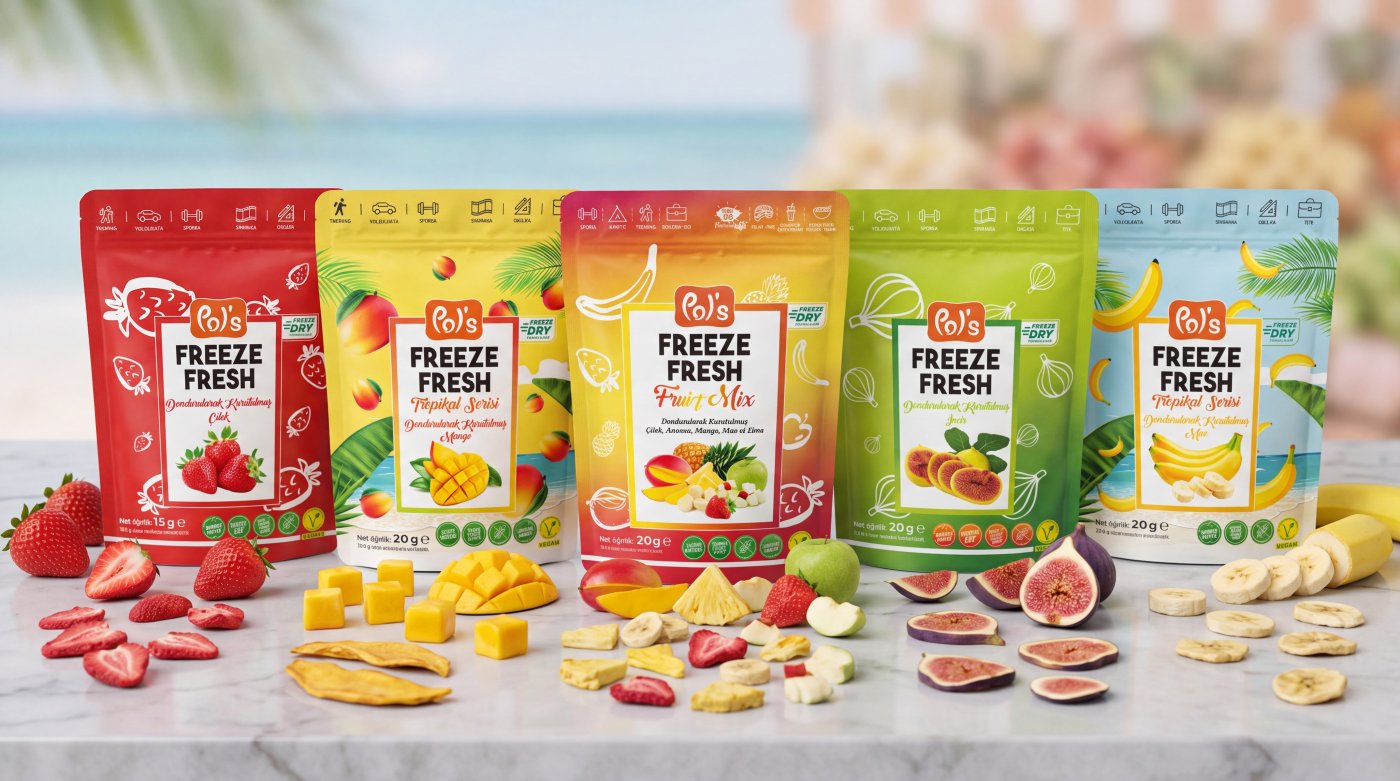
The first is using dried fruit; freeze-dried fruit holds 2 to 3 percent water.
The second is puréeing the fruit and building an emulsion with cream; that is how ganache is made.
The fat in the cream can carry the water of the fruit.
The third is using the fruit outside the chocolate, as a coating, decoration or accompaniment.
Those three routes form the technical framework of the pairing.
Until the water problem is solved, matching flavours means nothing.
How is texture matched?
Texture is as much a part of the pairing as taste.
Chocolate is either hard and brittle or melted and fluid.
Fruit can be juicy, soft or crisp.
Three combinations work.
The first is contrast: hard chocolate and juicy fruit.
Chocolate-covered strawberries belong there.
The second is agreement: fluid ganache and soft fruit purée.
The third is layered: crisp freeze-dried fruit and smooth chocolate.
That third is the most balanced; two different textures register at once.
The combination to avoid is two soft textures together.
A pairing such as soft chocolate mousse and ripe banana leaves a monotonous sensation.
What changes with milk chocolate?
Milk chocolate is low in cocoa solids and high in sugar.
That lowers its capacity to carry acid.
An acidic fruit makes milk chocolate read sour and unbalanced.
Milk chocolate works with low-acid fruits.
Banana, dates, figs and ripe pear belong there.
Caramelised fruits agree too; caramelisation lowers acidity.
Milk proteins act as a buffer, binding some of the acid.
But that buffer is limited.
Where acidic fruit is used with milk chocolate a layer should sit between them: nuts, biscuit or cream.
That layer prevents the two components meeting directly.
What about white chocolate?
White chocolate is the hardest pairing.
There are no cocoa solids and no bitterness.
The sweetness is very high.
That means nothing is present to balance the acidity of the fruit.
But there is an exception: highly acidic fruits can work with white chocolate.
The reason is that extreme sweetness balances against extreme acid.
Raspberry, passion fruit and lemon are classic pairings with white chocolate.
The balance here is built from two extremes rather than meeting in the middle.
Medium-acid fruits give the worst result with white chocolate.
They neither balance nor contrast; the result is flat and over-sweet.
A pinch of salt helps when working with white chocolate; it cuts the sweetness markedly.
Classic pairings and common mistakes
Five classic pairings can be listed.
Dark chocolate and raspberry; the most balanced combination.
Dark chocolate and orange; no shared compounds but a strong contrast.
Milk chocolate and banana; two low-acid components where texture decides.
White chocolate and raspberry; balance from two extremes.
Dark chocolate and sour cherry; acid and bitterness in balance.
Three mistakes recur.
The first is adding fruit containing water directly to chocolate.
The second is choosing the wrong cocoa content, pairing an acidic fruit with milk chocolate.
The third is using too much fruit; the fruit then overwhelms the chocolate.
Fruit at 10 to 20 percent of the chocolate weight is generally enough.
Beyond that the product turns into a fruit dessert and the chocolate recedes into the background.
How does temperature change the pairing?
Chocolate and fruit are both highly sensitive to temperature.
The aromas of chocolate open at body temperature.
Chocolate from a fridge has a closed aroma and a hard texture.
A similar situation applies to fruit; the perception of sweetness and aroma falls in cold fruit.
Both should come out twenty minutes before serving.
The situation differs in warm pairings.
Fruit served with melted chocolate creates a contrast in temperature.
That is a separate experience; the chocolate should stay at 40 to 45 degrees, since hotter cooks the fruit.
The perception of aroma falls markedly in pairings of frozen fruit with chocolate, which is why a more intense chocolate is preferred in those presentations.
Where a board carries both warm and cold elements, they should be assembled at the last moment; otherwise the temperatures equalise and the intended contrast disappears.
