


Twenty years ago, ordering dessert in a café mostly meant taking a slice cut from a whole cake. Today most displays are filled with products made as slices from the outset. That shift is not an aesthetic preference; it is a conclusion forced by the arithmetic of running a business.
What separates a whole cake from a slice cake?
A whole cake is cut at the point of sale, which means the weight of every slice depends on the hand doing the cutting. From the same cake one slice may weigh two hundred grams and the next two hundred and fifty.
With slice cakes the portion is decided in production. Every piece comes from the same mould at the same weight. For a business this means cost is fixed per gram.
The second difference is the cut face. A slice cut from a whole cake exposes two surfaces to the air the moment it is cut and begins to dry. A product made as a slice usually has a single cut face, or is protected by a coating.
Why does the waste ratio matter so much?
Once a whole cake is opened, the clock on spoilage starts running until it is sold. Slices left unsold at the end of the day are thrown out, and that loss is written directly against profit.
Looking at the numbers clarifies it. If eight slices of a twelve-slice cake sell, the waste ratio is thirty-three per cent. If four different varieties were opened that day, the loss is multiplied fourfold.
With slice cakes only the anticipated quantity goes into the display; the rest waits in the freezer. If sales pick up, more slices are thawed. That flexibility can bring waste down to single figures.
How does it make range easier?
A café working with whole cakes has to open a whole cake for every new variety. Offering five varieties means carrying the risk of selling five cakes at once. The number of varieties is therefore necessarily kept low.
With slice cakes, two or three pieces of each variety can go into the display. Offering ten varieties in the same case carries the same risk as offering three for a business working with whole cakes.
More varieties also raise the average transaction. A customer who sees choice is more likely to decide; a customer who sees only one option may leave without ordering.
How long does it hold in the display?
| Product type | Display life | Limiting factor |
|---|---|---|
| Chocolate mousse | 2-3 days | Cream forming a skin on the surface |
| Cheesecake | 3-4 days | Base absorbing moisture |
| Fruit slice | 1-2 days | Fruit releasing water, colour dulling |
| Coffee, praline | 2-3 days | Praline drawing moisture and softening |
| Tiramisu, mosaic | 2-3 days | Biscuit layer softening |
The values above apply at 4 °C in a closed display. In an open case or a humid environment the times shorten noticeably.
It is no accident that fruit products have the shortest life; fresh fruit releases water over time, thinning the cream and fading visually. Fruit slices are therefore the last to be thawed, according to the day's projected sales.
How should frozen slice cakes be thawed?
Ready-to-serve frozen cakes should be thawed slowly at refrigerator temperature. Left at room temperature, condensation forms on the surface; droplets of water appear on the cream and the appearance suffers.
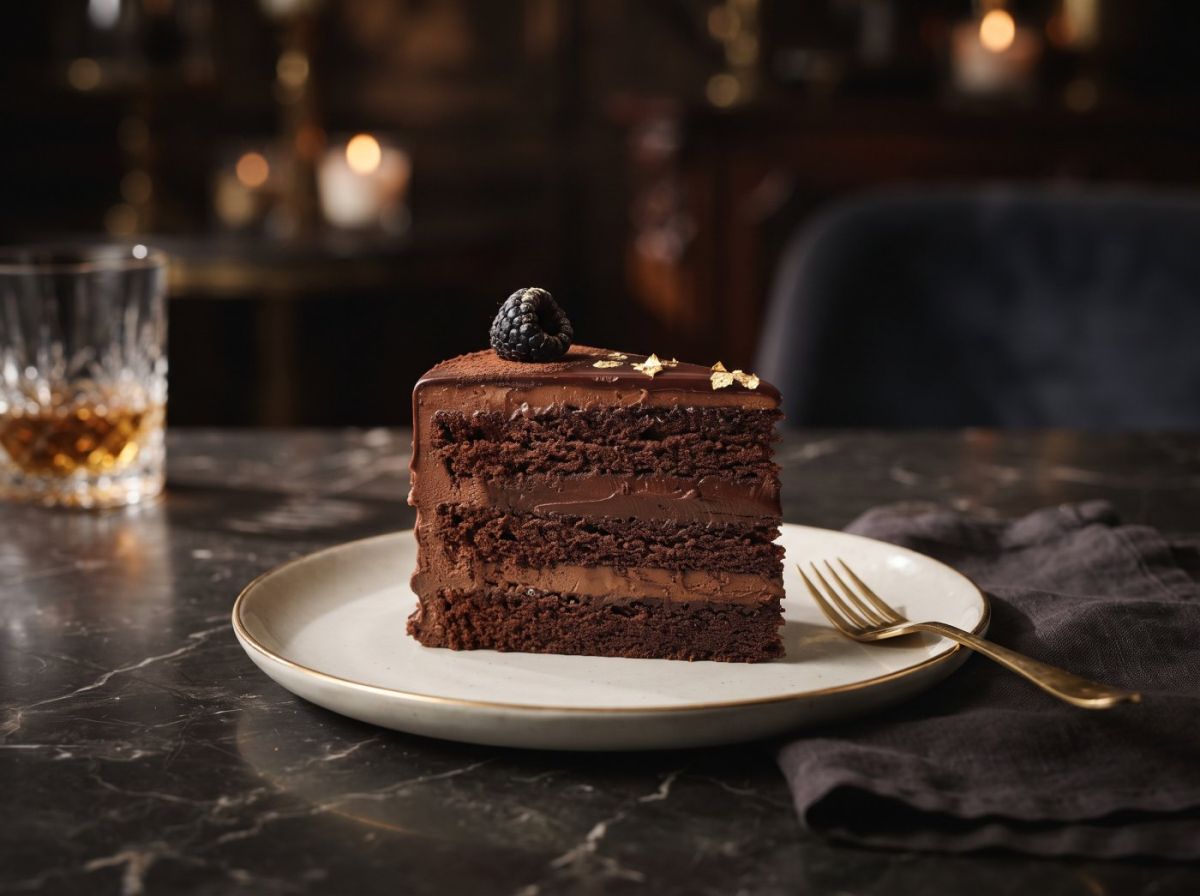
Thawing time depends on the density of the product. Light mousse-based items are ready in three or four hours; dense products such as cheesecake need six to eight.
A product thawed once is never refrozen. The emulsion structure of the cream breaks during a second freeze and releases water on thawing; the texture does not come back.
What does serving temperature change?
A slice taken straight from the refrigerator hides part of its aroma. Cold dulls the sense of taste, and chocolate and coffee notes in particular become imperceptible.
A slice brought to room temperature fifteen minutes before serving is perceived as noticeably better. This is the cheapest intervention available for raising perceived quality without changing the product.
The exception is fruit and jelly-topped items; these hold their form while cold and soften and slump on the plate as they warm.
How should slicing and presentation be handled?
Where cutting is required, the knife is dipped in hot water and wiped before each slice. A cold blade drags the cream and leaves a smeared cut face.
On the plate the slice is set with the cut face towards the customer. Visible layers raise the perceived value of the product directly, so presentation angle is far from trivial with multi-layered cakes.
A sauce or fruit alongside fills the empty area of the plate and makes the portion look fuller. This raises perception at almost no change in cost.
How is pricing built?
Costing slice cakes is straightforward because the portion is fixed: unit purchase price plus an allowance for waste and service cost gives the selling price.
Leaving waste out makes the price come out lower than it should. For a product with a two-day display life, assuming ten per cent waste is realistic, and that figure belongs in the cost.
Whether to differentiate price between varieties is a choice. A single price simplifies the menu; varied pricing protects the margin on higher-cost items.
Which varieties belong together?
When choosing what goes in the display, the taste profiles should not repeat one another. Five chocolate products do not read as five options to a customer.
A balanced display is usually built on four axes: a dense chocolate item, a light fruit item, something with coffee or caramel notes, and a cheese-based item. Those four cover most palates.
Adding a seasonal fifth keeps the display from looking static and gives regular customers a reason to look again.
