


In smoking, heat cooks the meat, but smoke writes its flavour. And smoke changes completely according to the chemical make-up of the wood being burned. For experienced producers, choosing the wood therefore carries the same weight as choosing the spices.
How does smoke carry aroma?
When wood burns, three main components break down: cellulose, hemicellulose and lignin. Each decomposes at a different temperature and releases different aroma compounds.
Lignin matters most for aroma. As it breaks down it produces phenolic compounds, and most of what we call smoke flavour comes from these. Vanilla, clove and sooty notes emerge from this group.
Cellulose and hemicellulose, when they break down, yield sugar derivatives and carbonyl compounds. These create both the sweetish notes and the brown colour at the surface.
The differences between woods arise from the ratio of these three components and from the natural resin, tannin and sugar content of the wood.
What separates hardwood from softwood?
Only hardwoods — trees that shed their leaves — are used in smoking. This rule concerns safety rather than taste.
Conifers such as pine, spruce and fir contain a high proportion of resin. Burning resin leaves soot and gives the meat a bitter, acrid flavour. It also causes undesirable compounds to accumulate in the product.
Hardwoods are low in resin and burn more cleanly. Oak, beech, apple, cherry and walnut are common examples.
Which wood gives which aroma?
| Wood | Intensity | Aroma profile | Best suited to |
|---|---|---|---|
| Oak | Medium-high | Classic smoke, slightly tannic | Beef, lamb, sucuk |
| Beech | Medium | Neutral, balanced, faintly sweet | All meats, sausages |
| Hickory | High | Intense, sharp, faint bacon note | Beef ribs, cured meats |
| Apple | Low-medium | Sweetish, fruity, gentle | Chicken, turkey, pork |
| Cherry | Low-medium | Mildly sweet, gives deep colour | Poultry, beef |
| Walnut | High | Sharp, faintly bitter | Red meat, in small quantity |
| Vine cuttings | Low | Delicate, wine-like | Fish, chicken |
The intensity column is the most practical information there. Intensely aromatic woods are balanced by strongly flavoured meats; with delicate meats the same wood buries the product's own character entirely.
Why do fruit woods pair with poultry?
The wood of fruit trees such as apple, cherry and pear contains a higher proportion of natural sugar than others. As it burns those sugars caramelise and carry faintly sweet notes along with the smoke.
Chicken and turkey have a mild flavour of their own. Intense smoke covers it; light, sweetish smoke supports it. This is why fruit woods pair with poultry.
Cherry wood has a further property: it gives the product a markedly dark, reddish colour. That is the reason it is often chosen on visual grounds.
Are woods blended?
They are, and it is common in professional production. The aim is to complete what a single wood leaves lacking.
The most frequent approach combines a wood that builds the backbone with one that softens the aroma. Oak with apple is a typical example: oak delivers the classic smoke flavour while apple softens the sharpness and contributes to colour.
In blends the ratio usually favours the dominant wood; the secondary wood does not exceed a third of the total. Beyond that the two aromas suppress each other and the result turns muddy.
Why does the moisture of the wood matter?
Very dry wood burns fast and produces flame, which gives heat rather than smoke. Very wet wood does not burn fully, producing dense, heavy smoke and leaving a sooty taste in the product.
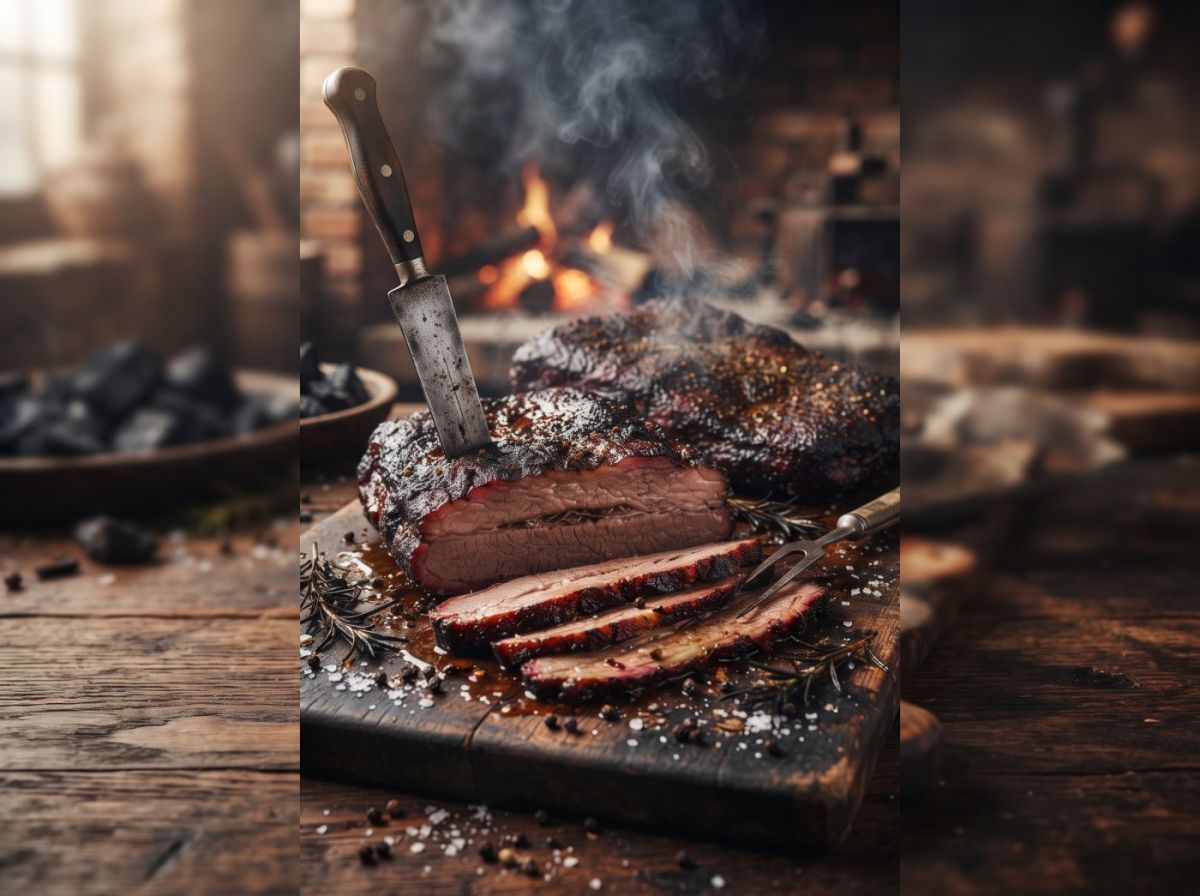
The ideal is wood dried sufficiently but not completely. In industrial production this balance is achieved with chips and pellets manufactured to a controlled moisture content.
In home use, soaking wood chunks briefly before use is a common method. This delays them catching flame and lets them produce smoke for longer.
What does the colour of the smoke tell you?
Smoke colour gives direct information about the quality of combustion, and experienced producers intervene on the basis of it.
Thin, bluish, almost invisible smoke is the ideal; it indicates the wood is burning cleanly and producing the aroma compounds wanted.
Thick, white, dense smoke indicates incomplete combustion. That smoke leaves a bitter, sooty taste in the product. The cause is usually insufficient airflow or wood that is too wet.
Black smoke is the worst sign; soot is being produced and the process should be stopped at once.
Which matters more, time or intensity?
The two work together, but time is more forgiving. A product smoked for a long period with a mild wood takes on a balanced aroma. One smoked briefly with an intense wood ends up sharp at the surface and flat within.
The approach preferred in practice is therefore a medium-intensity wood over an extended period. The aroma distributes evenly through the meat and no harshness develops.
Over-smoking is an irreversible mistake. A product that has taken too much smoke cannot be corrected by airing; the aroma compounds are chemically bound to the surface.
Do chips, chunks and pellets differ?
The physical form of the wood determines how long it produces smoke. There are three common forms, each corresponding to a different working duration.
Chips catch fastest and burn out soonest; they suit short smokes of twenty or thirty minutes, or refreshing the aroma at the end of a process. They need frequent replenishment.
Chunks burn more slowly and produce smoke for hours. This is the form preferred for long hot-smoking runs.
Pellets are made from compressed sawdust with a controlled moisture content. They give the most consistent smoke, which is why they are standard in industrial chambers with automatic feed.
Which woods are used in Türkiye?
Oak is the most widespread in local production; it is readily available, and the familiar taste of traditional Turkish smoked products comes largely from it.
Beech comes second and is preferred particularly in sausage and salami production; its neutral profile does not get in front of the spice blend.
Fruit woods, obtainable as pruning waste, are used in regional production. Apple and cherry are accessible sources for smoking in the fruit-growing regions of Türkiye.
