


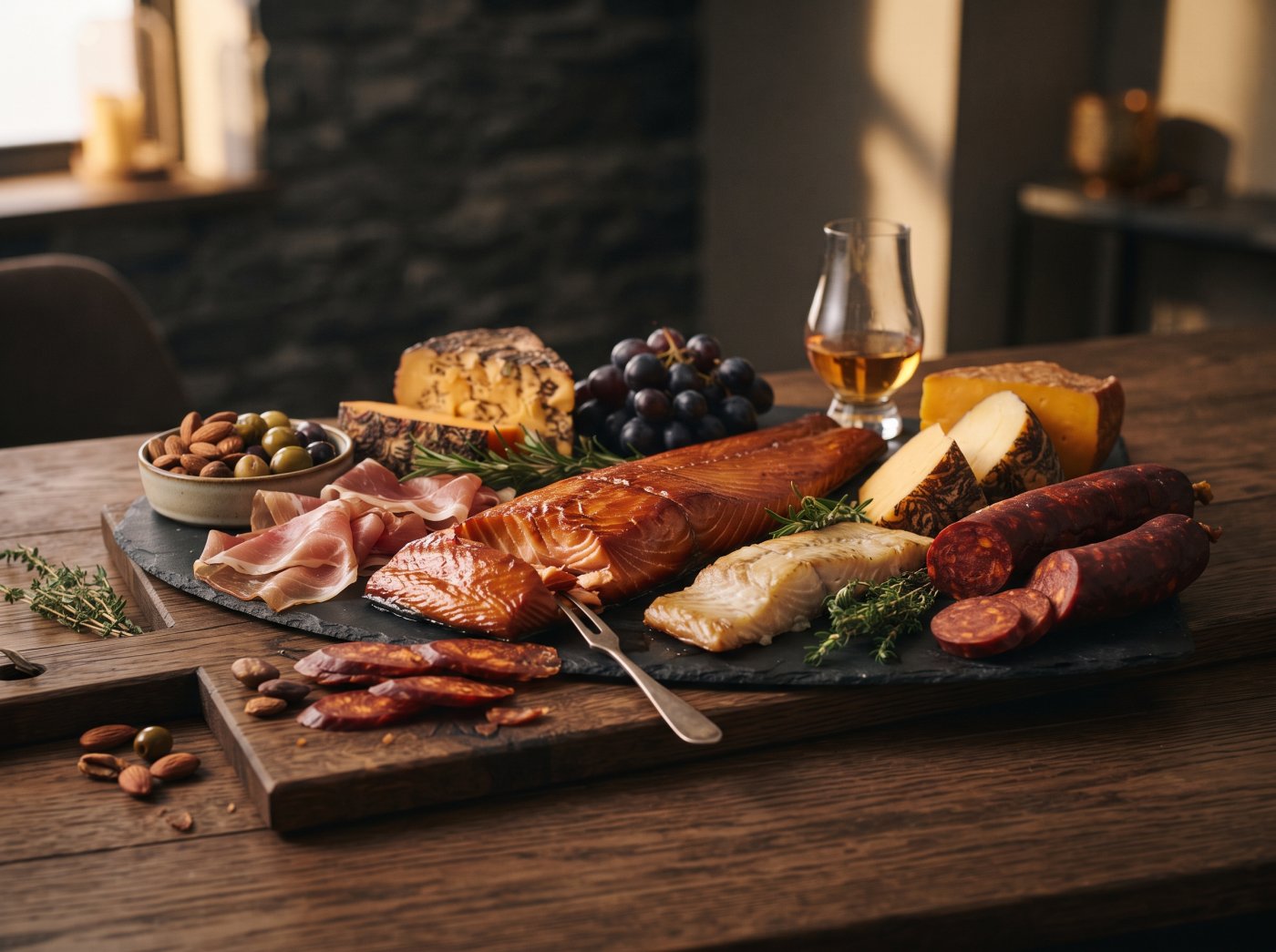
Colour is the first signal a consumer uses to judge quality in charcuterie. But that signal cannot be read as directly as is assumed. A change in colour sometimes indicates spoilage and far more often indicates nothing but chemistry.
Where does the pink colour in smoked products come from?
The red of raw meat comes from a protein called myoglobin. When meat is cooked that protein changes structure and the colour turns grey. Processed charcuterie, however, stays pink despite being cooked.
The reason is curing salts. Nitrite reacts with myoglobin to form a stable compound called nitrosomyoglobin. That compound is heat-stable and gives the product its characteristic pink.
Nitrite's function is not only colour. It prevents the growth of the bacterium responsible for botulism and delays the oxidation of fat. The colour is in fact the visible by-product of that protective process.
In products made without nitrite the colour is a greyish brown. This is not a mark of lower quality but simply a different production choice, and shelf life is generally shorter.
Why does product from a vacuum pack look pale?
For nitrosomyoglobin to show its bright pink, it needs a certain amount of oxygen. Because there is no oxygen in vacuum packaging, the product looks pale, even greyish.
When the pack is opened, air contacts the product and the colour brightens within minutes. This is called blooming and it is entirely normal.
A pale appearance in a vacuum-packed product should therefore not be read as a sign of spoilage. The product gaining colour shortly after opening indicates, on the contrary, that curing was done correctly.
Why does sliced product darken over time?
Sliced charcuterie kept in the refrigerator browns from the edges inward. This is the oxidation process at a more advanced stage.
Under prolonged contact with oxygen, nitrosomyoglobin breaks down and a brown compound called metmyoglobin forms. The process proceeds much as the browning of a cut apple does.
This change is not spoilage; the product stays safe. Taste is affected somewhat, however, because oxidation advances on the fat as well.
The way to slow the browning is to reduce contact with air: wrap the slices tightly, press the air out of the packaging, and store on the coldest shelf of the refrigerator.
Does light affect colour?
It does, and more than is generally assumed. Oxidation accelerates markedly in charcuterie exposed to direct light; this is why products fade under the lights of a retail display.
The effect is particularly pronounced under fluorescent and high-intensity lighting. Professional delicatessen cabinets therefore use lighting that produces little heat and emits at low wavelengths.
At home, keeping the product in opaque packaging or a closed container provides the same protection.
Why does the texture change?
Textural change in charcuterie has two main sources.
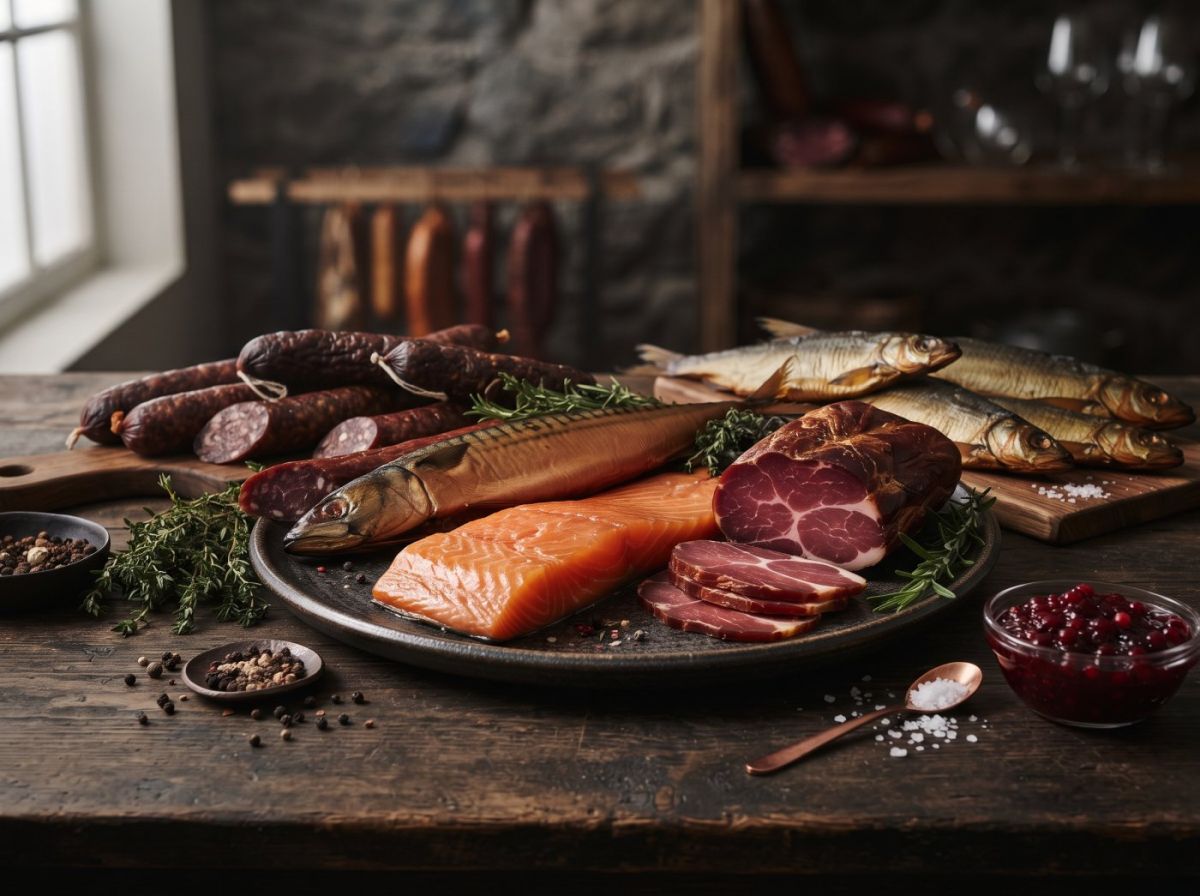
The first is moisture loss. Once opened, the product contacts air and loses water from its surface. The surface firms, the edges of slices curl, and the product feels dry.
The second is slow change in the protein structure. Over time the protein network tightens and the product moves from firm to hard. Cold slows this process but does not stop it.
In frozen products a further factor enters: ice crystals tear the protein network, and the product weeps on thawing. Charcuterie that has been frozen and thawed therefore has a looser texture than fresh.
What is the white layer on the surface?
Fermented sucuk and some cured salamis show a white, powdery layer on the surface. This is usually a mould culture added under control and is part of the production; it protects the product and develops aroma.
Mould that appears greenish, black or fuzzy, by contrast, is an unwanted development and the product should not be eaten.
A separate case is salt crystals. In dried products, salt migrating to the surface can appear as white specks. Rubbed with a finger, salt disperses; mould does not.
Why does it turn grey when heated?
The pink of a charcuterie slice fried in a pan or heated in an oven disappears and the colour shifts to a greyish brown. The reason is that nitrosomyoglobin loses its stability above a certain temperature.
This change does not mean the product has spoiled; it only shows that heat has advanced the chemistry. The same happens when a cured product is held at high temperature for a long period.
Businesses wanting to preserve colour keep heating brief and the temperature low. Adding charcuterie last on a toasted sandwich or a pizza protects both colour and texture.
How do you recognise spoilage?
| Sign | Normal change | Sign of spoilage |
|---|---|---|
| Colour | Browning at the edges | Greenish or greyish tones |
| Smell | Smoke and spice | Sour, ammonia-like |
| Surface | Slight drying | Sticky, slimy texture |
| Packaging | Flat vacuum | Swollen, gassy pack |
| Liquid | A little clear liquid | Cloudy, foaming liquid |
The most reliable criterion in the table is smell. Colour and texture change for many reasons; but a sour or sharp smell almost always indicates microbial activity.
A swollen vacuum pack is a sufficient sign on its own. Gas production is a direct result of bacterial activity, and such a product should be discarded without opening.
How can colour loss be delayed?
The first rule is to eat an opened product as soon as possible. Beyond that, three practices help.
Keeping a product whole is always better than keeping it sliced; the less cut surface, the slower the oxidation. Buying a baton and slicing as needed is therefore advantageous for both freshness and cost.
Removing air from the packaging is the second. Without a vacuum sealer, even pressing the air out of a zip bag by hand makes a difference.
The third is temperature. The refrigerator door is the warmest zone and unsuitable for charcuterie; the product belongs on the bottom shelf, towards the back.
