


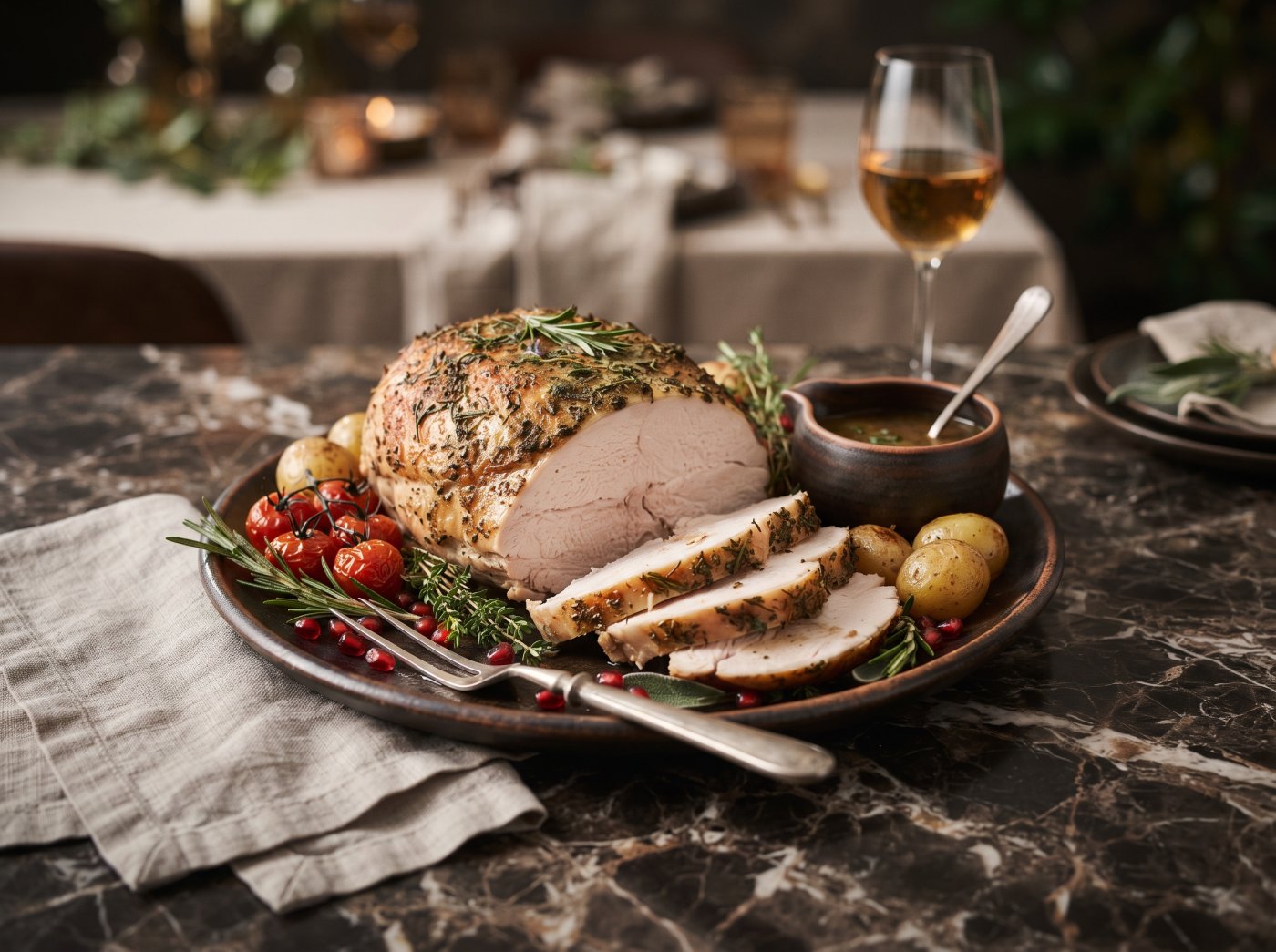
Turkey is a meat whose consumption in Türkiye is largely compressed into a single week. That seasonality arises from habit rather than from the product itself, because in nutritional terms turkey deserves a place at the table throughout the year.
What is turkey's nutritional profile?
Turkey stands out for high protein and low fat. Skinless breast is among the leanest of animal protein sources.
A hundred grams of skinless turkey breast contains roughly 29 grams of protein and 1 gram of fat. That corresponds to slightly more protein and less fat than the same quantity of chicken breast.
It is rich in micronutrients too, carrying significant amounts of vitamins B3 and B6, selenium and phosphorus. Selenium is particularly notable; a hundred grams of turkey covers a substantial share of the daily requirement.
Turkey is also known for its tryptophan content. That amino acid is a precursor the body uses in producing serotonin; the belief that eating turkey makes you sleepy is exaggerated, however, since many other protein sources contain comparable amounts.
How does it compare with chicken and beef?
| Criterion (100 g, skinless) | Turkey breast | Chicken breast | Beef striploin |
|---|---|---|---|
| Protein | 29 g | 27 g | 26 g |
| Fat | 1-2 g | 3-4 g | 8-12 g |
| Calories | 130-140 kcal | 150-165 kcal | 200-220 kcal |
| Iron | Medium | Low | High |
| B12 | Medium | Low | High |
| Selenium | High | Medium | Medium |
The table shows turkey to be the leanest option. Red meat, however, is stronger in iron and B12, so turkey belongs alongside red meat rather than in place of it.
Within the white meat group, turkey offers slightly more protein and less fat than chicken. The difference is not large but accumulates with regular consumption.
Why does turkey dry out so easily?
This is the most common complaint about turkey, and the reason is its fat content. Fat melts during cooking and moistens the meat from within. In turkey breast, where fat is low, that internal basting does not happen.
The second factor is muscle structure. Turkey breast is a thick, large muscle, and the distance between its surface and its centre is considerable. By the time the centre is cooked, the outer layer has taken too much heat.
The third is the temperature threshold. Poultry proteins become safe at around 74 °C, and going a few degrees beyond that causes noticeable water loss in the muscle. Turkey is a meat that has to be cooked within a narrow band.
How can drying be prevented?
The most effective method is brining. Held in salted water for several hours, the muscle proteins partly dissolve and their water-holding capacity increases. Brined turkey stays noticeably juicier when cooked for the same time.
The second method is temperature control. Using a thermometer matters more with turkey than with other meats; cooking by eye easily overshoots the threshold.
The third is resting. Turkey should sit for at least fifteen minutes after leaving the oven before being cut; in that time the moisture pushed to the centre redistributes along the fibres.
The fourth is cooking in parts. Cooking breast and leg separately rather than roasting whole lets each finish in its own optimal time. In whole roasting, the breast has dried out by the time the leg is done.
Why are smoked turkey products so common?
Turkey is a favoured raw material for smoking and curing in the delicatessen sector, for three reasons.
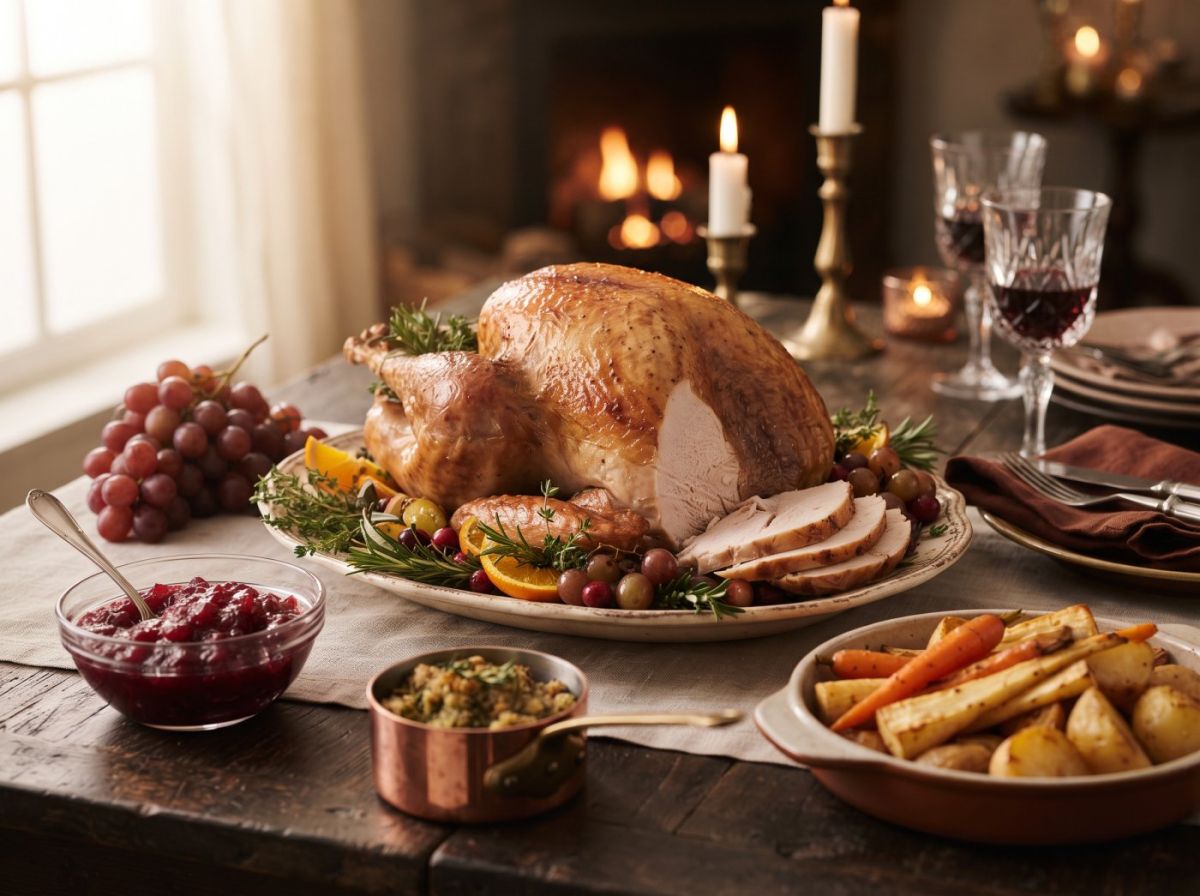
The first is neutrality of taste. Turkey's own flavour is mild; it carries smoke and spice aromas without overwhelming them, which makes developing flavoured products easier.
The second is textural suitability. Because turkey breast is a large, uniform muscle, it gives even, wide surfaces when sliced. That is an advantage in sandwiches and on plates.
The third is fat content. A low-fat product suits a "light" positioning, and that is a demand which finds a response among consumers.
How is it used in a diet?
Turkey breast is among the most efficient protein sources in calorie-controlled eating. Twenty-nine grams of protein and 130 calories per hundred grams is a strong ratio for protein density.
A few approaches work for practical use. Cooked whole and sliced during weekly preparation, turkey breast can be added to salads and sandwiches over several days.
It can also be used as mince; turkey mince contains markedly less fat than beef mince. That can cause meatballs to fall apart, however, so mixing in some fattier mince or adding a binder is necessary.
Which spices suit it?
Turkey's neutral taste allows a wide range of spices. Thyme, rosemary and sage are classic pairings; the resinous aroma of these herbs balances the meat's lightness.
Citrus works well too. Lemon and orange zest add freshness and break the flatness that comes with leanness.
In uses adapted to Turkish cooking, sumac, chilli flakes and cumin give good results. Yoghurt-based marinades both season and help tenderise; the acid and calcium in yoghurt loosen the muscle fibres.
How do turkey leg and breast differ?
The two cuts come from the same bird but behave entirely differently in the kitchen, and cannot be cooked the same way.
The breast is a muscle the bird would use for flight but, in a domestic turkey, barely works at all. Its fibres are fine, its fat content very low and its colour pale. It cooks quickly and dries easily.
The leg and drumstick, by contrast, carry the bird's weight and work constantly. They are high in connective tissue and myoglobin, which makes them darker in colour and more pronounced in flavour. Their fat content is also two or three times that of the breast.
That difference dictates the cooking method. Breast is cooked briefly at a controlled temperature; leg gives its best result cooked slowly at low heat. Leg is also more forgiving than breast: a few extra minutes causes no noticeable loss.
How should it be stored?
Raw turkey keeps for up to two days in the refrigerator and up to nine months in the freezer. A whole bird holds its quality longer than portioned cuts.
Cooked turkey keeps for three or four days refrigerated. If it is stored sliced, contact with air has to be limited; because the cut surface is wide, drying is rapid.
For smoked and cured turkey products, shelf life depends on the packaging. Vacuum packs keep for the period on the label while sealed, and should be eaten within three or four days once opened.
