


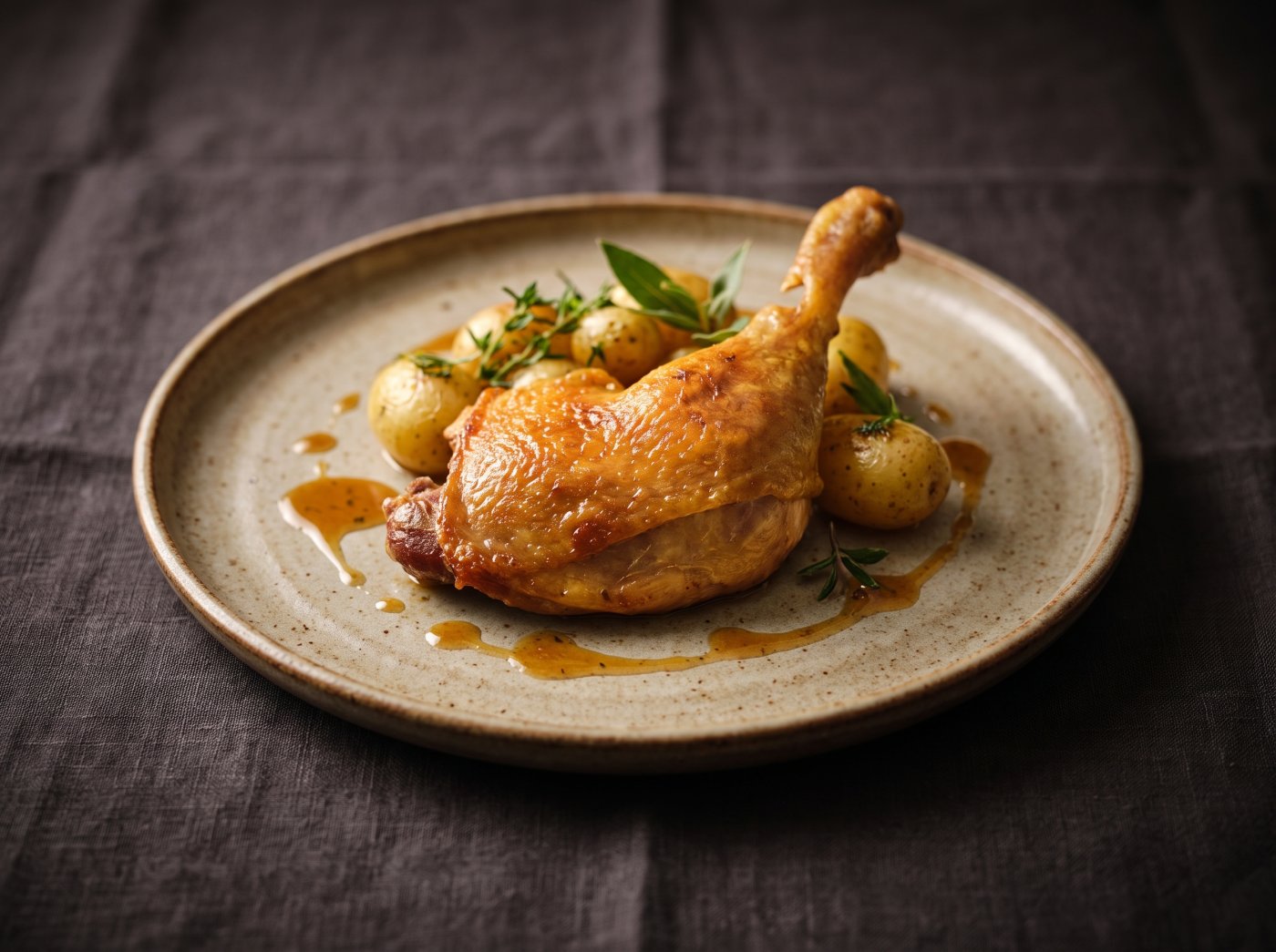
Confit comes from the French verb "confire", meaning to preserve. The method was developed so that meat could be kept for months in an age without refrigeration. Today the same technique is used less for preservation than for the texture it produces.
What exactly is confit?
Confit is meat cooked slowly at low temperature, submerged in its own fat or a suitable animal fat. The fat here is not a frying medium; the temperature sits far below frying point and the fat serves only as a medium conducting heat evenly.
When the process ends, the meat is kept under the layer of fat covering it. That layer cuts off contact with air and halts oxidation. This is the actual mechanism that lets the meat keep without spoiling.
The method is traditionally identified with goose and duck, but chicken, turkey and beef can be prepared the same way. What matters is not the animal but the temperature and the time.
Why does it produce such a tender texture?
Meat toughens when muscle proteins contract under heat and expel their moisture. That contraction accelerates above roughly 65 °C. In confit the temperature is generally held between 80 and 90 °C, often lower, so the proteins never contract enough to toughen.
That same range is sufficient for the collagen in connective tissue to convert to gelatin. As collagen dissolves, the structure holding the fibres together loosens and the meat reaches the point of parting with a fork.
The third factor is the fat itself. Because the meat cooks submerged, it loses no moisture from its surface; drying out is not a possibility. The moisture loss that is unavoidable in dry cooking is taken out of the equation.
How are time and temperature set?
The single critical variable in confit is the stability of the temperature. If it climbs, the meat begins to fry and the purpose of the method is lost.
| Product | Temperature | Time |
|---|---|---|
| Chicken breast | 80-85 °C | 1.5-2 hours |
| Chicken leg | 85-90 °C | 2-3 hours |
| Duck leg | 85-90 °C | 3-4 hours |
| Beef shoulder | 85 °C | 5-6 hours |
At home the easiest way to hold a steady temperature is the oven; on the hob the temperature fluctuates. The dish is covered and the meat placed so that it is fully submerged; any part above the fat dries and darkens.
Why is it salted first?
Before the meat goes into the fat it is rubbed with salt, usually with spices, and left for several hours or overnight. This step cannot be skipped and it does two jobs.
The first is seasoning. Fat will not carry salt into meat; salt dissolves in water, not in fat. The salt therefore has to enter the meat before cooking.
The second is drawing out moisture. Salt pulls part of the water from the surface of the meat. Less water means less risk of spoilage in storage. This is why traditional confit recipes keep the salting period long.
How does canned confit differ from fresh?
Confit prepared as a canned product goes through the same process and is then sealed in a tin and sterilised by heat treatment. That additional step allows it to be kept at room temperature for a long period.
Freshly made confit is kept refrigerated under its layer of fat and eaten within weeks. Once that layer is broken the protection ends; from that point the product should be finished within a few days.
In texture there is no marked difference between the two. Because heat treatment goes a little further in the canned version, the meat can be slightly softer.
How is it used in the kitchen?
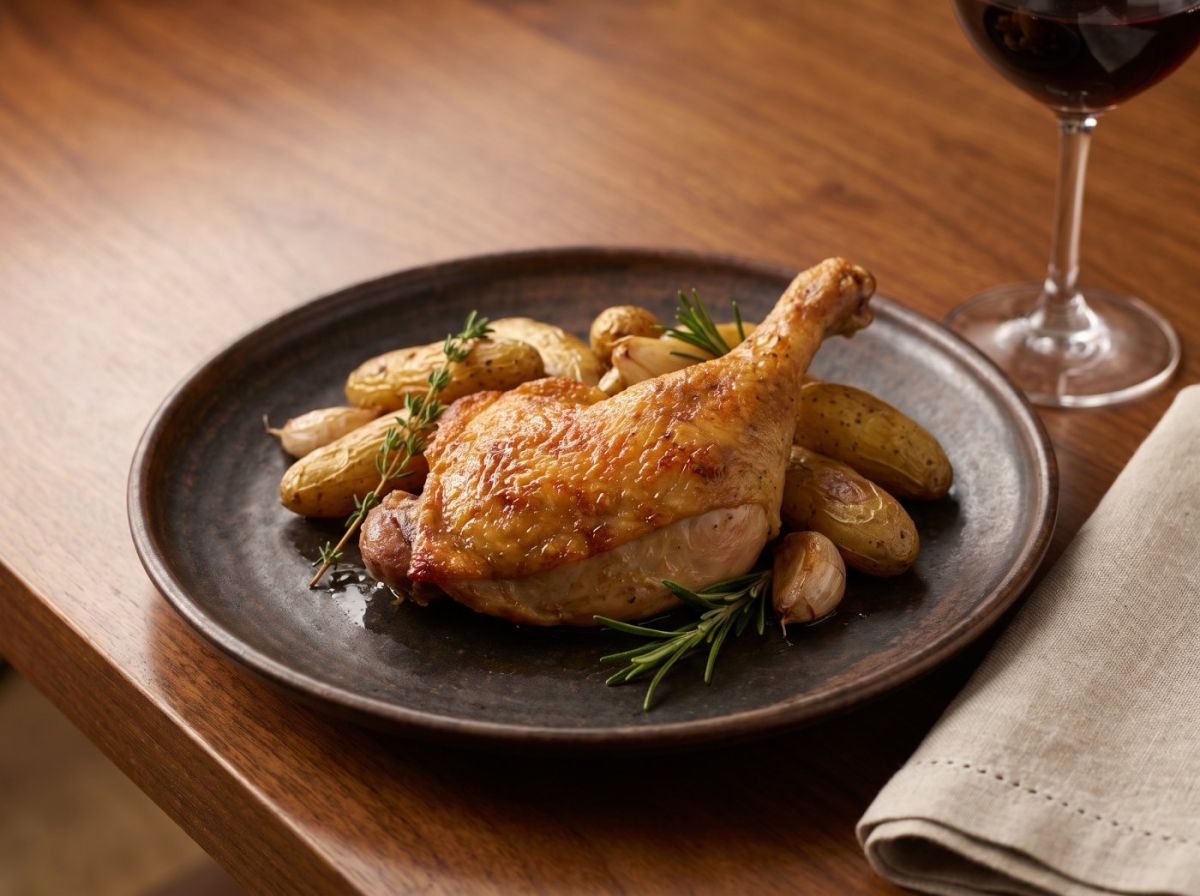
Confit meat is already cooked; all that remains is to heat it and, if wanted, to brown the surface.
The most common use is lifting the meat out of its fat and searing only the skin or outer surface in a hot pan. That step adds a crisp outer layer to the soft interior and brings two opposing textures into the same mouthful.
Other uses rely on shredding. Confit meat pulls apart into fibres easily with a fork; in that form it goes into salads, pasta sauces, sandwiches and pastry fillings. Shredded confit lends depth in minutes to a dish that would otherwise need long cooking.
What happens to the leftover fat?
Confit fat is not discarded. It has taken on the aroma of the meat during cooking and can be used again. Strained and refrigerated, it keeps for several months.
That fat is used for frying potatoes, sautéing vegetables or preparing a new confit. With each use the aroma concentrates a little further; in traditional kitchens the same fat is known to have been carried forward for years.
Whether the fat is still usable is judged by smell. A sour or sharp note indicates oxidation, and that fat should be thrown out.
How does it look nutritionally?
Confit is cooked in fat, but it absorbs far less than assumed. The mechanism that fills pores during frying does not operate here; because the temperature is low, the water inside the meat does not evaporate and leave room for fat.
Even so the layer of fat on the surface should be taken into account. Draining excess fat before serving lowers the amount in the portion noticeably.
Protein content is unaffected by the cooking method; a confit chicken breast carries the same protein value as a grilled one.
Which fat is used?
Traditionally confit is made in the animal's own fat: duck fat for duck, goose fat for goose. The reason is harmony of flavour; an animal's own fat adds no foreign aroma to the meat.
When there is not enough of it, or none available, pork fat is the classic alternative; in Türkiye tail fat, butter or olive oil is used instead. Olive oil leaves a more pronounced background note and pulls the product towards a Mediterranean character.
The deciding factor in the choice is melting point. Fats that solidify at room temperature form a better seal during storage; with fats that stay liquid the protective layer is more permeable. For confit intended to keep, a solid fat is therefore preferred.
Which mistakes spoil the result?
The most common error is letting the temperature run high. Once the fat reaches frying point the meat becomes a fried product and the texture confit gives cannot be obtained.
The second is failing to submerge the meat fully. Any part left exposed both dries out and becomes the starting point for spoilage in storage.
The third is cooling it too quickly. Confit should cool slowly in its cooking vessel, in its own fat; meat lifted out while hot contracts, and part of the tenderness achieved is lost.
