


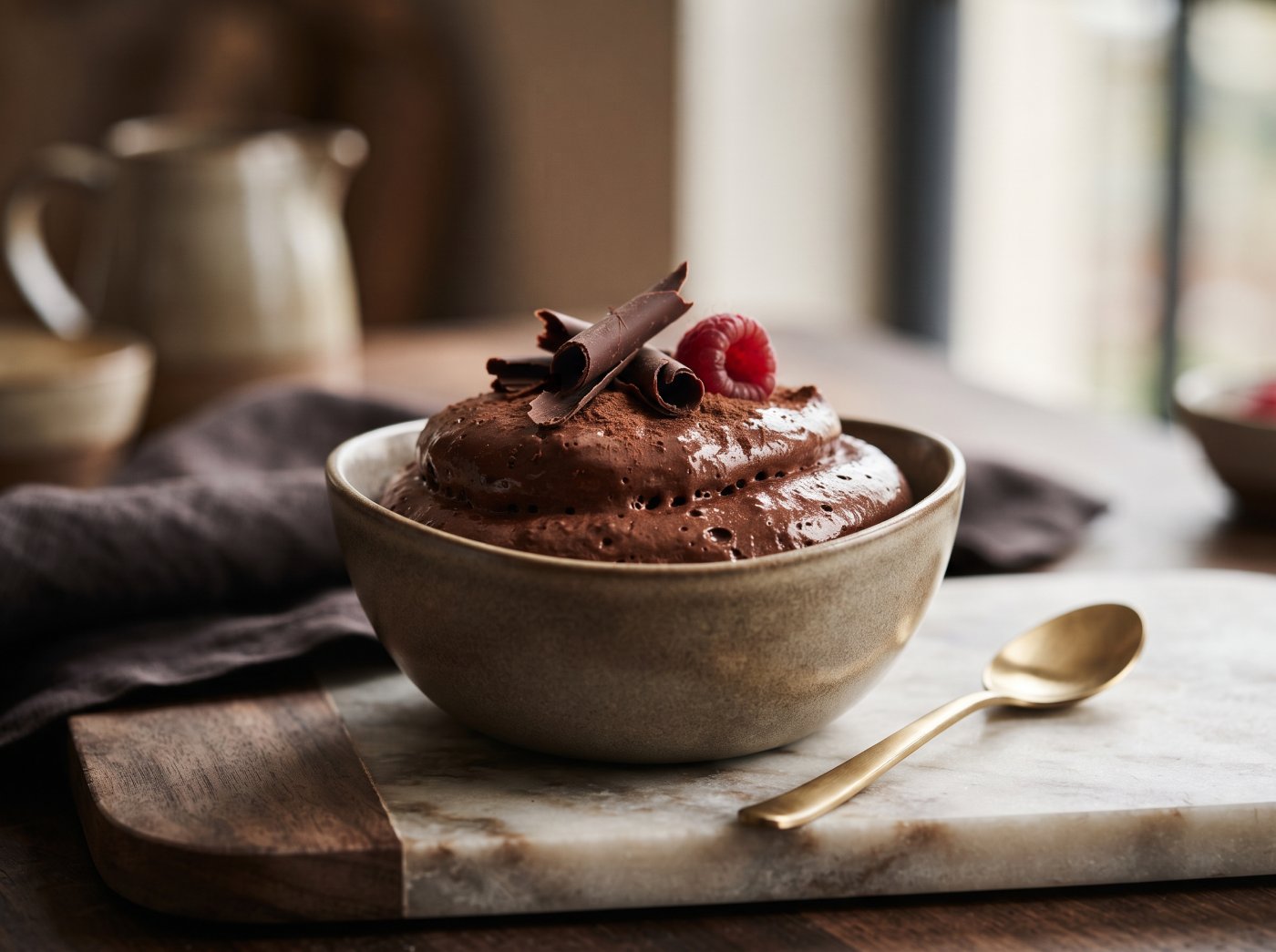
Lift a spoonful of mousse and you notice it weighs less than you expected. That sensation is no accident; mousse is a product in which a significant part of the volume is air. What we call lightness in patisserie usually refers directly to that proportion of air.
What structure does the word mousse describe?
Mousse means foam in French, and that is precisely its definition: gas bubbles dispersed through a liquid or semi-solid mixture.
Such a structure is called a foam and it has three components. The continuous phase is the liquid surrounding the bubbles — cream, chocolate or fruit purée. The dispersed phase is the trapped air. The third is the molecules coating the bubble surfaces and preventing them merging; these are usually proteins or fats.
The difference between mousse and whipped cream lies in that third component and in stabilisation. Whipped cream is only aerated cream and collapses within hours. Mousse contains an additional component that fixes the structure.
How is the air trapped?
Patisserie uses three distinct methods of holding air, and most mousses combine two of them.
Whipped cream. As cream is whipped, fat globules partially break up and build a network around the bubbles. That network stands because the fat is semi-solid at room temperature.
Whipped egg white. The proteins in egg white unfold as they are whipped and form an elastic film at the bubble surface. That film is very light but less durable than cream.
Italian meringue. Boiling sugar syrup is added to egg white as it whips. The syrup partly cooks the proteins and strengthens the structure markedly. This is the method most favoured in professional mousses.
How much gelatine should be used?
Gelatine forms a gel network as it cools and holds the bubbles in place. The quantity, however, is a fine balance.
| Gelatine ratio | Result | Use |
|---|---|---|
| Very low (below 0.5%) | Runs off the spoon, will not slice | Served in glasses |
| Balanced (0.8-1.2%) | Holds on a spoon, slices hold shape | Slice cakes |
| Excessive (above 1.5%) | Rubbery, slow to melt | To be avoided |
The ratios are by total mixture weight. The clearest sign of too much gelatine is that the product has to be chewed rather than melting; once mousse loses that property it is no longer mousse but a jelly-like dessert.
Mousses without gelatine also exist. In chocolate mousse the cocoa butter solidifies when cold and does the same job; a mousse made with dark chocolate therefore needs no additional stabiliser.
Why is chocolate sufficient on its own?
The cocoa butter within chocolate is a fat that solidifies just below room temperature. As the mousse cools, that fat crystallises and builds a solid skeleton around the bubbles.
The strength of that skeleton depends on the cocoa content. Mousse made with seventy per cent dark chocolate is firm enough to slice; in milk chocolate the cocoa butter proportion falls and gelatine becomes necessary.
White chocolate contains no cocoa solids at all, only cocoa butter. It builds structure but contributes no flavour support, which is why white chocolate mousses generally take fruit purée or citrus zest alongside.
Why does the folding matter so much?
The final step in preparing mousse is adding the aerated component to the main mixture. That step alone determines whether the product succeeds.
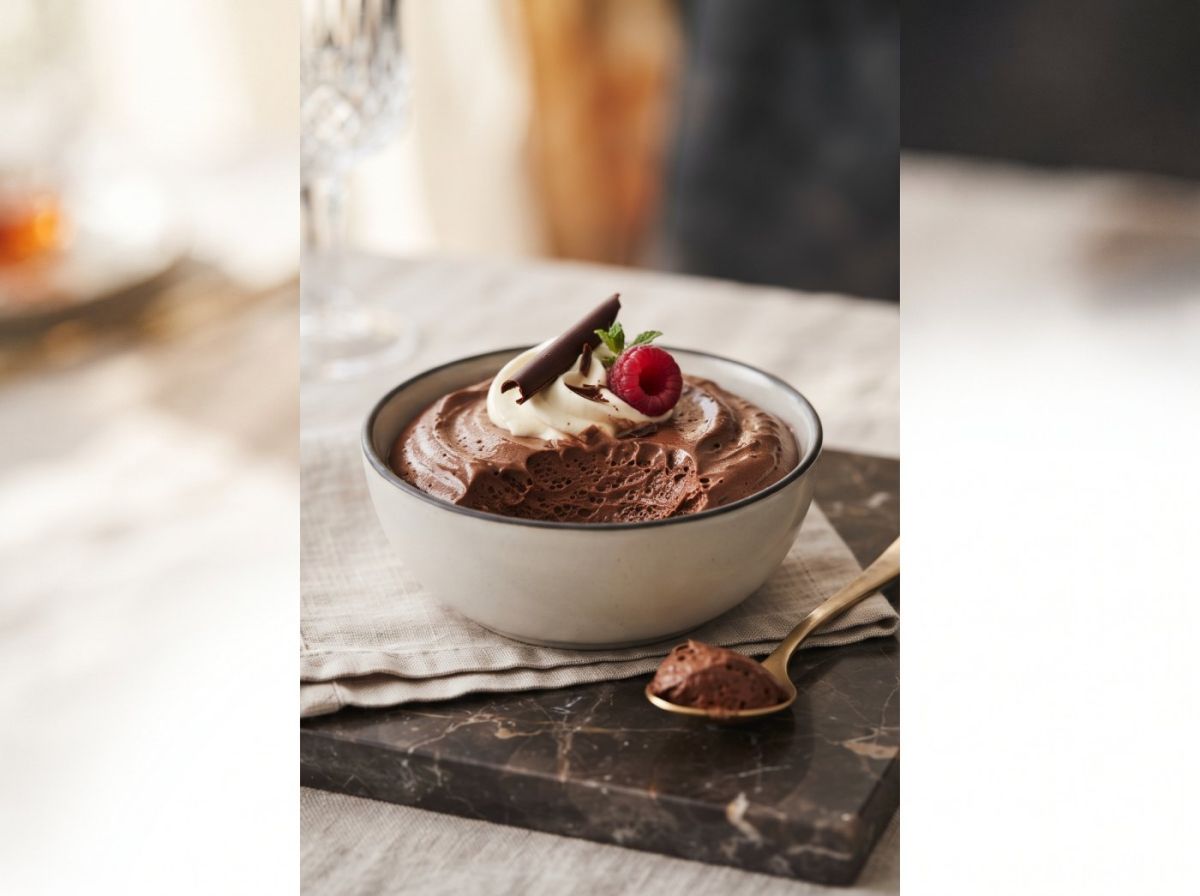
Vigorous mixing bursts the bubbles. The air lost cannot be recovered; the mixture densifies and the product turns heavy.
The correct technique is folding: the spatula enters at the edge of the mixture, goes to the bottom and turns towards the centre. The bowl is rotated slightly with each fold. The aim is uniformity in the fewest possible movements.
Temperature difference has to be accounted for as well. Adding cold cream to a hot chocolate mixture shocks the fat and causes it to seize. The two components are brought to similar temperatures before being combined.
Why does mousse collapse?
There are four common causes, and all of them occur during preparation.
The first is over-whipping the cream. Cream whipped too far begins separating towards butter; the fat network breaks and its capacity to hold air falls.
The second is adding the gelatine wrongly. Hot gelatine poured straight into a cold mixture sets instantly and forms stringy pieces; no network is established.
The third is mixing time. Prolonged mixing drives the air out.
The fourth is the resting condition. If mousse stands at room temperature before chilling, the bubbles rise before the gelatine has set and a layer of foam forms on top with a dense layer beneath.
How does frozen mousse behave?
Mousse is a structure well suited to freezing, and it is commonly prepared frozen in patisserie. The air bubbles act to some extent as a buffer against the ice crystals forming during freezing.
Thawing should be slow, in the refrigerator. Fast thawing produces condensation at the surface and the mousse looks watery.
Mousse thawed once is not refrozen. A second freeze completely destroys the fat network already loosened by the first thaw, and the product weeps on thawing.
Frozen mousse also has an advantage in slicing. Cut while semi-frozen, the edges of the slices come out sharp; in a fully thawed product the knife line blurs.
At what temperature should mousse be served?
Mousse holds its texture at refrigerator temperature but does not show its full aroma. Cold suppresses chocolate and coffee notes in particular.
A slice brought out ten minutes before serving holds its shape and opens up its aroma. Beyond that the gelatine begins to relax and the slice spreads at the edges.
For fruit mousses the time should be shorter; the acid in fruit purée weakens the gel network and these products are more sensitive to warming.
Where do home cooks most often go wrong?
- Letting the cream warm up: cream that is not cold will not whip properly; the bowl and whisk should be cold too.
- Boiling the gelatine: high heat reduces its setting power, warming is enough.
- Using fresh pineapple, kiwi or papaya: enzymes in these fruits break gelatine down and the mousse never sets; heat-treated purée must be used.
- Unmoulding too early: at least four hours of chilling is needed, preferably overnight.
- Combining with a whisk: this step calls for a spatula, not a whisk.
