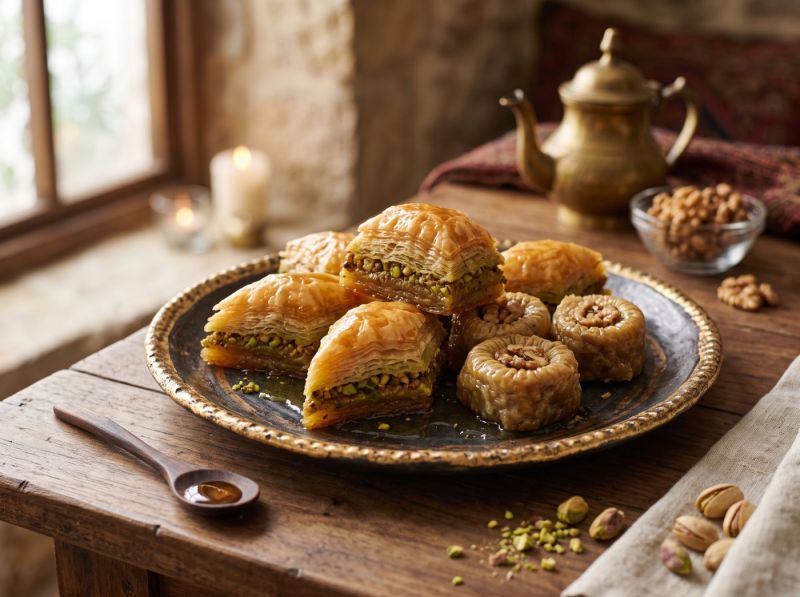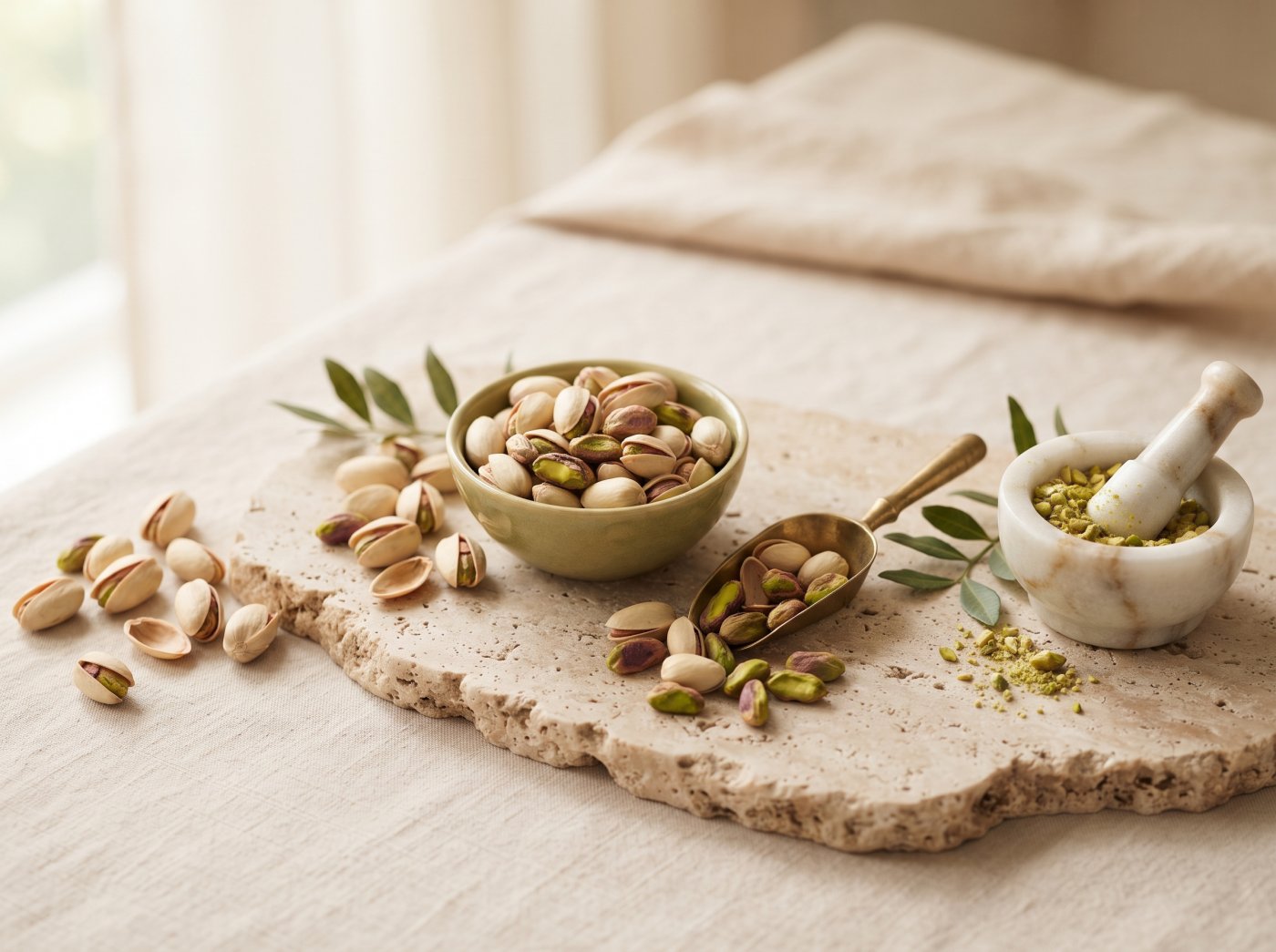
The price gap between a kilo of Antep pistachio and a kilo of walnuts is far too large to be explained by any difference in flavour. The reason is to be found not in the kitchen but in the orchard.
Why does the tree not yield the same every year?
The pistachio tree shows a behaviour known as alternate bearing: one year it produces a heavy crop, the next its yield falls markedly. This stems from the tree's own physiology rather than from any fault in husbandry.
In a heavy year the tree channels most of its energy into fruit and cannot develop the following year's buds sufficiently. The next year it naturally sets little fruit. This cycle alone halves average yield.
Climate risk sits on top of that. A frost during flowering or extreme heat can largely determine that year's crop. This is the fundamental reason pistachio prices swing from year to year.
Why is the harvest done by hand?
Pistachio is a fruit whose outer hull separates easily once ripe, but ripening on the tree is not simultaneous. Mechanical harvesting also collects unripe nuts, which are then removed during sorting; waste rises.
In quality production the tree is shaken or the clusters are picked by hand. The hull is then removed, empty nuts are separated by flotation in salt water, and the crop is dried.
Every one of these steps requires labour. A significant share of the final price comes not from the product itself but from that work.
Do the varieties differ?
The main varieties grown in Türkiye carry different characteristics, and their uses diverge accordingly.
| Variety | Size | Colour | Typical use |
|---|---|---|---|
| Uzun (Gaziantep) | Medium | Deep green | Baklava, desserts, confectionery |
| Kırmızı | Medium-large | Green with reddish skin | Snacking, desserts |
| Halebi | Large | Light green | Snacking |
| Siirt | Large, round | Light green to yellowish | Snacking, roasting |
Confectionery favours deep-green, small-kernelled varieties; they give colour and their aroma is concentrated. For snacking, larger varieties come to the fore, because they are easy to shell and look substantial.
What does the colour indicate?
The depth of green relates to the chlorophyll in the kernel and depends on both harvest timing and variety. Pistachios harvested early are darker green; as they ripen the green lightens and shifts towards yellow.
Confectioners seek deep green for visual reasons. A pronounced green layer in a baklava cross-section raises the perceived quality of the product directly.
But deep green does not always mean superiority. Early harvesting can also mean aroma compounds have not fully developed. Experienced buyers look not at colour alone but at colour together with aroma.
Artificial colouring is a practice that should not be confused with the natural product. In natural pistachio the shade of green varies from kernel to kernel and is lighter beneath the skin; a uniform, bright green should raise suspicion.
How is size grading done?
Pistachios are graded by screen size, and that grading feeds directly into price. Larger lots sell higher, because visual fullness matters in the snacking market.
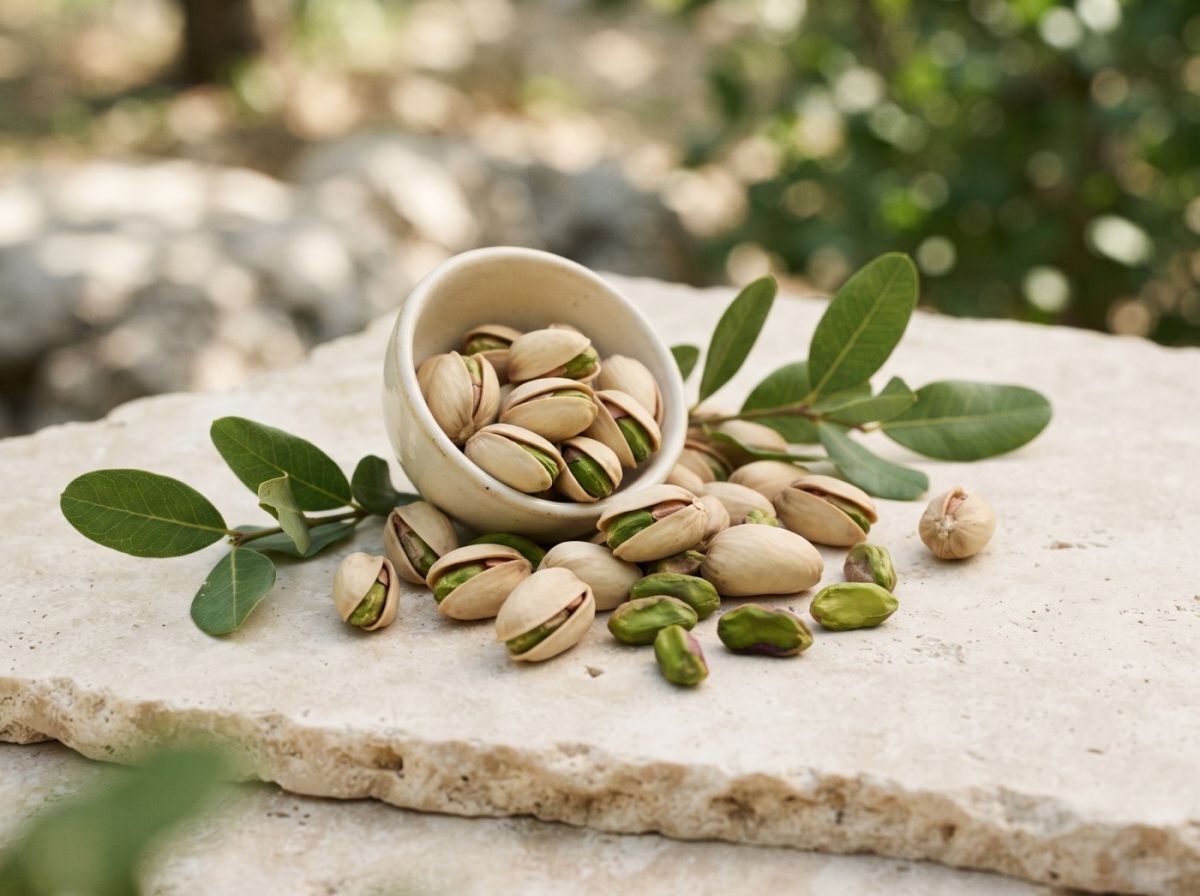
In confectionery, size is secondary; the product will be broken or ground anyway. Dessert producers therefore often prefer medium-sized, darker lots, which gives them a cost advantage.
The proportion of broken kernels is a separate criterion. A high broken ratio means a lower price, but where the product will be ground that is no disadvantage.
What does geographical indication mean?
Antep pistachio holds a registered geographical indication. That registration means only produce grown in a defined region and meeting set characteristics may be sold under the name.
In practice the registration protects the name. Pistachio grown in another region, whatever its quality, cannot be marketed under it.
For a buyer this means the origin is verifiable. But geographical indication alone is not a guarantee of quality; lots of differing quality can be produced within the same region.
How should pistachios be stored?
Pistachio is a nut high in oil, and that oil oxidises over time. Oxidised pistachio tastes bitter, and that taste cannot be reversed.
Three factors accelerate oxidation: heat, light and oxygen. Correct storage therefore means an airtight container in a cool, dark place.
Shelled kernels deteriorate faster than nuts in shell, because the shell is a natural barrier. For long storage, freezing shelled kernels gives the best result; they keep their freshness for up to a year in a freezer with no loss of texture.
What does roasting do to pistachio?
Roasting lowers the moisture inside the nut and creates new aroma compounds through the Maillard reaction. The result is a crisper texture and a more pronounced flavour.
Roasting is not suitable for every use, however. Confectionery prefers raw pistachio; the product will be baked anyway, and pre-roasted nuts turn bitter under a second heat. This is why raw pistachio is used in baklava and şöbiyet.
Roasting temperature is decisive too. Roasting briefly in the 140-150 °C range develops the aroma; at higher temperatures the oil begins to oxidise and the flavour turns sharp.
Roasted pistachio has a shorter shelf life than raw, because roasting opens the cell structure and exposes the oil more to oxygen. Roasted product should therefore be bought in small quantities.
What should you check when buying pistachios?
- Smell: fresh pistachio smells faintly sweet; a sharp or paint-like note indicates oxidation.
- Firmness: the kernel should feel firm under a finger; a softened kernel has drawn moisture.
- Skin colour: a purple-red tone in the thin skin is natural and varies by variety.
- Broken and empty kernels: the debris collecting at the bottom of the pack is informative.
- Packing date: for nuts, the production date tells you more than the expiry date.
The most reliable method when buying pistachios is to taste one. A single bitter kernel indicates the whole lot has begun to oxidise.