Coeliac disease is an autoimmune condition that develops in response to gluten, the protein found in wheat, barley and rye. Behind the sentence "I can't eat gluten" there is usually this diagnosis, and it has nothing to do with preference.
What actually happens in the body?
Gluten is not fully broken down during digestion; peptide fragments called gliadin remain.
In genetically predisposed people the immune system reads those fragments as a threat and mounts a response.
That response targets the inner surface of the small intestine. The finger-like projections on that surface, called villi, gradually flatten.
Villi are the structures that expand the absorptive surface. When they flatten, the absorptive area shrinks and nutrients are not taken up adequately.
This is why coeliac disease is a nutritional problem, not only a digestive one. Deficiencies of iron, folate, B12, calcium and vitamin D are common.
Why is the symptom picture so varied?
Because malabsorption can affect every system in the body.
Digestive symptoms are the best known: bloating, diarrhoea or constipation, abdominal pain, gas.
But a significant share of patients have no digestive symptoms at all. Instead there is fatigue, anaemia, reduced bone density, mouth ulcers or joint pain.
In children, growth delay and delayed puberty come to the fore.
Skin signs are possible too. An itchy rash called dermatitis herpetiformis is the cutaneous expression of coeliac disease.
That variety of presentations is the main reason diagnosis is often late.
How is it diagnosed?
The order matters, and diagnosis can become impossible when it is disturbed.
The first step is a blood test measuring tissue transglutaminase antibodies.
The second step is usually an endoscopic biopsy. A sample from the small intestine is examined for villous structure.
The critical point is this: both tests must be done while the person is eating gluten. Testing someone who has already gone gluten-free produces false negatives.
This is why switching to a gluten-free diet on the basis of "I tried it and felt better" complicates diagnosis. Where there is suspicion, a doctor comes first.
Genetic testing is used in some situations but does not establish a diagnosis on its own; the genes concerned are common in the population.
What is the treatment?
The only treatment is a lifelong gluten-free diet. There is no drug therapy.
Once gluten is removed the immune response stops and the villi recover over time. That recovery takes months in children and one to two years in adults.
Partial adherence does not work. Even small amounts of gluten restart the immune response.
The threshold is quite low. Even 10 to 50 milligrams a day has been shown to sustain intestinal damage in some patients — a quantity at the level of a bread crumb.
Feeling no symptoms does not mean being safe. In silent coeliac disease the damage continues without symptoms.
Which grains are a problem?
Wheat, barley and rye are the primary sources. All wheat varieties are included: einkorn, emmer, kamut, durum.
Bulgur, semolina, couscous and some starch-based products also come from wheat.
Oats are a separate matter. Oats themselves contain no gluten, but they mix with wheat in the field, in transport and in milling. Certified gluten-free oats are considered safe.
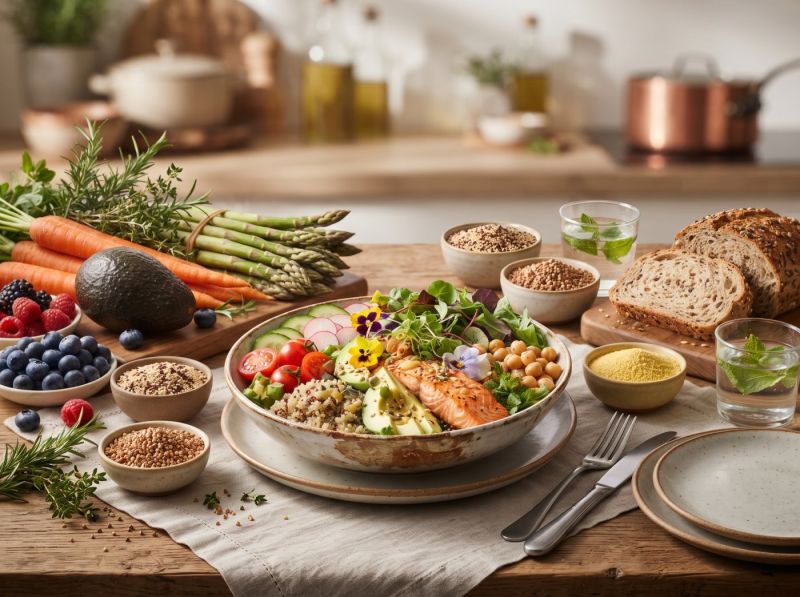
Rice, corn, buckwheat, quinoa, millet, teff, chickpeas and lentils are naturally gluten-free.
Unexpected sources need attention: soy sauce, some soup bases, ready-made sauces, beer, and the fillers in some medicines.
| Source | Status | Note |
|---|---|---|
| Wheat, barley, rye | Contains | All derivatives included |
| Oats | Contamination risk | Certified product is safe |
| Rice, corn, buckwheat | Does not contain | Naturally gluten-free |
| Soy sauce | Usually contains | Wheat-based fermentation |
| Malt extract | Contains | Produced from barley |
Why does cross-contamination matter so much?
Because a gluten-free product loses its safety the moment it touches a gluten-bearing surface.
A shared toaster is the most common source. Crumbs collecting in the slot transfer to the next slice.
A shared board and knife are the second. Gluten-free food should not be prepared on a board where bread is cut.
Shared frying oil is the third. Gluten-free potatoes cooked in oil that has fried breaded product are no longer gluten-free.
Flour dust can hang in the air for hours. Where wheat flour is used in the same kitchen, gluten-free preparation needs a separate time or a separate area.
A knife dipped into a jar is a source too; using a spoon in shared jars is a simple answer.
What should you look for on a label?
The term "gluten-free" is regulated. Products carrying it must contain less than 20 parts per million of gluten.
The crossed grain symbol shows the product has passed the audit of a certification body. That symbol means regular testing.
"May contain gluten" or "wheat is processed in the same facility" is a voluntary warning. For someone with coeliac disease that product is not considered safe.
Allergens are printed in bold in the ingredients list. Wheat, barley, rye and oats are among the substances that must be declared there.
Formulations change. A product that was safe before needs its label rechecked at every purchase.
How is a practical kitchen arrangement built?
A separate shelf is the simplest start. Gluten-free products belong on the upper shelf; anything on a lower shelf collects crumbs from above.
Separate equipment is the second step. Toaster, cutting board, bread knife and colander should be separate. Colour-coded handles prevent mix-ups.
Preparation order is the third. Gluten-free dishes are prepared first, gluten-containing ones afterwards.
Labelling shared containers is the fourth. Keeping separate butter, jam and sauce containers is the safest answer.
Cleaning is the last step. Surfaces should be wiped with disposable paper rather than a cloth; a damp cloth spreads crumbs.
What should be asked when eating out?
Four questions cover most of it.
First: is this dish prepared in a gluten-free area? Gluten-free ingredients are not enough on their own.
Second: are fried items cooked in shared oil? That question surfaces information the menu never carries.
Third: does the sauce contain flour or malt? Sauces are the most common source of hidden gluten.
Fourth: are separate pans and plates used? Pasta water alone is a source of contamination.
On the business side, the answers to these questions should be prepared in advance and known by the staff. "I think it's gluten-free" is not an acceptable answer for someone with coeliac disease.