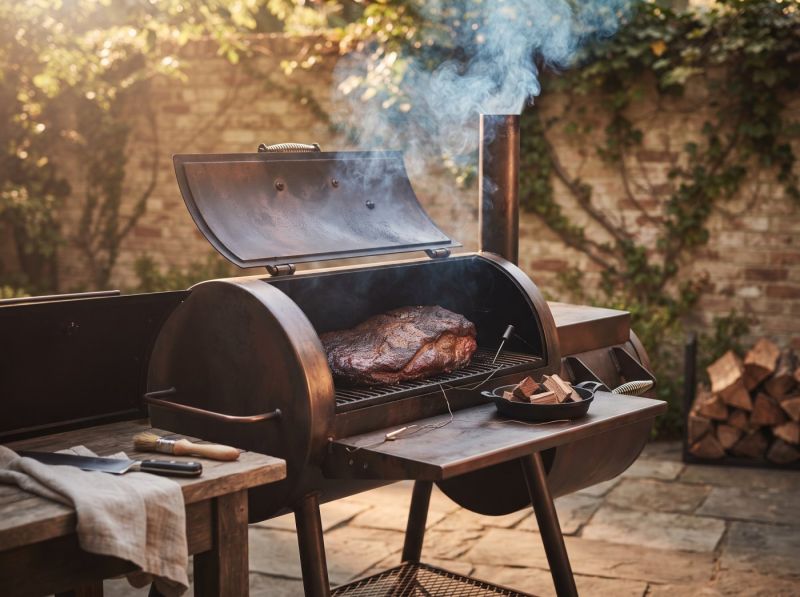
Describing smoking as "holding meat in smoke" captures the most visible but least decisive part of the process. By the time the smoke stage arrives, most of the work is already done. The steps that determine the outcome happen before it.
How many stages does smoking have?
Smoking consists of three mandatory stages and one optional: brining, drying, smoking and resting. The order cannot be changed; each stage prepares the precondition for the next.
Brining seasons the meat and regulates its moisture. Drying creates the surface smoke can adhere to. Smoking supplies aroma and colour. Resting lets that aroma distribute evenly through the meat.
When a stage is skipped, the error becomes visible in the following stage, which makes the source of the problem hard to locate. When smoke will not take on a product, the fault usually lies not in the smoking but in the drying.
What does brining do?
Brining means holding the meat in a salt solution or coating it in dry salt. It does three jobs.
The first is seasoning. Salt advances into the depth of the meat by diffusion; salt scattered on the surface does not have the same effect.
The second is water management. Salt first draws water from the surface, then re-enters the meat in dissolved form. During this process the muscle proteins partly dissolve and their capacity to hold water increases. Brined meat emerges less dried out from the long heat of smoking.
The third is safety. By lowering water activity, salt slows bacterial growth. In methods applying low temperatures over long periods this protection is essential.
Duration depends on thickness; the general measure is roughly one day per centimetre.
Why can the drying stage not be skipped?
Meat coming out of brine is rinsed and left in a cool, ventilated place for its surface to dry. During that wait a thin, tacky, matte layer forms on the surface, called the pellicle.
The pellicle is the surface smoke adheres to. On a wet surface, smoke particles mix with condensing water and run off, leaving neither colour nor aroma. On a dry, slightly tacky surface the particles cling and accumulate.
This stage usually takes two to four hours and can be done uncovered in a refrigerator. Rushed, it leaves the product pale after smoking, with a weak smoke aroma.
What separates cold smoking from hot smoking?
| Criterion | Cold smoking | Hot smoking |
|---|---|---|
| Temperature | 20-30 °C | 60-90 °C |
| Duration | 12 hours to days | 2-6 hours |
| Does the meat cook? | No | Yes |
| Texture | Firm, dense | Soft, juicy |
| Preparation | Long brine essential | Short brine sufficient |
| Afterwards | Needs cooking or long curing | Eaten directly |
The third row is the critical one. In cold smoking the meat does not cook; it only takes on aroma and dries. Cold-smoked products are therefore either cooked afterwards or made safe through a long curing process. Carried out without control, this creates a serious food safety risk.
In hot smoking the meat cooks during the smoke stage. The product is ready to eat when it leaves the chamber.
How does industrial production differ from home?
The fundamental difference is the level of control. In industrial smoking chambers, temperature, humidity and smoke density are each set separately and recorded throughout the process.
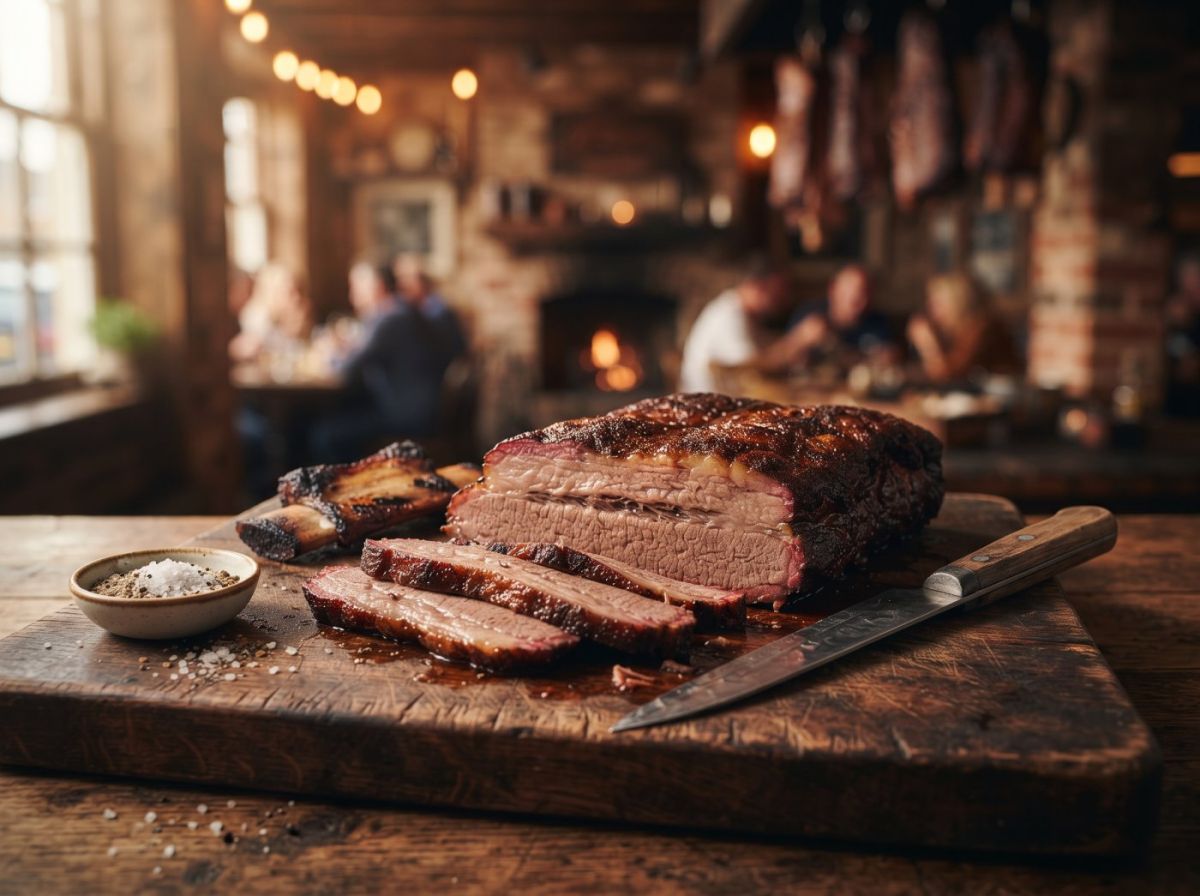
Humidity control is particularly decisive. When the chamber is too dry the surface of the meat hardens quickly and the moisture inside cannot escape; this is called case hardening, and it leaves the interior raw while the exterior over-dries. That variable is difficult to manage at home.
The second difference is traceability. Temperature and time are logged for every batch, so the conditions applied can be reviewed retrospectively if a problem arises.
The third is the consistency that comes with scale. When the same recipe runs in the same chamber under the same parameters, variation between products falls to a minimum.
What does smoke contribute?
The smoke produced when wood burns contains hundreds of compounds. Three of them matter for the product.
Phenols supply aroma and colour, and act as antioxidants that delay fat turning rancid. Carbonyl compounds react with surface proteins to create the brown colour. Organic acids lower the pH at the surface and inhibit bacterial growth.
Together these three explain why smoke delivers both flavour and preservation. Smoking has been used throughout history as a preservation method; the aroma is a by-product of it.
Why is resting necessary?
In a product leaving the chamber, smoke aroma is concentrated at the surface while the interior has not yet reached the same intensity. Rested for several hours, preferably a day, the aroma compounds distribute through the meat.
An unrested smoked product tastes sharp on the outside and flat within. The same product tasted a day later is noticeably more balanced.
Resting is done in the refrigerator, loosely covered. Wrapping tightly traps surface moisture and softens the pellicle.
How is smoked product stored?
Smoking extends shelf life but does not make it unlimited. Hot-smoked products behave like cooked meat: a few days in the refrigerator, or the period stated on the label in vacuum packaging.
The pellicle and smoke layer at the surface form a barrier, and the product stays protected as long as that barrier is intact. Slicing removes it, opening the cut face to air and accelerating spoilage. Keeping a piece whole therefore always gives longer life than keeping it sliced.
Freezing is suitable too, though smoke aroma weakens over time. In a smoked product frozen for longer than three months the aroma recedes noticeably, while the texture is largely preserved.
What should you watch when trying it at home?
Hot smoking is the safest option under home conditions, because the product cooks during the process and safety can be verified by measuring internal temperature. Beef and turkey products should reach 72 °C at the centre.
Cold smoking should not be attempted at home. It is a process in which the meat does not cook, lasting hours or even days, with the temperature sitting in the range suited to bacterial growth; applied without control it carries serious risk.
Any wood used must be untreated, unpainted and free of resin. Resinous trees such as pine impart a bitter taste and leave undesirable compounds in the product.