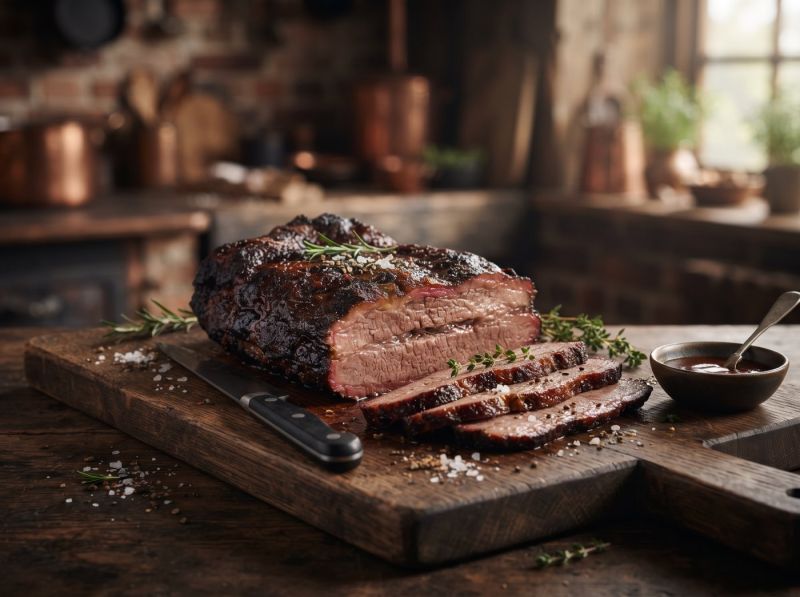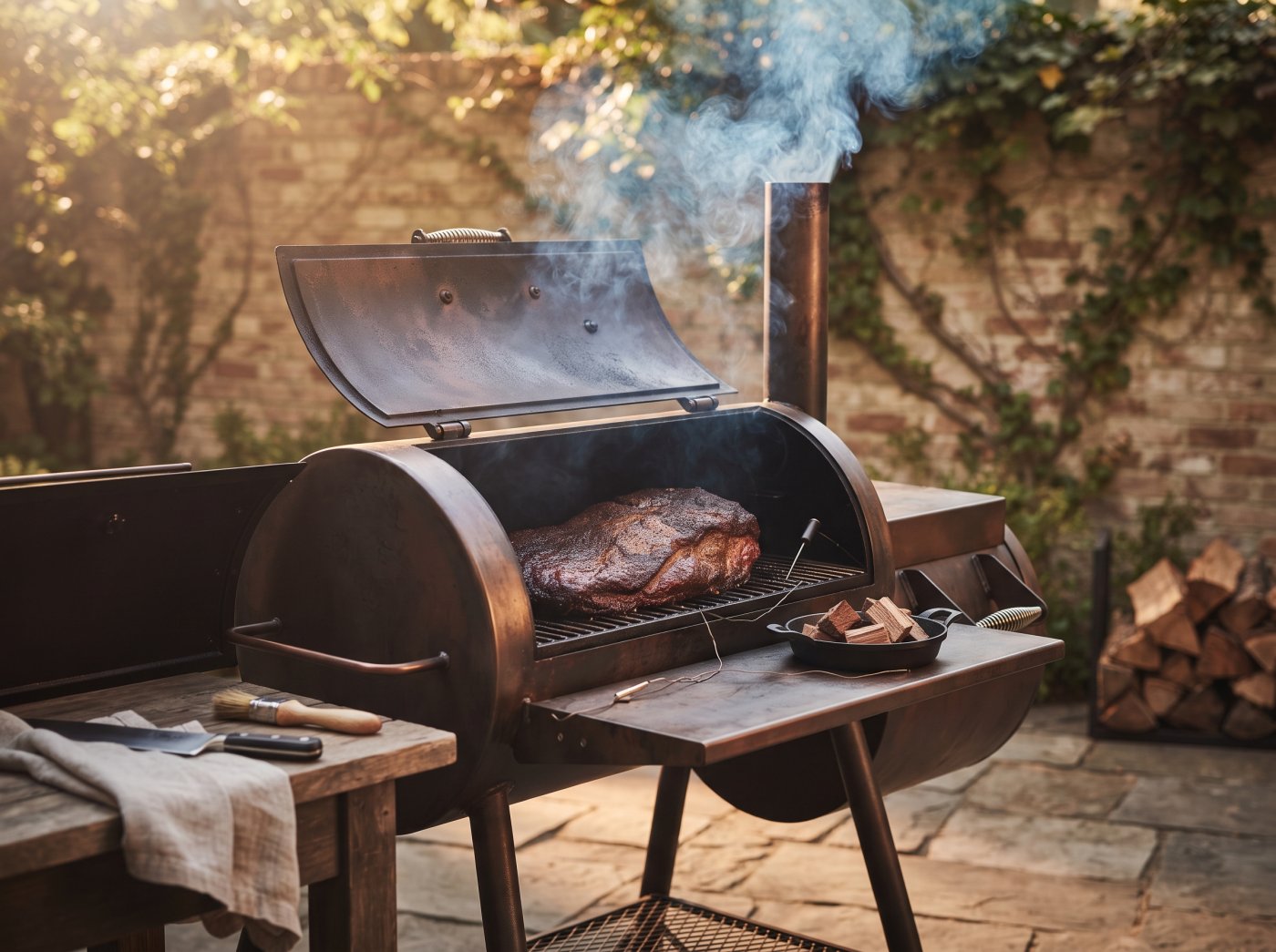
The first person to notice that a piece of meat hung above a fire kept for days probably did not regard it as a discovery. Yet that observation was the beginning of one of the oldest and most widespread methods of preserving food.
What exactly is smoking?
Smoking is the controlled exposure of food to the smoke produced by burning wood. Three things happen simultaneously during the process: the food dries, protective compounds accumulate on its surface, and it takes up the aroma compounds of the smoke.
Of those three, only the last is prominent today. The modern consumer buys a smoked product for its taste; the method, however, was pursuing durability rather than flavour.
The Turkish word "füme" comes from the French "fumé", meaning smoked. "Tütsüleme" is the Turkish term for the same process; the two are used interchangeably.
How does smoke preserve food?
Smoke's preservative effect arises from three separate mechanisms working together.
The first is drying. During smoking, moisture leaves the surface of the food. As water activity falls, the environment ceases to be habitable for bacteria, yeast and mould.
The second is chemical. Phenolic compounds in smoke are antimicrobial and form a protective layer at the surface. The same compounds also act as antioxidants and delay fat turning rancid.
The third is acidity. Organic acids in smoke lower the pH at the surface, and many spoilage bacteria cannot multiply at low pH.
None of these three is sufficient alone. This is why smoking is almost always applied together with salting; salt protects the interior while smoke protects the surface.
What types of smoking are there?
Temperature is the fundamental variable dividing smoking, and that division determines what the product is.
| Type | Temperature | Does it cook? | Typical examples |
|---|---|---|---|
| Cold smoking | 20-30 °C | No | Salmon, some salamis, cured meats |
| Warm smoking | 30-50 °C | Partly | Certain sausages |
| Hot smoking | 60-90 °C | Yes | Smoked roasts, smoked breast, frankfurters |
In cold smoking the product only takes on aroma and dries; safety comes from a long brine and curing period. In hot smoking the product cooks in the chamber and is ready to eat when it comes out.
There is a fourth method: liquid smoke. Here smoke is condensed into liquid form and sprayed onto or mixed into the product. It provides aroma but not the drying and surface protection that smoke delivers.
Which foods are smoked?
Meat and fish are the most common, but the method is used far more widely. Cheese, salt, peppers, tea, garlic and even water can be smoked.
What they share is a surface capable of holding smoke. Porous, slightly moist surfaces take smoke well; glossy, oily surfaces do not.
Smoking cheese requires a separate technique because cheese melts at low temperature. Only cold smoking is applied to cheese, and for short periods.
What place does smoking hold in Turkish cooking?
In Anatolia smoking never became as widespread as drying and salting; the climate favoured drying. Pastırma is the typical example: it is salted, coated in çemen and dried, not smoked.
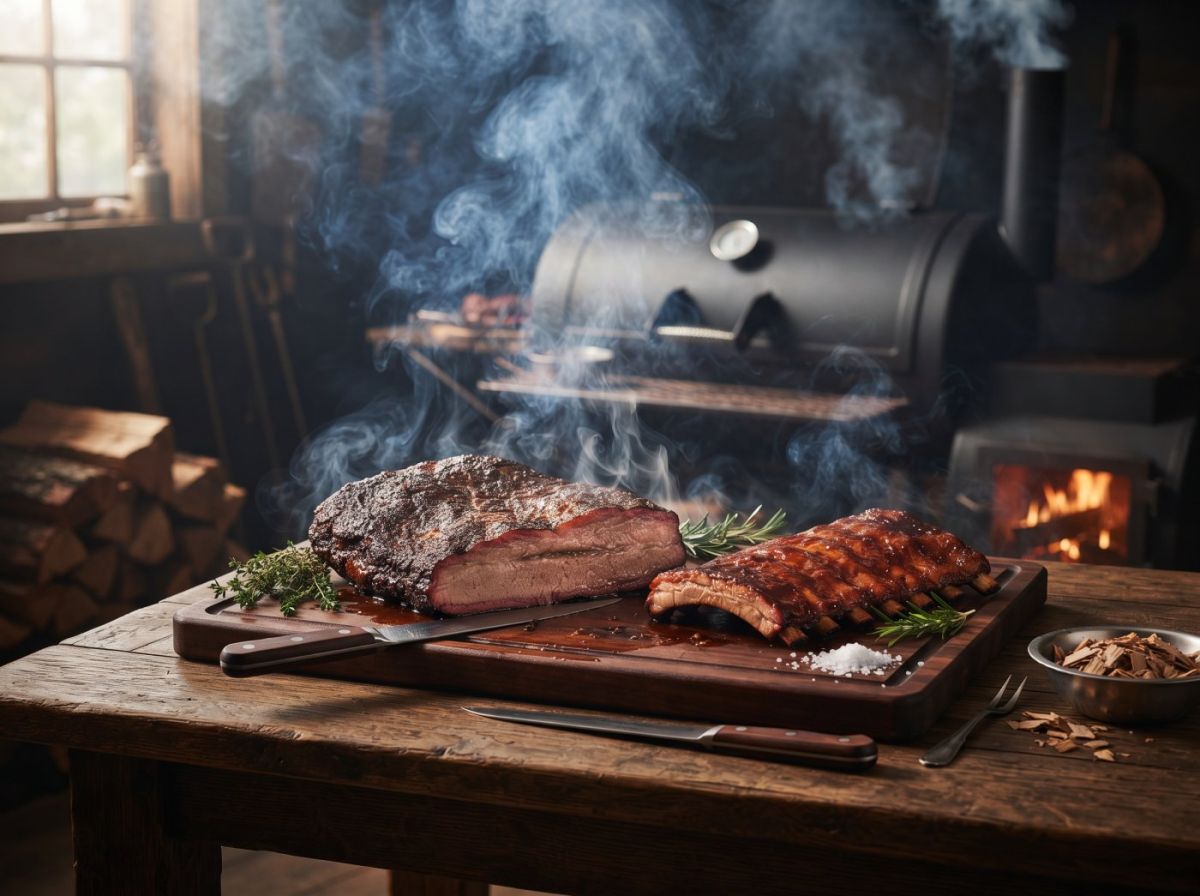
In the Black Sea region, by contrast, the smoking tradition is strong. Because the humid climate makes drying difficult, smoke took its place.
In the modern Turkish delicatessen sector smoking is a common method. In producing roasts, ham, salami and sausage, smoke is used for both aroma and shelf life. This is an application formed by adapting European charcuterie techniques rather than a traditional inheritance.
Are smoked products healthy?
This question calls for a balanced answer. Some compounds formed during smoking, particularly at high temperature and in direct contact with smoke, can produce undesirable substances.
In modern industrial production this risk is reduced three ways: filtering the smoke, generating smoke indirectly, and keeping temperature under control. Food regulations set upper limits for these compounds, and production is carried out to those limits.
For the consumer, the reasonable approach is to eat smoked products in moderation as part of a balanced diet. The same principle applies to grilling and barbecuing over direct flame.
Does liquid smoke replace real smoke?
Partly, but only in terms of aroma. Liquid smoke is obtained by condensing genuine wood smoke in water and stripping out unwanted components such as tar. It is therefore a naturally derived product rather than a synthetic one.
In aroma the result is convincing and highly consistent; the same intensity is achieved in every batch. This is why it is favoured in industrial production.
What it does not deliver is preservation. In real smoking the product dries for hours and a physical barrier forms at its surface; with liquid smoke that process does not occur. In products using liquid smoke, shelf life is therefore achieved through heat treatment and packaging.
There is a textural difference as well. The surface of a genuinely smoked product is slightly dried and firmed; a product treated with liquid smoke does not carry that surface character.
How do you choose a smoked product?
The first thing to look for on a label is whether the smoking was done with real smoke or with liquid smoke. Both are legal, but they are different products.
The second is the meat content. In processed meat products, those with a higher meat content generally give better texture and taste.
Visually, look at how natural the surface colour is. In genuine smoking the colour is uneven; surfaces more exposed to the smoke darken. A product with an identical shade on every surface may have had colouring added.
Can it be done at home?
It can, but the choice of method is critical. Hot smoking can be applied safely at home; the product cooks throughout the process and can be verified by measuring internal temperature.
Cold smoking is not suited to home conditions. It is a process in which the meat does not cook, lasting hours or even days, with the temperature sitting in the range favourable to bacterial growth. Applied without knowledge of controlled brining and curing, it carries serious risk.
Any wood used must be untreated hardwood. Painted, varnished or resinous wood both spoils the taste and is unsafe.