


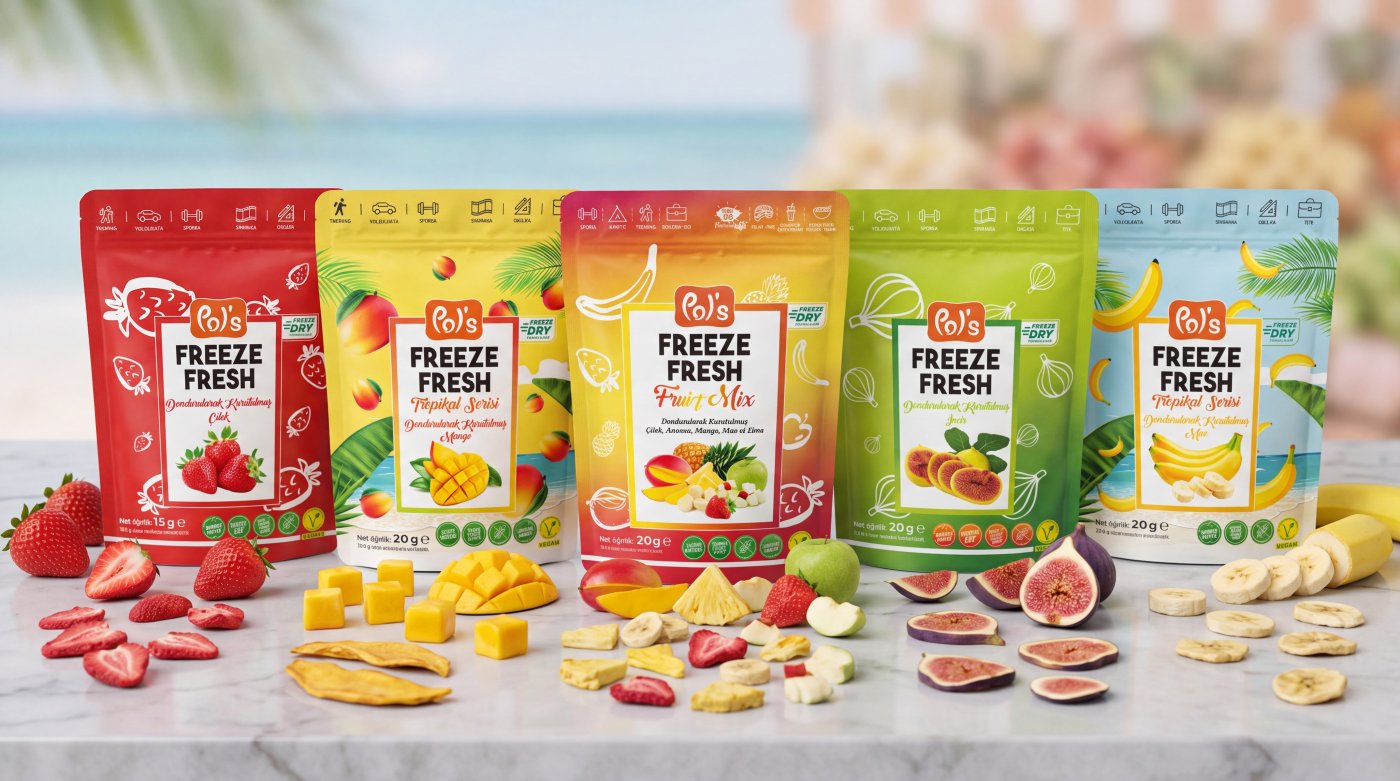
When a business chooses suppliers it follows one of two paths. Either it commits to a few brands and buys their whole range, or it goes to whichever brand it rates highest in each product group.
Both work. But they produce different outcomes at different business sizes, and that difference is usually noticed late.
What do the two approaches look like in practice?
In brand-based supply, the business buys from the portfolio of one brand or a small number of brands. Cheese, sucuk and frozen dough all come from the same place.
In range-based supply, each product group is judged separately. Cheese from one brand, potatoes from another, dessert from a third.
The difference is not a quality preference but a management one. The first reduces the number of relationships; the second looks for the best in each line.
What does brand-based supply actually deliver?
The biggest gain is order management. A kitchen working with one supplier places one order a week and receives one delivery. The same kitchen with three suppliers manages three orders, three deliveries and three invoices.
The second is volume discount. As the total spend with one supplier rises, the unit price falls. Spread purchasing never reaches that threshold.
The third is speed of resolution. A damaged pallet or a missing line closes faster with a single counterparty. In a three-supplier structure, even working out who sent which line takes time.
The fourth is payment terms. A business buying regularly and in volume can negotiate credit; one buying small and scattered volumes usually pays up front.
When is range-based supply the better call?
If the menu has a defining product, range-based supply is unavoidable.
For a pizzeria, mozzarella is not a line item — it is the product. That cheese's melting behaviour defines the menu. The same business will not apply equal care to who supplies its napkins.
The second case is single-source risk. In a kitchen tied to one supplier, that supplier's stock problem stops the menu outright. With two sources the risk is shared.
The third is price pressure. A sole supplier who knows there is no alternative negotiates increases more comfortably. Scanning the market once a year preserves that balance.
| Criterion | Brand-based | Range-based |
|---|---|---|
| Ordering burden | Low | High |
| Unit price | Falls with volume discount | Varies by line |
| Product fit | Average | Best in each line |
| Supply risk | Concentrated | Distributed |
| Negotiating power | From volume | From alternatives |
| Suitable scale | Small and medium | Medium and large |
How does scale change the decision?
For a business under a hundred covers a day, brand-based supply is almost always right. Order management already sits with the head chef, and adding suppliers takes directly from their time.
Between one hundred and three hundred covers, a hybrid structure comes forward: the three or four defining lines on the menu are chosen separately, the rest comes from one supplier.
Above three hundred covers, purchasing becomes a job of its own. At that scale, line-by-line selection is both feasible and makes a measurable difference to margin.
Building the hybrid model
Split the menu into two lists. The first holds the lines the customer notices: the main product, cheese, meat, dessert. The second holds the ones they do not: oil, flour, spices, packaging.
Manage the first list range-based. A brand change in these lines shows up on the plate.
Manage the second list brand-based. Buying these from one supplier creates volume and lowers the ordering burden.
Review the list once a year. As the menu changes, a line can move from the first list to the second.
Which questions to ask a supplier
The price list is not the first question. Ask first about delivery frequency and minimum order value; those affect daily operation more than price does.
The second question is cold chain documentation. For frozen and delicatessen products, ask for a record showing transport temperature was logged.
The third is stock depth. How many days of stock a supplier holds on a line determines whether your menu survives seasonal swings.
The fourth is the returns policy. How faulty or damaged goods are handled has to be written into the contract; a verbal understanding falls apart at the first problem.
What is the hidden cost of switching suppliers?
Price comparisons usually look only at unit price. But the switch itself is a cost line.
The first item is recipe adaptation. A new cheese melts differently, new potatoes need a different time, a new flour takes on water differently. Settling that takes the kitchen two to four weeks, and waste rises during that period.
The second is training. Until staff learn the new product's cooking times, both speed and consistency drop.
The third is stock turnover. Remaining quantities of the old product have to be used before the new one arrives; running both in parallel makes service inconsistent.
Add those three together and a five percent unit price advantage usually fails to pay for itself in the first quarter. A switch makes sense when the price gap exceeds fifteen percent, or when a quality problem becomes persistent.
Which clauses does a supply contract need?
A verbal understanding falls apart at the first disagreement. These four clauses should be written down.
Price validity period. "Prices valid until further notice" is not a commitment; specify a window of at least ninety days and a notice period for increases.
Delivery window. Give a day and an hour range; a term like "morning" cannot be used to plan a kitchen.
Handling of missing and damaged lines. Write down how a problem is reported, how quickly it is replaced and how it appears on the invoice.
Notification of product changes. When a supplier changes a line's formulation or origin, they should be obliged to give advance notice; silent changes are the most common cause of inconsistency on a menu.
