


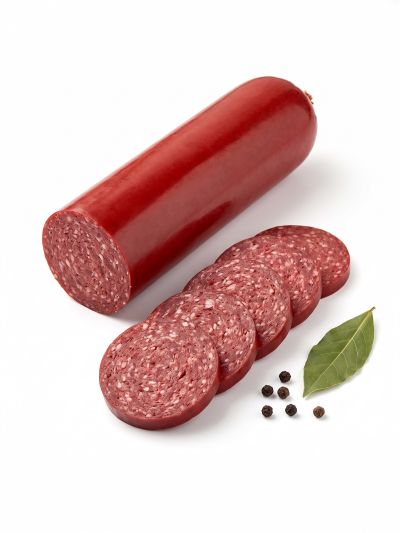
Spanish Style Salami 1600 g (Log)
The Spanish and Hungarian salami traditions use the same spice — paprika — in different ways. In the Hungarian tradition the pepper takes a sweetish, colouring role, while the Spanish tradition favours more concentrated and smoked varieties; the result is a darker cut and a deeper flavour.
That distinction makes it worthwhile to place the two side by side on one board. Visually the difference between pale orange and deep red is legible, and in taste one reads rounded while the other reads deep. In tapas and aperitif presentation the Spanish salami finds the components of its own tradition beside olives and cheese.
Shelf life and storage conditions
- Shelf Life
- Production and best-before dates are printed on the packaging.
- Storage Conditions
- Store between 0 °C and +4 °C with the cold chain maintained. After opening, keep refrigerated in a sealed container.
Please contact us for pricing. (professional kitchen / wholesale)
Why Choose This Product?
- The same spice used differently: the Hungarian tradition sweetish, the Spanish deeper.
- The cut is markedly darker than Hungarian salami, so the two are distinguishable side by side.
- In tapas and aperitif service it finds the components of its own tradition beside olives and cheese.
- At 1600 g it is one of the largest logs in the salami group.
Where To Use It
- Tapas and aperitif presentation
- Charcuterie boards and wine service
- Sandwich and baguette fillings
- Breakfast tables
- Pizza toppings
- Butcher and deli counters
Wholesale Ordering & Storage
Bought alongside the Hungarian salami it presents two traditions on one counter; both share the same shelf conditions and plan into a single delivery. Store between 0 °C and +4 °C with the cold chain maintained. After opening, keep refrigerated in a sealed container.
Frequently Asked Questions
What is the difference between Spanish and Hungarian salami?
Both use paprika, but different varieties. In the Hungarian tradition the pepper is sweetish and colouring; in the Spanish tradition it gives a more concentrated, deeper profile.
Is it the same as chorizo?
Not the same, but close in spice profile. Chorizo is specific to Spain and usually made from pork; this product is made from beef.
What is it served with in tapas?
Olives, hard cheese and bread. Beside a spiced salami, components carrying acid and salt work as a counterweight.
Similar Products
You May Also Like
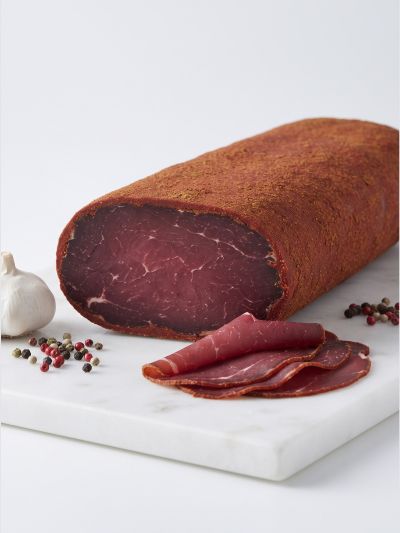
Pastirma production has three stages: salting, drying and coating with cemen. Salt draws water from the meat, drying completes that process, and the cemen — a paste of fenugreek, garlic and paprika —…
The tightest bottleneck in breakfast service is the stove. Eggs, menemen and toasties all call for it at once, and every additional cooking step joins the queue — which means orders waiting on one an…
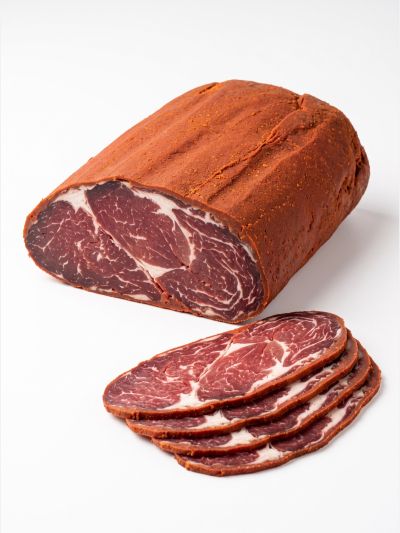
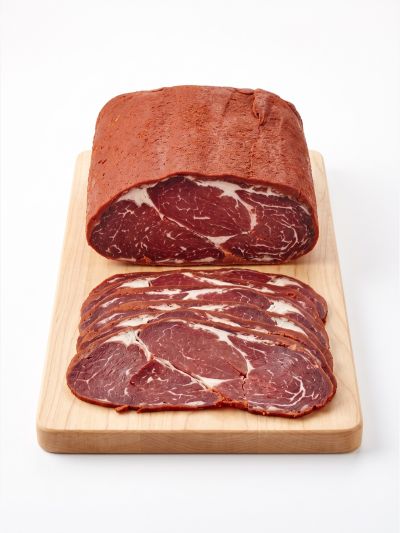
The cut used in pastirma directly determines the grade of the product, and ribeye sits at the top of that classification. The reason is marbling: the fat distributed through the muscle of a ribeye st…
Taken onto a menu fresh, ribs demand a cooking time measured in hours. That means occupied burners, staff supervision and advance planning; a kitchen that misjudges demand either bins the ingredient …