


Standing in front of a butcher counter wondering which piece to buy is not really a question of flavour. The difference between beef cuts is set by how much the animal used that muscle. A hard-working muscle becomes firm and fibrous; a muscle that barely moves stays tender. That single sentence explains the logic behind almost every decision you will make about beef in the kitchen.
How does muscle work change the meat?
Muscle tissue operates inside a sheath of connective tissue. The more an animal uses a muscle, the thicker that connective tissue grows and the more collagen it contains. Collagen is tough when cold, but under long, moist heat it converts to gelatin, giving the meat tenderness and a full mouthfeel. Muscles that work little contain little collagen, so they need no long cooking — in fact, long cooking dries them out.
This gives a simple rule: muscles from the back and loin are cooked fast at high heat, while muscles from the shoulder, leg and chest are cooked slowly at low heat. Anyone who knows this rule can cook a cut they have never heard of.
Where does ribeye come from?
Ribeye is taken from the section of the back that sits over the ribs. The animal barely uses this muscle while walking, so its fibres are fine. What really distinguishes ribeye is the fat distributed between the muscle fibres, known as marbling. During cooking this fat melts and moistens the meat from within.
That structure makes ribeye well suited to the grill and the pan. The time it takes for the surface to brown is roughly the time the interior fat needs to begin melting. Ribeye gains nothing from long cooking; on the contrary, the melted fat runs off and leaves a dry texture behind.
Why is striploin leaner than ribeye?
Striploin runs along the back towards the loin and is the direct continuation of the ribeye. The difference shows up in marbling. Striploin carries fewer fat veins, so its fibres read more clearly and its texture feels firmer. One edge usually carries a strip of fat, and that strip supplies moisture during cooking.
Being leaner makes striploin an unforgiving cut. Once the internal temperature climbs too high, the muscle releases its juices and the meat firms up. Controlling doneness therefore matters more with striploin than with ribeye.
Why do short ribs need long cooking?
The rib section wraps the chest and works constantly with every breath the animal takes. Collagen content is high and the muscle fibres are thick. Cooked quickly over high heat, the result is hard to chew.
Cooked for hours at low temperature, however, the collagen turns to gelatin, the meat softens enough to pull apart with a fork, and it leaves a deep, concentrated beef flavour. Long cooking in an oven, a pressure cooker or a smoking chamber is what this section is actually for.
Which cut suits which method?
| Cut | Fat level | Suitable method | Approximate time |
|---|---|---|---|
| Ribeye | High, marbled | Grill, pan, open fire | 6-10 minutes |
| Striploin | Medium, edge strip | Grill, pan, oven | 8-12 minutes |
| Short rib | High, layered | Low oven, smoking, braising | 3-6 hours |
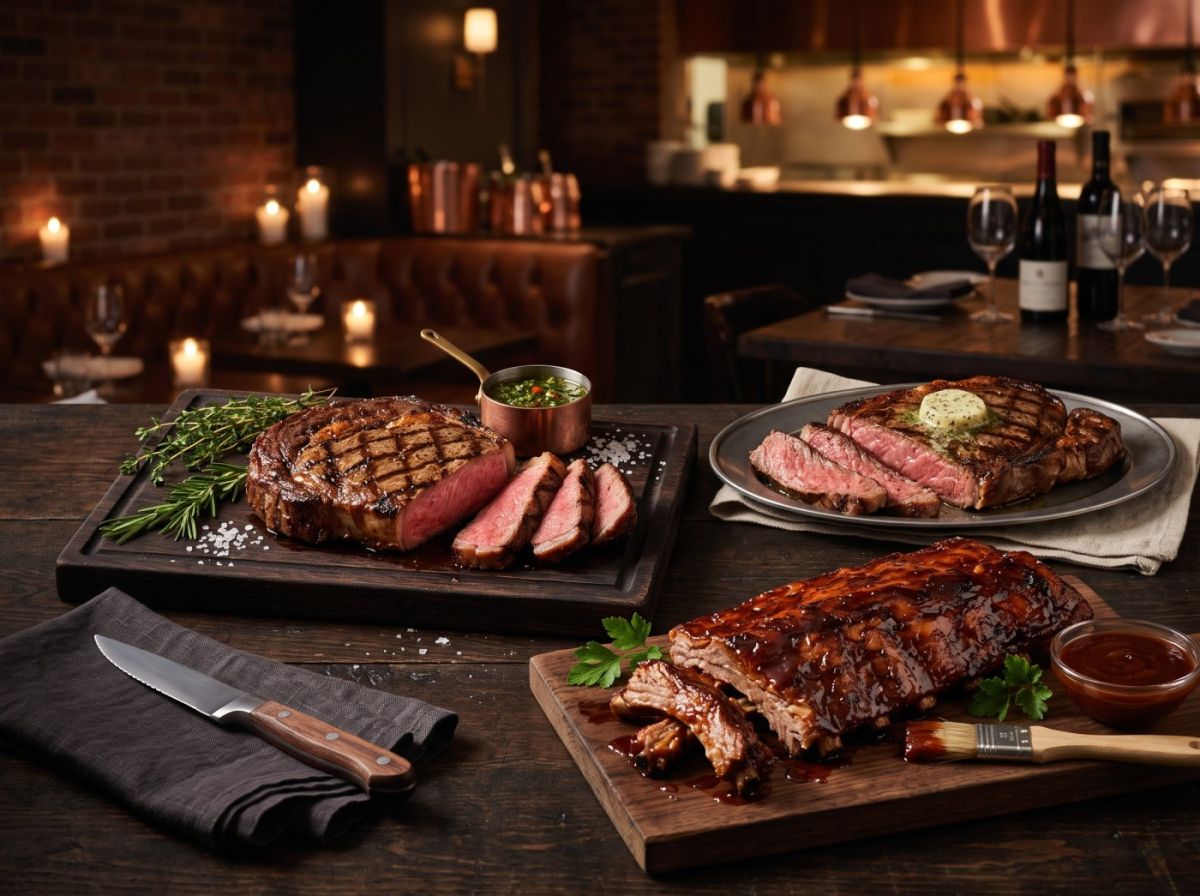
There is no need to memorise the table. Look at how the fat is distributed: if it is scattered in fine threads between the fibres, cook it fast; if it sits in thick layers, cook it slow.
Does the cut still matter in smoked products?
Yes, and it becomes more pronounced. During smoking the meat warms slowly and loses moisture from the surface, and in that process the character of the cut comes forward. Smoked products made from the back stay tender when sliced thin, while those made from the chest and rib section give a denser, more fibrous bite. Knowing which section a smoked product came from therefore tells you how to slice it.
Which section does mince come from?
Mince is not a single cut but a way of preparing meat, and the section used decides the result outright. Mince from a lean leg muscle falls apart in a meatball because there is no fat to bind it. Mince from the shoulder or brisket carries roughly a fifth fat, holds its shape while cooking and stays juicy.
When a butcher says "twenty per cent fat" this is not a mark of low quality but a technical choice. As the fat ratio drops the meatball firms up; as it rises the mixture breaks apart in the pan. The narrow band in the middle gives the most balanced result for both flavour and texture.
The section also affects colour. Mince from lean cuts looks deep red, while fattier cuts give a lighter tone. A lighter colour indicates fat content, not freshness.
Why does meat need to rest?
During cooking the muscle fibres contract and push their moisture towards the centre of the meat. Cut into it straight off the heat and that moisture pools on the plate while the meat itself dries out. A few minutes of rest lets the fibres relax and the moisture redistribute through the tissue.
Resting time depends on thickness. Five minutes is enough for a steak two fingers thick; a large whole roast can rest for up to twenty minutes. Covering the meat loosely keeps the heat in, while wrapping it tightly traps steam and softens the crust.
The same principle applies to slow-cooked cuts. A rib that has cooked for hours, left to sit in its own juices after coming off the heat, lets the gelatin redistribute through the tissue so it does not fall apart when sliced.
What should you look for when buying beef?
- Colour: fresh red meat looks bright; a dulled surface means long exposure to air.
- Fat colour: cream-white fat is normal; fat tending towards yellow indicates an older animal and gives a more intense flavour.
- Fibre direction: seeing which way the fibres run lets you slice across them. Meat cut across the grain always chews more tenderly.
- Thickness: a grilling steak cut thinner than two centimetres cooks through before the outside browns.
Knowing where a piece of meat came from is far more useful than memorising recipes. Once you can read the cut, you can work out which method will succeed and decide for yourself based on what is in front of you.
