


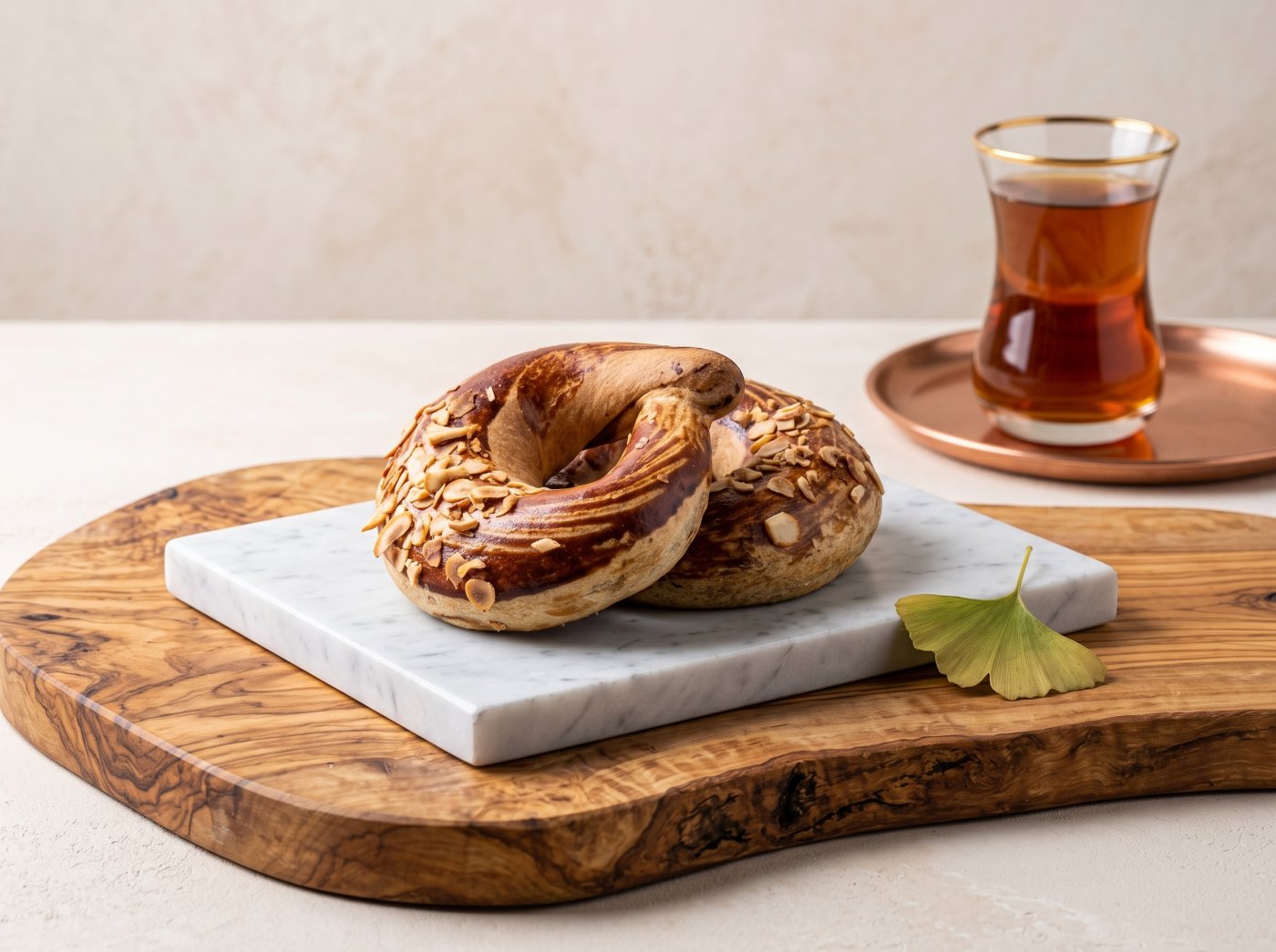
Ay çöreği fills one of the fastest-emptying shelves in a Turkish bakery window in the morning hours. Its crescent shape gave it its name, but what really defines the bun is the long rest its dough requires. Cut that time short and the result looks similar and tastes entirely different.
What separates ay çöreği from other yeasted doughs?
Ay çöreği is an enriched dough. Alongside flour, water and yeast come fat, milk, egg and sugar. Each of these changes how the dough behaves:
- Fat works its way between the gluten strands and loosens the network, producing a soft, tender crumb.
- Milk brings both moisture and lactose; the lactose caramelises in the oven and gives the crust its golden colour.
- Egg binds the dough and, thanks to the fat in the yolk, keeps the bun soft longer.
- Sugar feeds the yeast, but too much slows it down, so the ratio is set carefully.
In bread dough the goal is to build a strong gluten network. In bun dough the goal is to build that network far enough and then soften it with fat. The balance between the two decides how light the bun will be.
Why does the dough rest so long?
In enriched doughs, fat makes the yeast's job harder. As the yeast converts sugar to carbon dioxide it has to work its way past fat molecules, and the rise slows down. This is why ay çöreği dough rests far longer than a plain bread dough.
Long resting brings a second gain: aroma compounds produced by the yeast and by the enzymes in the flour accumulate over that time. A bun given a short rest may rise well but tastes flat. This is precisely what bakers mean when they say the dough "has no smell yet".
In practice the rest happens in two stages. The first applies to the whole dough, the second to the shaped buns individually. Skip the second rest and the buns split at the sides in the oven, because the dough is still expanding inside.
What goes into the filling?
The classic ay çöreği filling is cinnamon, caster sugar and ground walnut. Depending on the region, cocoa, hazelnut, sesame or poppy seed may be added. The critical property of the filling is that it stays dry: a moist filling creates steam between the layers of dough and the bun falls apart as it opens.
If walnuts are used, adding them unroasted is preferable. The oven will roast them anyway, and pre-roasted walnuts can turn bitter under a second heat. Cinnamon behaves the opposite way, losing its aroma under prolonged heat, so it goes in last.
At what temperature is it baked?
The sugar and milk in ay çöreği dough take on colour faster than plain doughs. High heat therefore seals the crust early and leaves the centre underbaked.
| Stage | Temperature | Time | Purpose |
|---|---|---|---|
| Preheat | 190-200 °C | 15 minutes | Even heating of the oven floor |
| Bake | 170-180 °C | 18-24 minutes | Cooking the centre, gradual crust colour |
| Rest | Room temperature | 15 minutes | Letting steam disperse, crumb setting |
The egg wash is the second factor deciding colour. Yolk alone gives a dark, glossy finish; yolk mixed with milk gives a lighter, more matte surface.
What separates ay çöreği from açma?
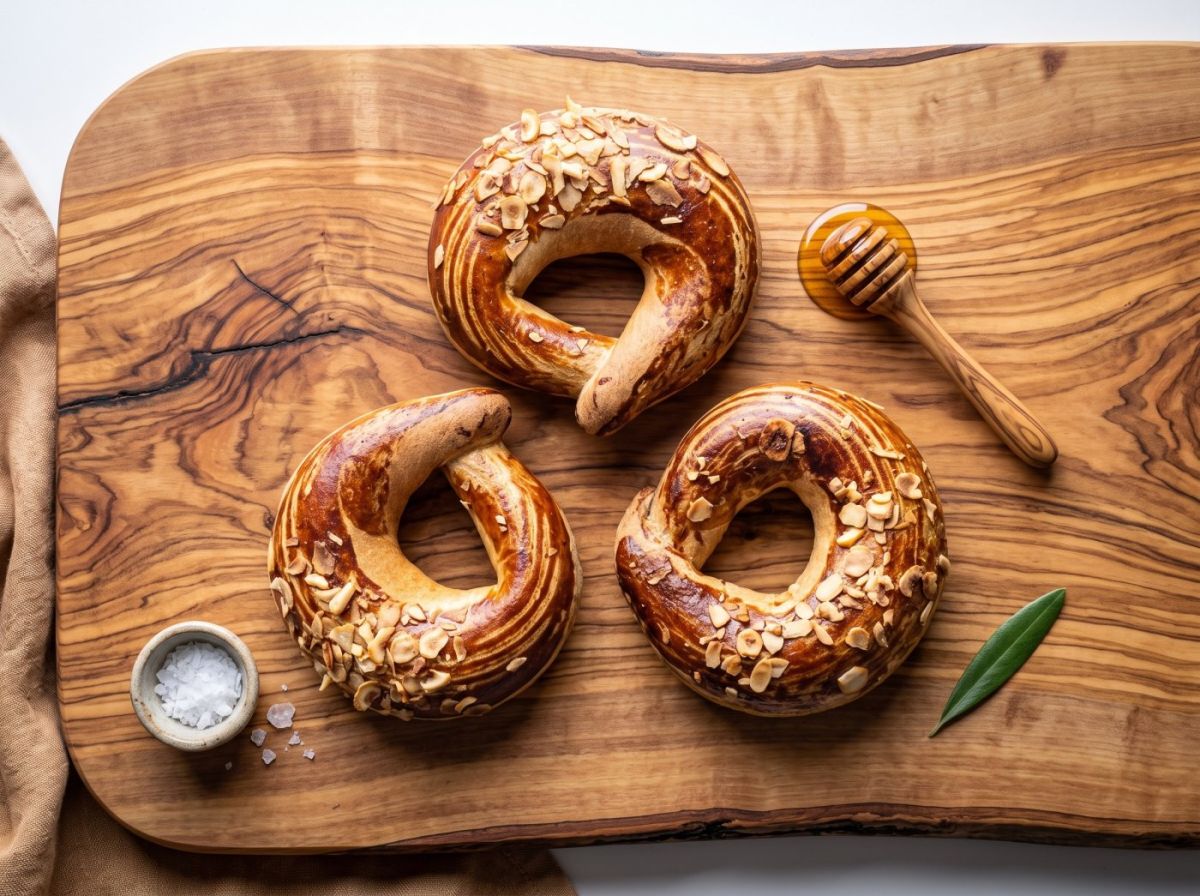
Both are made from enriched yeasted dough and look related from the outside. The distinction shows up in two places. The first is seasoning: açma is a lightly salted dough, usually plain or filled with cheese, while ay çöreği takes a sweet filling in a sweetened dough.
The second is lamination. In açma the dough is rolled out, oiled and folded before shaping, which produces distinct layers once baked. In ay çöreği the dough is generally rolled out in a single sheet, scattered with filling, rolled up and curved into a crescent. The result is a uniform, soft crumb rather than a layered one.
That difference also separates how the two are served. Açma splits open readily for fillings; ay çöreği is eaten whole, alongside tea or milk.
Why does kneading time matter?
Kneading lets the proteins in the flour bind with water and build the gluten network. In an under-kneaded dough that network stays weak; when the yeast produces carbon dioxide the gas escapes and the bun fails to rise properly. In an over-kneaded dough the network stretches and tears, the dough turns sticky and loses shape as it is formed.
Order matters in enriched doughs. Adding fat at the very beginning prevents the gluten network from forming at all. Professional practice therefore kneads flour, water, yeast and sugar first, then works the fat in gradually once the network has developed. This sequence makes it possible to get both a strong structure and a tender crumb.
The practical way to tell the dough is ready is to stretch a small piece between your fingers. If it thins enough to let light through without tearing, it has been kneaded sufficiently.
Is there a difference between frozen and fresh dough?
Ay çöreği prepared as raw frozen dough is blast-frozen immediately after shaping. Freezing halts yeast activity, which then resumes from where it stopped during thawing. The crumb of a correctly thawed frozen bun is almost indistinguishable from one made with fresh dough.
The difference appears at the thawing stage. If the bun thaws slowly at refrigerator temperature and then completes its final rest at room temperature, the result is sound. A bun thawed directly in a warm place rises on the outside while the centre stays cold, and it collapses in the oven.
How should ay çöreği be stored?
Ay çöreği has a high fat content, which makes it relatively resistant to staling. Even so, it is at its best eaten within a day. For the second day, keeping it in an airtight container at room temperature is better than refrigerating it: refrigerator temperature accelerates the recrystallisation of starch and makes the bun feel dry.
For longer storage, freeze it unsliced, then thaw at room temperature and warm it for a few minutes in a low oven. This brings the crumb back close to its first-day softness.
