


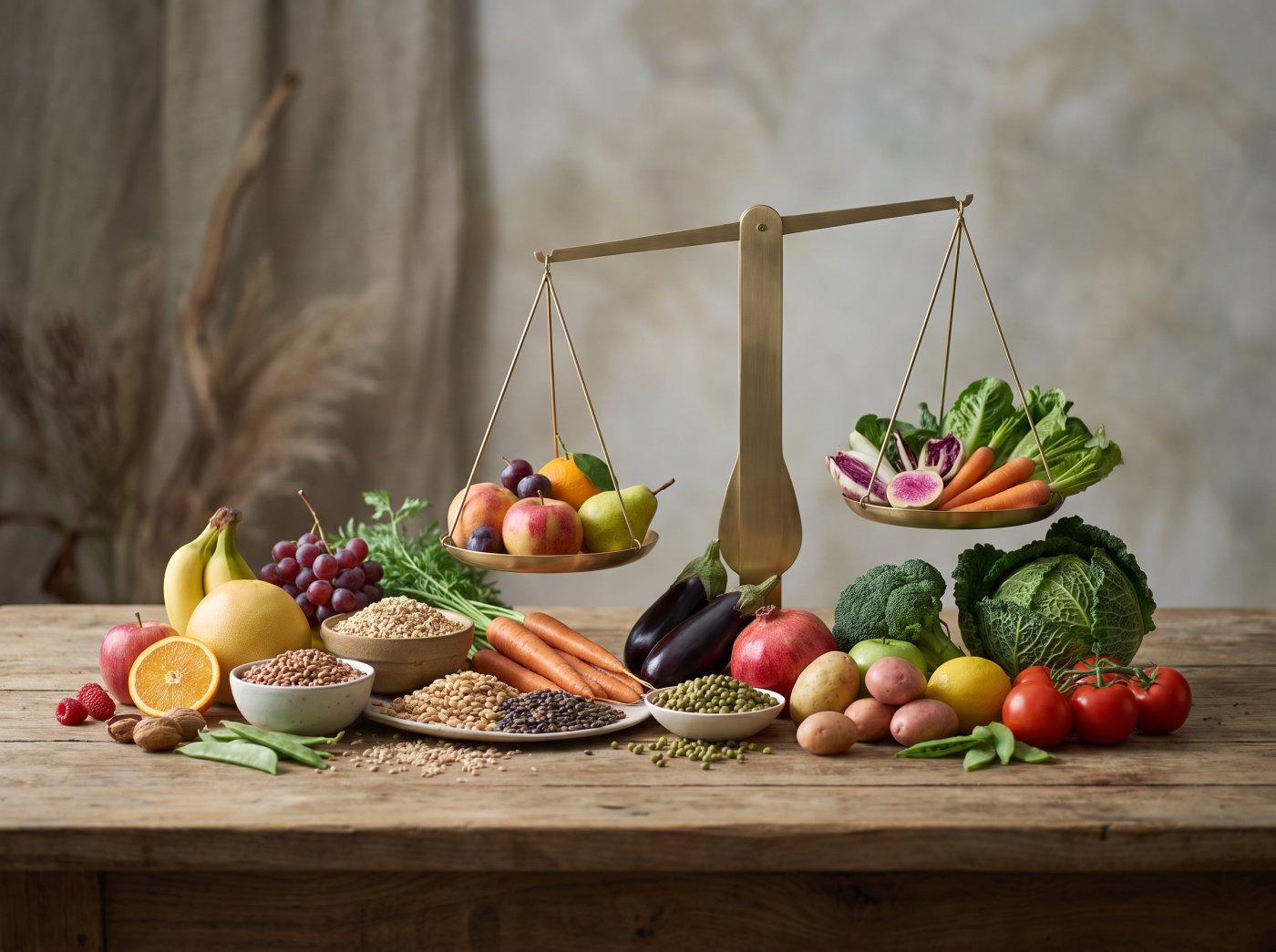
Most advice about eating arrives as a list: eat this, stay away from that. The approach is easy to grasp but fragile in practice. Cutting a food out entirely increases the attention paid to it, and in most people it eventually produces an uncontrolled return.
Why does prohibition fail?
Suppressing a behaviour does not reduce its weight in the mind; it usually increases it. In eating, this appears as constant thinking about the "forbidden" food and, ultimately, consuming more of it than usual.
The second problem is social. Eating is not only an individual act; tables are shared, invitations are accepted, holidays are spent together. A rigid list creates a point of conflict in all these settings and forces a choice between the social occasion and the plan.
The third is a nutritional misunderstanding. No single food, on its own, confers health or destroys it. What matters is that food's share of the overall pattern of eating.
How are portions measured?
Kitchen scales are the most accurate method, but they are not available at every meal. The approach that works in daily life is using the hand itself as a unit. Because hand size is proportional to body size, the method individualises itself.
| Food group | Measure | Per meal |
|---|---|---|
| Protein (meat, poultry, fish) | Size and thickness of the palm | 1 palm |
| Grains, pasta, rice | Fist | 1 fist |
| Vegetables | Two cupped hands | 2 handfuls |
| Fat (olive oil, butter) | First joint of the thumb | 1-2 joints |
| Nuts | What fits in a cupped palm | Half a handful |
These are starting points rather than exact values. The aim is not to count grams but to notice when a portion has grown.
How is a plate built?
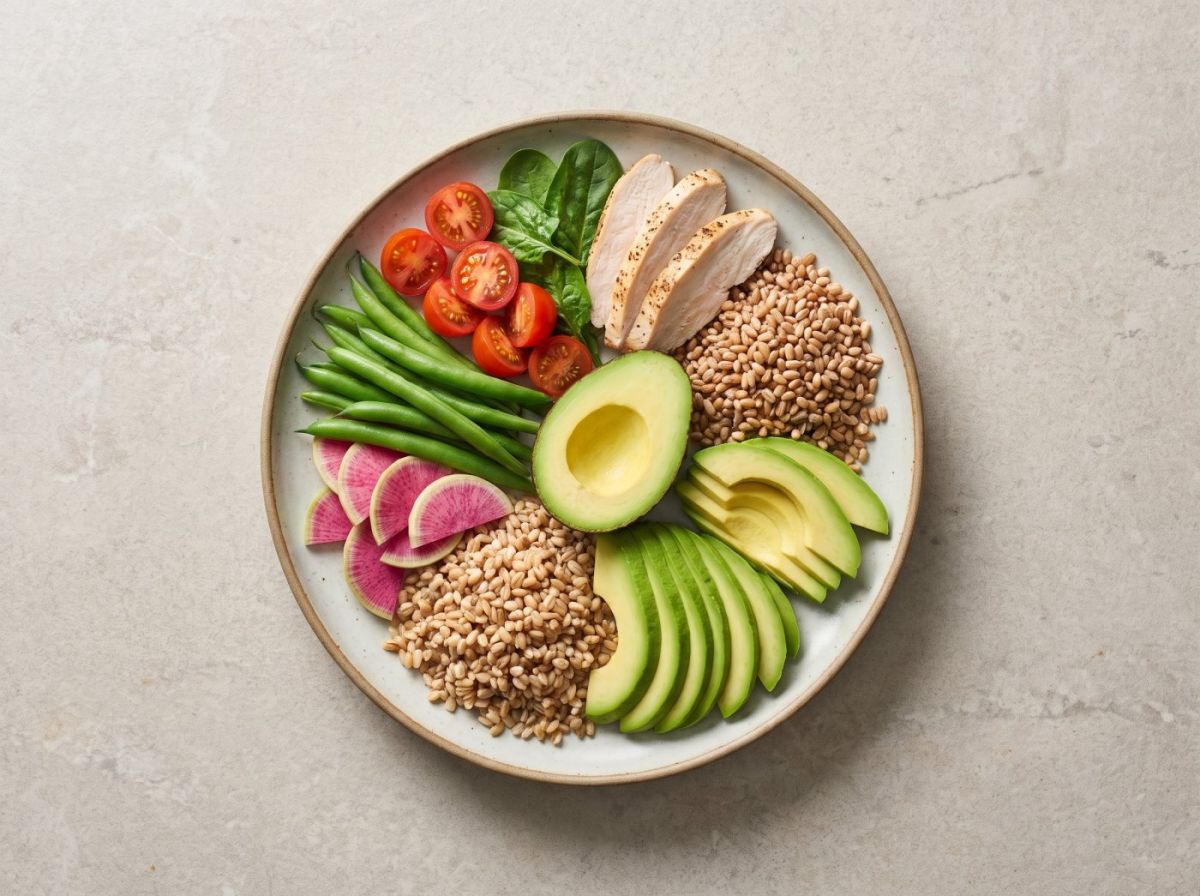
A visual rule is easier to apply than numerical targets. When half the plate is vegetables, a quarter a protein source and a quarter complex carbohydrate, a reasonable balance is struck without any calculation.
The reason this arrangement works is satiety. Vegetables supply volume and fibre, protein extends the feeling of fullness, carbohydrate keeps energy at a baseline. With all three present, hunger returns later after the meal.
Because the plate rule is flexible it adapts to almost any cuisine. In Turkish cooking, a vegetable dish in olive oil, a meat dish and bulgur pilaf form this arrangement naturally.
What does weekly balance mean?
Judging nutrition meal by meal creates unnecessary pressure. The body works on weekly averages rather than daily ones. A dessert eaten in excess at one meal makes no meaningful difference once the week is taken as a whole.
In practice this means an invitation or a special occasion is accepted as part of the plan rather than a lapse. Nor is there any need for extra restriction before or after; the effort to compensate usually creates a fresh imbalance.
The weekly view also makes variety easier to see. Which food group has been missing is read from the whole week, not from a single day.
Are snacks necessary?
Not for everyone. A snack helps those who go a long time between main meals and arrive at the table excessively hungry. For someone whose meal intervals are reasonable it is not a requirement.
If a snack is eaten, its content is what matters. A snack of carbohydrate alone raises blood sugar quickly and drops it again, creating hunger shortly afterwards. Adding protein or fat softens that effect.
Fruit with a handful of nuts, yoghurt with a slice of wholegrain bread, or cheese with a few crackers are simple combinations that strike this balance.
Should sugar be cut completely?
Reducing added sugar improves the quality of a diet markedly; there is broad agreement on this. But "reducing" and "cutting entirely" are not the same thing.
The workable approach starts by finding where most of the sugar comes from. For most people the source is not dessert but drinks: sugary carbonated drinks, packaged fruit juices and sweetened coffees. Reducing these makes a large difference without giving up dessert.
Fruit, which contains natural sugar, sits outside this discussion. The sugar in fruit arrives with fibre and water; absorption is slow and the effect is not the same.
How much does label reading matter?
The label is the most direct way to understand a product, but there is no need to read all of it. Three lines decide most questions.
The first is portion size. The values in the table are usually per hundred grams or per single serving, not per pack. Skip that line and the whole calculation is set up wrongly.
The second is the first three items in the ingredients list. Ingredients are listed by weight; if sugar or fat appears in the first three, that is largely what the product is.
The third is total sugar and salt. These two values are usually enough to place the product within a pattern of eating.
How is protein requirement set?
The general recommendation for adults is roughly 0.8 grams of protein per kilogram of body weight. For those doing regular resistance exercise the figure can rise to between 1.2 and 1.6 grams.
For a seventy-kilo adult that means around fifty-six grams of protein a day. In practice, putting a palm-sized protein source into each of three main meals covers most of it.
Spreading protein across the day is more effective than concentrating it in one meal; the body cannot make use of more than a certain amount at once.
Where should you start?
Trying to change everything at once is the most common approach and the fastest to be abandoned. Starting with a single habit yields a far higher success rate.
The three steps with the largest effect and the easiest application are these: replacing sugary drinks with water, adding a vegetable to every main meal, and not skipping meals. Once those are established, other adjustments become easier on their own.
What produces lasting results in eating is not a strict plan followed briefly, but a reasonable pattern that can be kept up for a long time.
