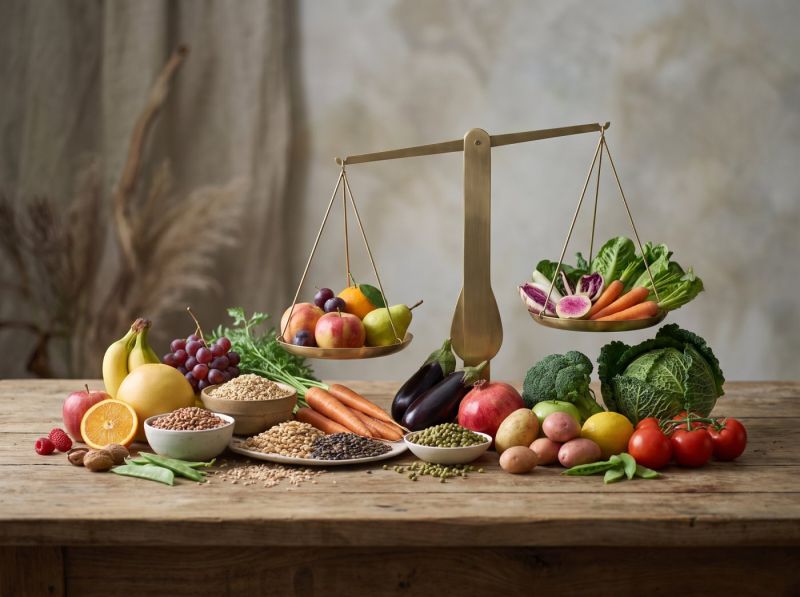
Meeting the daily fibre requirement is more complex than eating a bowl of vegetables. Most of what closes the gap hides in small choices at the table.
How much fibre is needed daily?
The recommendation for adults is 25 to 30 grams a day.
The Turkish average is known to sit markedly below that.
Fibre serves three functions.
It regulates the movement of the gut.
It slows the rise in blood sugar.
And it extends the sensation of fullness.
It also provides food for gut bacteria.
Thirty grams looks easy on paper.
But in practice a portion of vegetables carries 2 to 3 grams and a slice of bread 1 to 2; it is a target requiring deliberate choices.
What separates soluble from insoluble fibre?
The two types serve different functions.
Soluble fibre forms a gel in water.
It slows the emptying of the stomach and extends fullness.
It has effects on cholesterol and blood sugar.
Oats, barley, pulses, apples, citrus and linseed are rich in that type.
Insoluble fibre does not hold water.
It increases the volume of gut contents and shortens transit time.
Whole grains, wheat bran, vegetable skins and nuts provide it.
Both are necessary; most foods contain both types in different proportions.
A balanced intake needs grains, pulses and vegetables alike.
| Swap | Gain (grams of fibre) | Difficulty |
|---|---|---|
| Wholemeal instead of white bread | +3-4 | Low |
| Bulgur instead of white rice | +4-5 | Low |
| Whole fruit instead of juice | +2-3 | Low |
| A spoonful of lentils in soup | +2-3 | Very low |
| A spoonful of linseed in yoghurt | +2 | Very low |
| Cooking potatoes in their skins | +2 | Very low |
| A spoonful of chickpeas in a salad | +3 | Low |
| A handful of almonds as a snack | +3.5 | Low |
What do cooking and cooling change?
That is the least known mechanism.
Starchy foods cooked and then cooled develop resistant starch.
Resistant starch is not digested in the small intestine.
It reaches the large intestine and ferments there.
It behaves like fibre.
Rice, potatoes and pasta cooked and left overnight in a fridge show a marked increase in resistant starch.
That increase is largely retained on reheating.
That is a practical gain; rice eaten the next day delivers more of a fibre effect than freshly cooked rice.
Green bananas and pasta cooked al dente are rich in resistant starch too.
How much do skins matter?
Fibre concentrates in the skins of fruit and vegetables.
The skin of an apple carries around half its total fibre.
Potato skin gives a similar proportion.
Peeling discards a significant part of the fibre.
Cucumbers, courgettes, carrots and aubergines can be eaten with their skins.
Washing suffices; peeling is an unnecessary habit in most cases.
The white pith of citrus contains fibre too; it should not be discarded when segmenting an orange.
Dried fruits carry skins as well; dried apricots and figs are high-fibre products.
Where there is concern about pesticides, thorough washing is preferable to peeling; peeling removes both the fibre and the vitamins near the surface.
How are pulses increased?
Pulses are the densest group for fibre.
A bowl of lentil soup provides 8 to 10 grams.
A portion of chickpeas provides 12.
But the habit of eating them regularly is hard to establish.
The practical route is adding them to existing dishes.
A spoonful of red lentils in soup; it breaks down while cooking and goes unnoticed.
A bowl of cooked beans in a minced meat dish; it adds both fibre and volume.
Chickpeas or borlotti beans in a salad; they add both texture and protein.
Crushed lentils in a pasta sauce; they thicken and enrich it.
Canned pulses make those swaps easy; they need no preparation and drained and rinsed their sodium falls too.
What do nuts and seeds provide?
That group offers high fibre in small quantities.
A hundred grams of almonds carries 12.5 grams of fibre.
Chia seeds carry 34.
Linseed carries 27.
But the portions are small; a handful of almonds is 30 grams and provides 3.5 grams of fibre.
That is nonetheless 12 percent of the daily target.
Seeds should be used ground; whole linseed passes undigested and its fibre goes unused.
Adding a spoonful of seeds to yoghurt, soup or a smoothie is the most practical method.
Nuts also provide fat and protein, which supports fullness and makes snacking easier to control.
What should be watched when increasing it?
Fibre intake should not rise suddenly.
A sudden increase creates bloating, wind and discomfort.
Gut bacteria take time to adapt.
Increases of 5 grams a week suit.
The target gets reached in four weeks without discomfort.
Fluid intake should rise too; fibre draws water and without enough liquid it can cause constipation instead.
Two to two and a half litres a day is advised.
Fibre needs restricting in some situations; for people with bowel conditions a doctor's advice takes precedence.
Fibre supplements are the last option; fibre from food is always preferable because it arrives alongside vitamins and minerals.
How is fibre intake tracked?
Increasing it without measuring is difficult.
What gets eaten across a week is recorded.
Fibre content appears on the label of packaged products.
Nutritional tables serve for fresh ones.
The weekly total gets divided by seven, giving the daily average.
That measurement gets made once and shows where the gap lies.
For most people the gap sits on the grains and pulses side.
Vegetables generally contribute less than assumed; a portion carries an average of 2 to 3 grams of fibre.
After measuring, the target gets reached in four weeks through daily increases of five grams.
Repeating the measurement after those four weeks is worthwhile, since the swaps that felt large in the first week often turn out to have closed only half the gap.