


Hardness in a biscuit is usually treated as a fault. In biscotti it is the point of the recipe. This biscuit is designed to fracture when bitten and to soften when dipped — and that design emerged in a period when ovens were expensive and journeys were long.
Why is it baked twice?
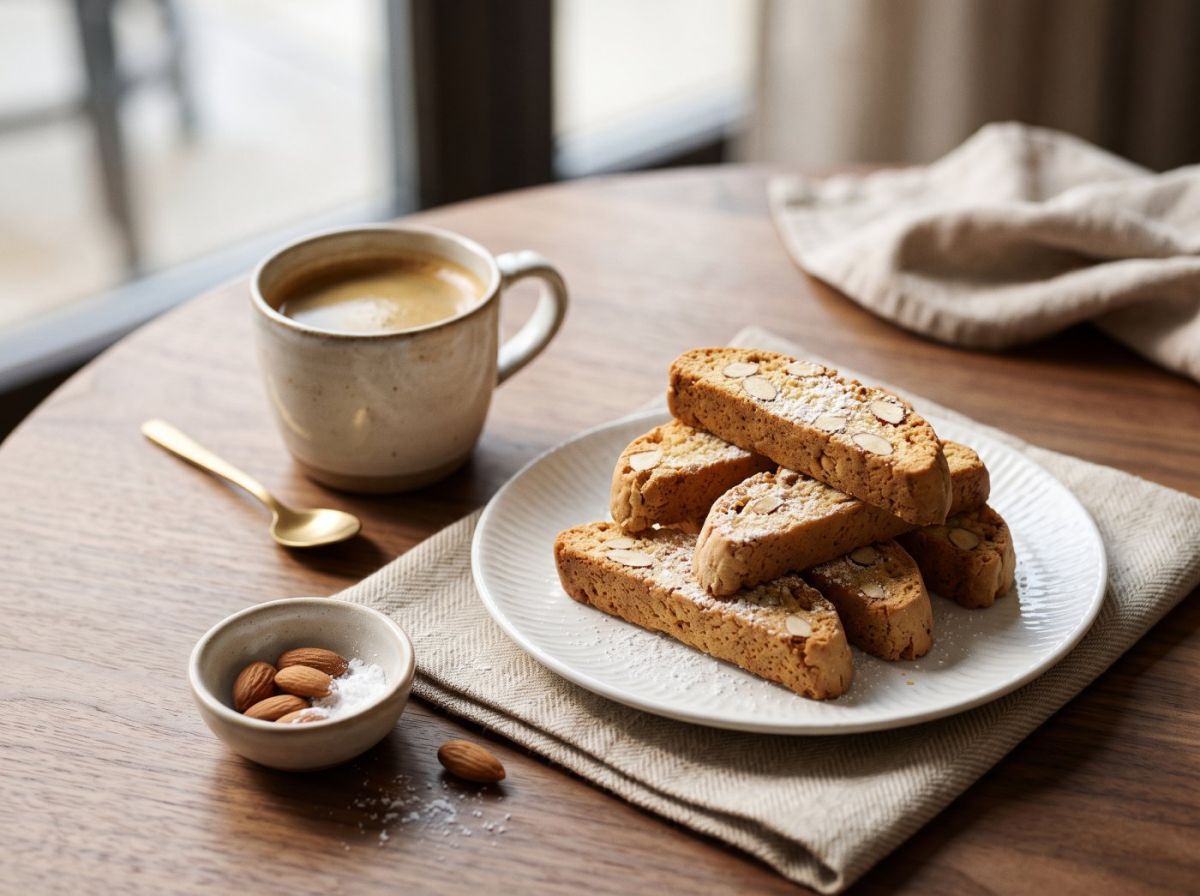
The dough is first shaped into a long log and baked. That first bake produces a loaf crusted on the outside but still moist within. After resting and cooling, the loaf is sliced on the diagonal and the slices go back into the oven.
The purpose of the second bake is not colour but moisture removal. Because the cut surfaces are exposed, the water remaining inside evaporates away. As moisture drops the biscuit hardens and becomes correspondingly durable: where there is no water, mould and bacteria cannot grow.
In the centuries before refrigeration this was a practical solution for travellers and sailors. Today the same method survives as one of the oldest ways of achieving a long shelf life without preservatives.
Are cantuccini and biscotti the same thing?
Not exactly. In Italian, "biscotti" is a general word meaning biscuits; in Türkiye it is used specifically for the twice-baked, long-sliced cookie. The almond version made in the Tuscan town of Prato is properly called cantuccini.
The difference is a matter of regional naming; the method is identical. In the Prato tradition no oil or butter goes into the dough, and egg alone acts as the binder. That makes the biscuit harder still, and longer-lived.
Why is it so hard?
Hardness comes from three sources, and all three work together:
- Low moisture. The second bake removes most of the water. The dried starch structure forms a brittle skeleton.
- Low fat. Fat shortens the gluten network in dough and makes a biscuit crumbly. In classic biscotti there is little fat, so the network stays long and the texture firm.
- A high proportion of nuts. Almonds, hazelnuts and pistachios create hard points within the slices; those visible pieces also determine where the biscuit breaks.
Together these make biscotti a product designed to be eaten alongside tea or coffee. In Italy its traditional partner is the sweet wine vin santo; in everyday use, espresso and milky coffee are more common.
Does it have to be dipped?
It does not, but this is the use it was designed for. The dry, porous structure draws liquid quickly. A few seconds of contact softens the outer layer of the slice while leaving the centre firm — and that contrast is precisely the point.
A slice left too long softens all the way through and falls apart. The right time, depending on thickness, is between two and five seconds.
How does gluten-free biscotti behave?
Gluten-free versions replace wheat flour with rice, maize, almond or chickpea flour. Because these flours contain no gluten, the elastic network that holds the dough together never forms. The result is a dough inclined to fall apart when sliced.
Producers solve this in two ways. The first is binding ingredients: psyllium husk, locust bean gum or additional egg take over part of gluten's function. The second is resting. The flour particles in a gluten-free dough absorb water more slowly, so letting the dough sit before baking firms up the structure and makes slicing easier.
The texture of a well-made gluten-free biscotti is indistinguishable from the classic. The difference usually shows in the aftertaste: versions made with almond flour are richer and denser, while those made with rice flour taste more neutral.
Why is the dough baked as a log?
Baking the slices individually looks easier but does not work. Thin slices cut from raw dough spread in the oven, their edges lose definition and the nuts in the middle break the slice apart.
Baking as a log solves exactly this. In the first bake the dough sets as a single mass and the nuts are locked into that firm structure. When the cooled loaf is sliced it holds together and the cut face comes out clean.
Timing the cut matters too. A loaf cut while hot is crushed, and one cooled completely cracks. The right moment is about fifteen minutes in, when the loaf is just cool enough to handle. The cut needs a serrated knife and a single stroke without pressing down.
How does slice thickness change the result?
Thickness decides how much moisture is lost in the second bake. Thin slices dry faster and end up harder; thick slices retain some moisture inside and stay softer.
| Slice thickness | Second bake | Result |
|---|---|---|
| 1 cm | 10-12 minutes | Very crisp, long shelf life |
| 1.5 cm | 14-16 minutes | Balanced; the most common choice |
| 2 cm | 18-20 minutes | Slight softness at the centre |
Cutting on the diagonal is not only about appearance: the angled cut increases surface area, so moisture leaves faster and the slice looks longer.
How should biscotti be stored?
Biscotti is an enemy of moisture. In a jar with constant contact with air it softens within days. Correct storage is an airtight tin, at room temperature, in a dry place. Under those conditions it holds its first-day texture for several weeks.
The refrigerator is not suitable. Moisture condensing on cold surfaces passes into the biscuit and costs it its snap. A softened biscotti can largely be recovered by five minutes in a 150 °C oven.
Does it belong at breakfast?
It does, and increasingly so. A biscotti kept low in sugar and high in nuts is both filling and measured alongside a morning coffee. It can also be dipped into yoghurt or crumbled over fruit.
The only thing to watch is portion size. Because the biscuit is dry its volume is small, and that makes it easy to eat more than intended without noticing. Two slices is a reasonable snack for most adults.
