


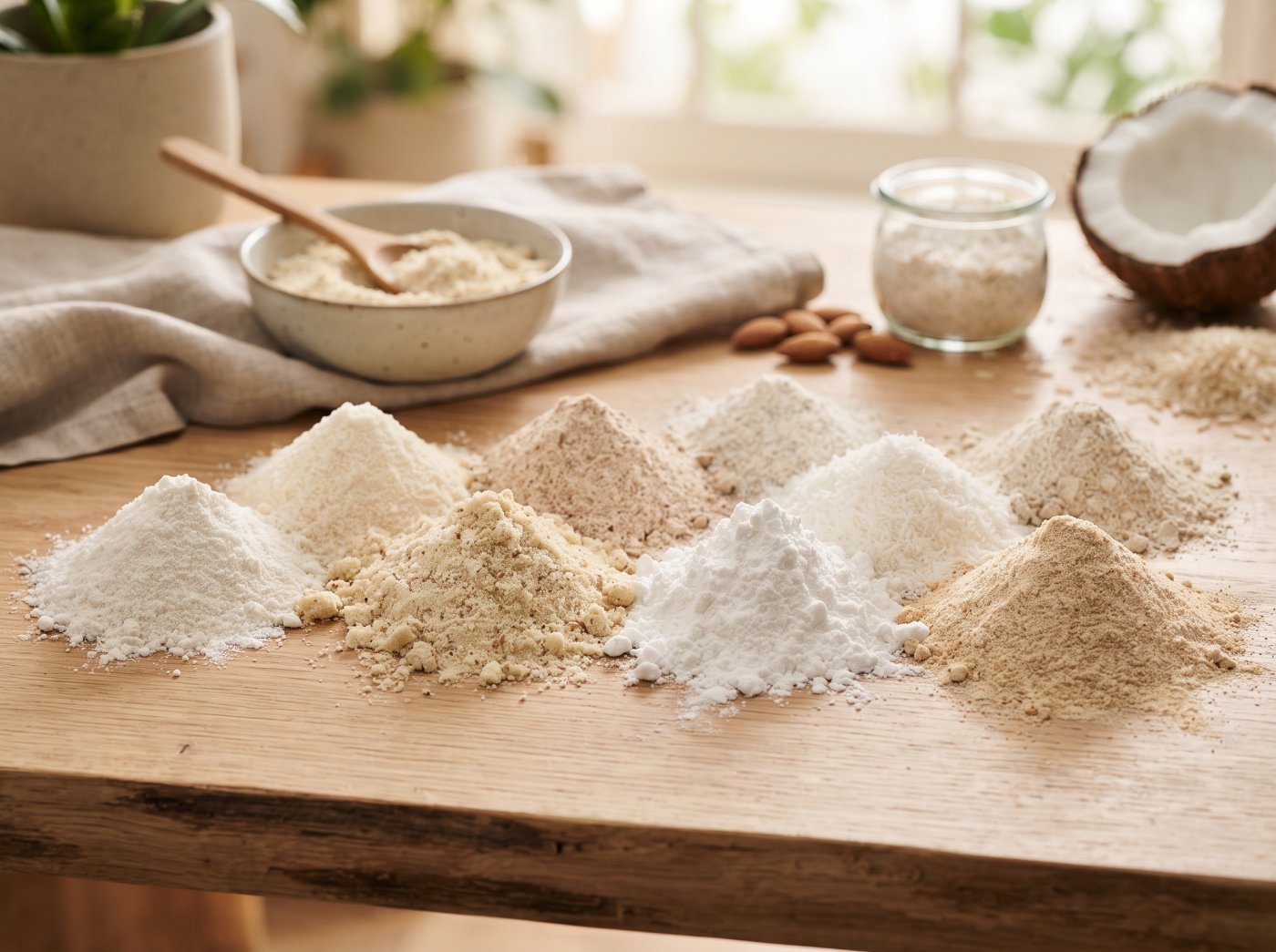
In a gluten-free recipe, "flour" is not a single ingredient. The jobs wheat flour does — building structure, holding water, giving taste, giving colour — are distributed across different flours in a gluten-free kitchen. Successful recipes therefore use blends rather than a single flour.
By what criteria are flours distinguished?
Four properties matter when assessing a gluten-free flour.
Protein content. High-protein flours (almond, chickpea, soya) contribute to structure and make the product more filling. Starch-dominated flours make no such contribution.
Water-holding capacity. Some flours absorb water quickly and in quantity (coconut, psyllium); others absorb very little (rice, cornflour). When the ratio in a blend changes, the liquid has to change with it.
Intensity of taste. Chickpea and buckwheat flours carry a pronounced flavour; rice and tapioca are almost neutral. Neutral flours are preferred in sweet products.
Textural contribution. Starches give lightness and crispness; wholegrain flours leave density and a granular sensation.
Which are the base flours?
A base flour makes up the largest share of the blend and carries the structure.
Rice flour. The most common base. Neutral in taste, inexpensive and easy to find. Unless finely milled it leaves a gritty sensation, which is the most frequent complaint about gluten-free products. Brown rice flour is higher in fibre but gives a denser result.
Maize flour. Distinguished by its yellow colour and faintly sweet taste. It creates a crisp crust in bread. Coarsely milled versions such as semolina are a different product and cannot substitute.
Sorghum flour. One of the flours that behaves closest to wheat. Its taste is mild and it gives a less gritty texture than rice flour; a valuable component in bread blends.
Which starches provide structure and lightness?
Starches are not used alone; they enter a blend to add lightness, elasticity and crispness.
| Starch | Property added | Typical ratio | Watch |
|---|---|---|---|
| Potato starch | Softness, moisture retention | 15-25% | Too much turns sticky |
| Tapioca starch | Elasticity, chew | 15-25% | Too much turns rubbery |
| Cornflour | Lightness, crispness | 10-20% | No taste, no nutrition |
| Arrowroot | Clarity, lightness | 10-15% | Costly, favoured in sauces |
Potato starch and potato flour should not be confused; they are different products. Potato flour is milled from the whole potato, is heavy and draws a great deal of water, while the starch is only the starch fraction.
Which flours add taste and nutrition?
This group forms a small part of the blend but determines the character of the product.
Almond flour. High in fat and protein. It gives a moist, rich texture and keeps a product soft for longer. Ideal for cakes, biscuits and brownies. It cannot be used alone in bread; its fat content loosens the structure.
Buckwheat flour. Despite the name it is not related to wheat and contains no gluten. It has a distinct, faintly earthy taste. It works well in pancakes and wholegrain breads; above thirty per cent its flavour becomes dominant.
Chickpea flour. High in protein and provides binding. Raw, it carries a pronounced pulse flavour that largely disappears on baking. It is useful in savoury products, particularly crackers and buns.
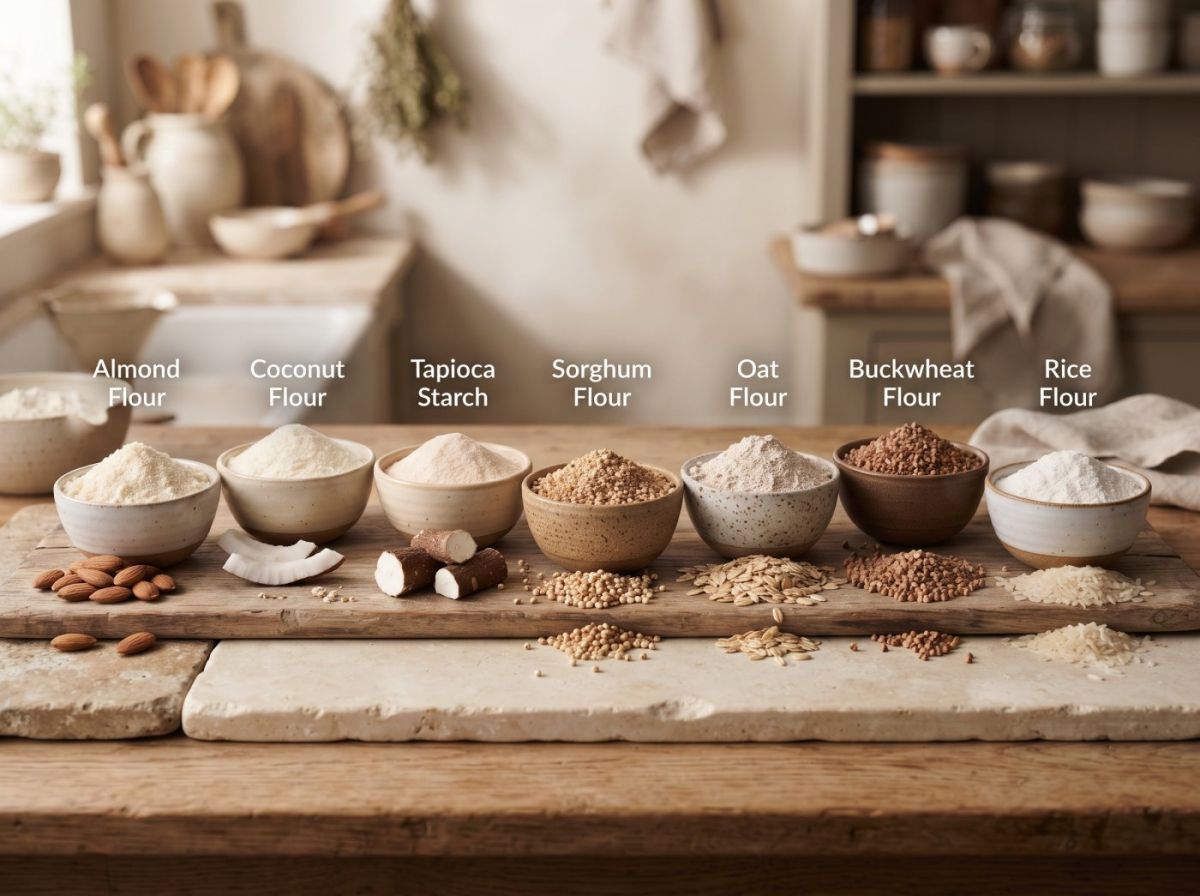
Coconut flour. Its water-holding capacity is extraordinarily high; it absorbs several times its own weight. It should not exceed ten per cent of a blend, or the product dries out.
Oat flour. Naturally gluten-free, though certified product must be used because of contamination risk. It gives a soft, faintly sweet taste and contributes fibre.
How is a blend built?
Professional formulations generally follow a three-part logic: base flour, starch and character flour.
In products needing structure, such as bread and buns, the base dominates — roughly sixty per cent base, thirty per cent starch and ten per cent character flour, with psyllium added as a binder.
In cakes and biscuits the ratio shifts. Because elasticity is not required, the starch share falls and almond or hazelnut flour rises; with a high fat content the need for binder also drops.
In pancakes and batters a single flour can suffice. With no structure to carry, buckwheat or chickpea flour works on its own.
Which blend for which product?
| Product | Dominant flour | Support | Note |
|---|---|---|---|
| Bread | Rice, sorghum | Tapioca, potato starch | Psyllium essential |
| Cake | Rice, almond | Cornflour | Little binder needed |
| Biscuits | Almond, rice | Potato starch | Fat builds the structure |
| Crackers | Chickpea, rice | Cornflour | Suits savoury flavour |
| Pancakes | Buckwheat | — | A single flour suffices |
| Thickening sauces | — | Cornflour or arrowroot | Flour is not used |
What should you watch when storing flours?
Some gluten-free flours are high in fat and spoil faster than wheat flour.
Almond, hazelnut and coconut flours are open to oxidation; at room temperature they develop a bitter note within months. These flours belong in a refrigerator or freezer.
Rice, maize and starches keep for a long time somewhere cool and dry. They should be held in airtight containers so they do not draw moisture.
Wholegrain flours — buckwheat, brown rice — are shorter-lived than white ones because they contain the oil of the germ.
A bitter smell is the most reliable sign that a flour has spoiled, and it should not be used; baking will not correct it.
Why does certification matter?
A grain that is naturally free of gluten can meet wheat during processing. Being in the same mill, on the same conveyor or in the same store is enough for contamination.
For someone with a coeliac diagnosis the phrase "naturally gluten-free" is therefore not sufficient; the pack should carry certified gluten-free status.
In certified products the gluten content is measured and verified to be below a set threshold. Oats are the most critical example here; uncertified oat flour is not considered safe in coeliac disease.
