


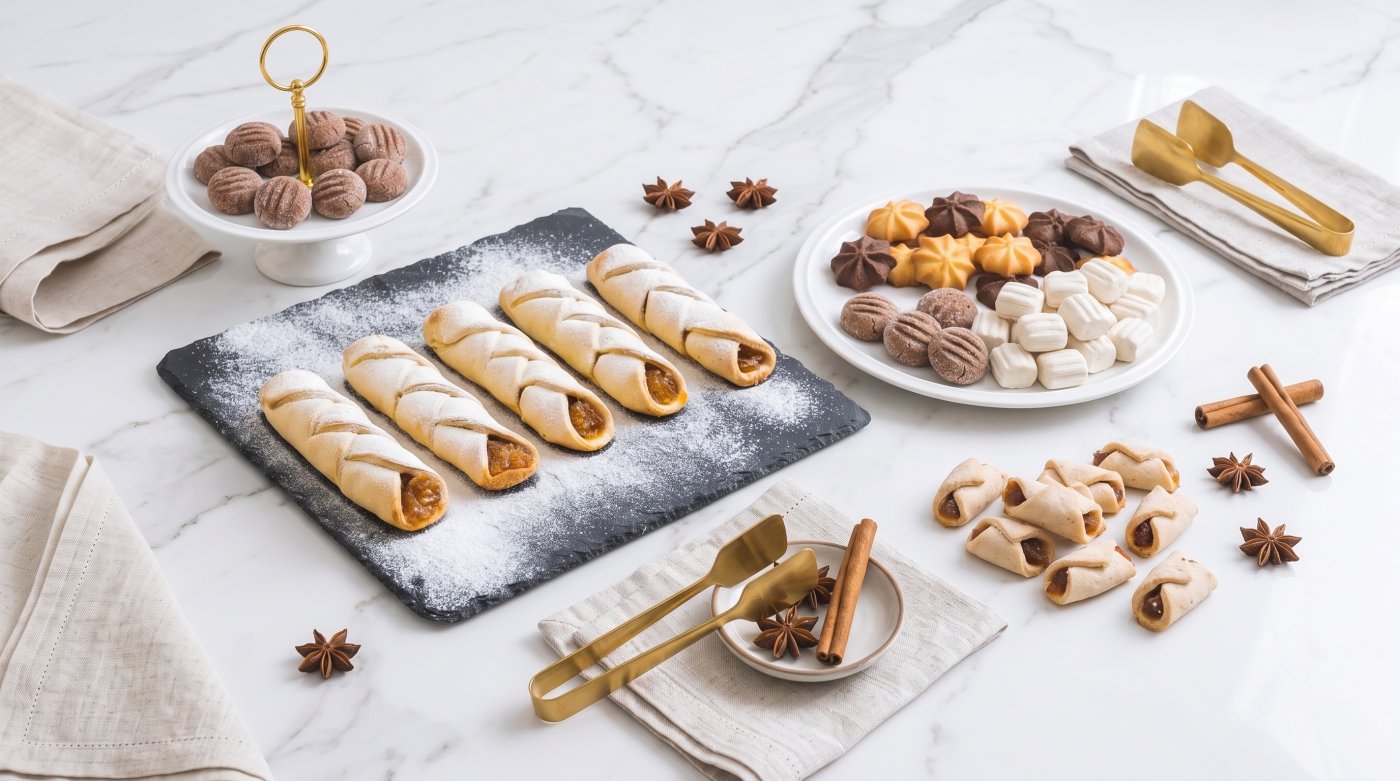
The gluten-free category has grown in recent years. Look at where that growth concentrates and an unbalanced picture appears.
Where does the growth concentrate?
In the biscuit and cake group.
In snack bars and chocolate.
In breakfast cereals and granola.
In bread, though growth runs slower there.
In savoury snacks and meal accompaniments the growth stays at its lowest.
| Group | Shelf share | Growth rate | Structural difficulty |
|---|---|---|---|
| Biscuits and cakes | High | Fast | Low |
| Bars and chocolate | Medium | Fast | Very low |
| Bread | Medium | Slow | Very high |
| Pasta | Medium | Medium | High |
| Savoury snacks | Low | Slowest | Medium |
Why is the sweet side easier?
Sugar acts as a binder in gluten-free dough.
The fat content can run high, which supports the structure.
In sweet products the expectation of texture stays more flexible.
Aroma can cover a fault in texture.
Those four make developing sweet products clearly easier.
What is the structural problem in savoury?
With low sugar there is no support from a binder.
Salt is not a component that supports structure.
The balance between crispness and fragility is narrower.
The product usually gets rolled thinner, which demands more structure.
The result is that developing a savoury product at the same technical level is harder.
What is the customer looking for?
People with coeliac disease need products at every meal.
The need for savoury options runs highest at breakfast and lunch.
Sweet products do not meet that need.
Something to stand in for bread is the most sought-after item.
Since that demand goes unmet by current supply, customers largely turn to making things at home.
How large is the gap?
Savoury products make roughly ten percent of gluten-free shelf space.
Against that, more than half of a customer's daily meals are savoury.
The difference between those two figures shows the size of the gap.
The gap runs widest in the meal-accompaniment category.
Crackers, savoury biscuits and poğaça are the three lines that could fill it.
Which products fill the gap?
Seeded crackers, where the seeds solve the structural problem.
Nigella and herb biscuits.
Gluten-free poğaça, the one line able to stand in for bread.
Corn-based crisps and sticks.
Among those four, poğaça sees the highest demand because it functions as a meal accompaniment.
How does the price difference affect demand?
Gluten-free products cost sixty to a hundred percent more than their classic equivalents.
On the sweet side that difference gets accepted; the product sits in the treat category.
On the savoury side it gets accepted less readily; the product is a daily need.
That is one of the factors limiting volume on the savoury side.
While volume stays low the unit cost does not fall, and the cycle feeds itself.
Why do producers avoid the savoury side?
The structural problem means extra development cost.
Volume expectations run low.
Certification costs apply separately to every product.
Winning shelf space is difficult.
Those four barriers together steer producers towards the easier, higher-volume sweet side.
Why is the certification cost decisive?
Every product gets tested separately.
Line cleaning gets validated.
Periodic audits happen.
On a low-volume product that cost stays high per unit.
So producers prefer high-volume products across which the certification cost can be spread.
How do businesses use this gap?
Cafés adding a savoury gluten-free option stand out.
Those products usually carry low volume while producing high loyalty.
A customer with coeliac disease returns regularly to a place where options exist.
In groups, the need of one person decides where everyone goes.
That effect produces value well beyond the sales volume of the product itself.
Is the gap closing?
Slowly.
Seed-based products lead the way in this area.
Legume flours are opening a new technical route.
As certification processes standardise, the cost falls.
Against that the sweet side still grows faster, and the proportional gap will not close in the short term.
Where is the gluten-free category heading?
The savoury gluten-free category grows more slowly than the sweet side but more steadily.
Meal accompaniments are gaining priority.
Bread alternatives remain the largest area of opportunity.
The foodservice channel is growing faster than retail.
Balance in the category is expected in the long run, though it will arrive through the savoury side growing rather than the sweet side shrinking.
Which products could close the gap?
Products standing in for bread, the largest need.
The cracker and savoury biscuit group.
Gluten-free poğaça and bakery items.
Legume-based snacks.
Among those four the bread alternative remains both the hardest and the most valuable area.
How do businesses turn the gap into an opportunity?
They add one or two savoury gluten-free options to the menu.
Those products get handled in a separate preparation area.
Using certified product gets stated on the menu.
Staff get trained on cross-contamination.
With those four steps a business becomes the place a narrow but loyal group of customers chooses.
How does a gluten-free option get announced on a menu?
A separate section opens on the menu.
The certification gets stated.
The separation in preparation gets explained.
Staff get informed about those products.
A gluten-free option nobody knows about does not sell; in this category being known matters as much as existing.
At what pace is the category growing?
The sweet side grows at double digits a year.
The savoury side in single digits.
The bread group grows slowest.
The foodservice channel grows faster than retail.
Assessed together, those four rates show the imbalance within the category will not close in the short term.
