



Bratwurst Sausage 300 g
The fundamental difference between bratwurst and frankfurter is how finely the meat is ground. In a frankfurter the meat is worked into an emulsion and fully homogenised; in a bratwurst it is coarsely ground and the particles remain distinguishable in the bite.
That lets the two products serve different purposes. A homogeneous texture gives softness and uniformity; a coarse grind offers something closer to meat and creates a chewing experience. In the German tradition bratwurst is eaten grilled or pan-fried, and the coarse texture holds its shape through that cooking.
Shelf life and storage conditions
- Shelf Life
- Production and best-before dates are printed on the packaging.
- Storage Conditions
- Store between 0 °C and +4 °C with the cold chain maintained. After opening, keep refrigerated in a sealed container.
Please contact us for pricing. (professional kitchen / wholesale)
Why Choose This Product?
- The coarse grind leaves meat particles distinguishable in the bite, unlike emulsion sausages.
- The texture does not break down on a grill or in a pan; the sausage holds its shape.
- Carried alongside the frankfurter it offers two texture options on a menu.
- A 300 g vacuum pack suits household and small-business use.
Where To Use It
- Grilling and barbecue
- Pan-fried breakfast sausage
- In bread and hot dogs
- German-style plating
- Camping and picnics
- Retail and deli counters
Wholesale Ordering & Storage
Bought with the frankfurter it builds two texture options on a menu; both share the same shelf conditions and plan into a single delivery. Store between 0 °C and +4 °C with the cold chain maintained. After opening, keep refrigerated in a sealed container.
Frequently Asked Questions
How does it differ from a frankfurter?
How finely the meat is ground. In a frankfurter the meat becomes an emulsion and the texture is homogeneous; in a bratwurst it is coarsely ground and the particles are felt.
How should it be cooked?
On a grill or in a pan over medium heat. The coarse texture holds through that cooking; high heat splits the casing.
Does it make sense to carry both?
It does. A homogeneous and a coarse option serve different palates and different plates.
Similar Products
You May Also Like
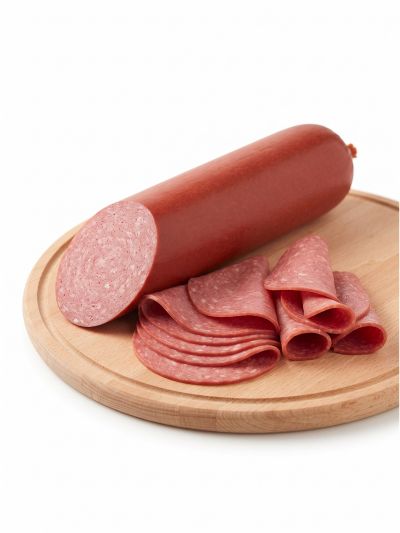
Not every kitchen has a slicing machine. In cafés, small businesses and retail counters a machine means investment, floor space and a cleaning burden; with this product the slicing is done in product…
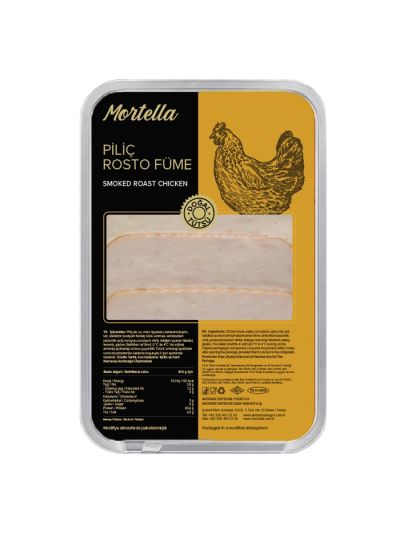
Roast is the charcuterie type produced by cooking meat as a whole piece and then slicing it. That separates it from salami and mortadella, which are minced and reformed: in a roast slice the muscle s…
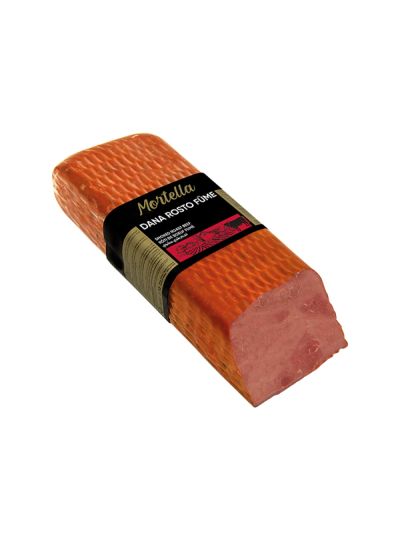
A log is an unsliced whole roast carrying the same recipe as the sliced product. The difference lies in the buying logic: a sliced product buys ready portions, while a log leaves the slicing decision…
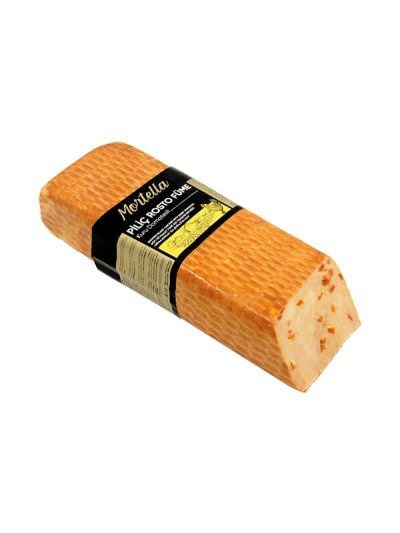
The dried tomato here is distributed through the meat rather than applied to its surface. In log form that means tomato is present at every point of the cross-section; a slice taken from either end o…