


Smoked Roast Beef 1800 g
A log is an unsliced whole roast carrying the same recipe as the sliced product. The difference lies in the buying logic: a sliced product buys ready portions, while a log leaves the slicing decision to the kitchen. Thick for a sandwich, paper-thin for a canapé — both come from the same log.
The second difference is how it behaves on the shelf. In a sliced product both faces of every slice meet the air; in a log only the cut face is exposed. That means the unused portion keeps far longer. Cost per kilo is also lower, since slicing labour is not built into the price.
Shelf life and storage conditions
- Shelf Life
- Production and best-before dates are printed on the packaging.
- Storage Conditions
- Store between 0 °C and +4 °C with the cold chain maintained. After opening, keep refrigerated in a sealed container.
Please contact us for pricing. (professional kitchen / wholesale)
Why Choose This Product?
- Slice thickness is decided in the kitchen; sandwich and canapé cuts come from the same log.
- Only the cut face meets the air, so the unused portion keeps longer.
- Cost per kilo is lower because slicing labour is not built into the price.
- 21.5 g protein and 2.5 g fat per 100 g — a rare ratio in red meat.
Where To Use It
- Hotel and restaurant kitchens
- Delicatessen and butcher counters
- Sandwich production lines
- Breakfast buffets
- Catering and banqueting
- Canapé and aperitif production
Nutrition Information (per 100 g)
- Energy: 523 kJ / 125 kcal
- Fat: 2,5 g (of which saturates 1,24 g)
- Carbohydrate: 3,9 g (of which sugars 0 g)
- Protein: 21,5 g
- Salt: 2,8 g
Wholesale Ordering & Storage
Log products are ordered by the kilo and suit kitchens with slicing capacity. The cut face should be wrapped and the product held between 0 and 4 °C. Store between 0 °C and +4 °C with the cold chain maintained. After opening, keep refrigerated in a sealed container.
Frequently Asked Questions
Can it be used without a slicing machine?
It can, but hand-cut slices will not be even. Log products are made for kitchens with slicing capacity; without a machine, the sliced product is the better fit.
What if the cut face darkens?
Some darkening can occur where the surface meets air. Taking off a thin slice and discarding it is enough; wrapping the face largely prevents it.
Should I buy the log or the sliced product?
If daily usage is high and you have a slicer, the log lowers cost per kilo. With low or irregular usage, the sliced product reduces the risk of waste.
Similar Products
You May Also Like
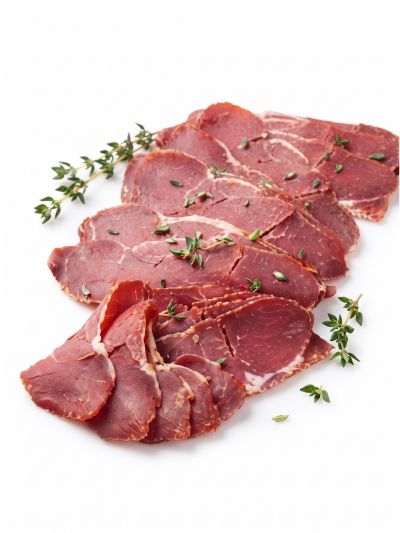
Cemen is the garlic-laden crust that both preserves pastirma and carries its characteristic aroma — but that aroma is not to everyone's taste. The intensity of the garlic and the distinctive scent of…
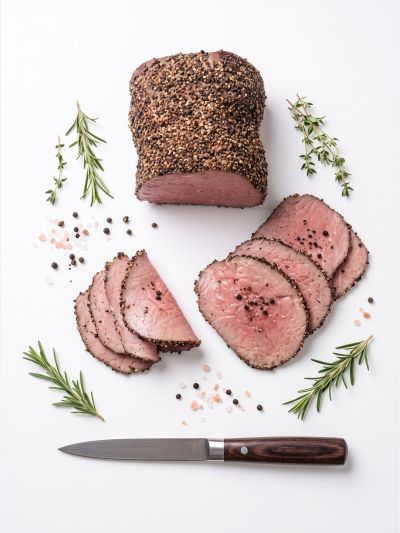
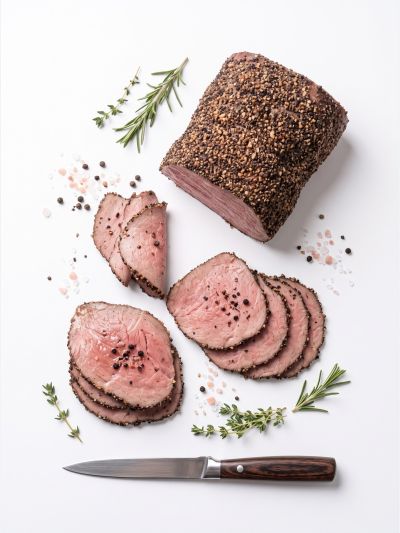
Menu variety comes not only from buying new ingredients but from splitting an existing one in two. Black pepper roast beef shares the same storage conditions, the same slicer and the same serving pla…
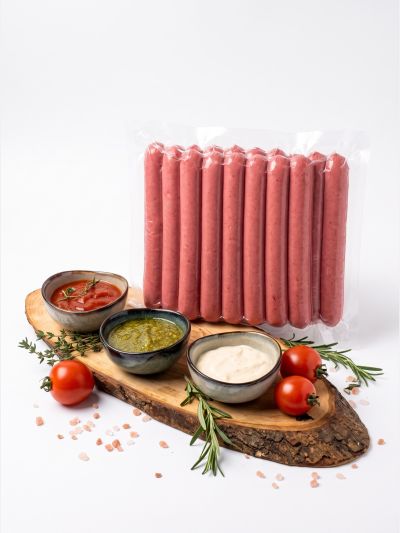
There are two kinds of ingredient in a kitchen: those visible on the plate and those that disappear into the sauce. For visible ingredients shape, colour and the neatness of the slice matter; for tho…

Being able to use one ingredient at different price points is an advantage that reduces the number of stock lines. With a coil, the portion is decided in the kitchen rather than in the product: a sho…