


Beef Ham 1750 g (Log)
The difference between a ham and a roast is not the cooking but the step that comes before it. A roast is cooked directly, while a ham first rests in brine; the salt solution works into the meat, raises the water-holding capacity of the muscle fibres and stops it drying out during cooking.
That explains why a ham gives a moister slice than a roast. Curing also gives the meat its characteristic taste; alongside the salt, the spices in the solution penetrate right into the muscle. Leg meat is preferred for this process because its structure is regular and its fat content low.
Shelf life and storage conditions
- Shelf Life
- Production and best-before dates are printed on the packaging.
- Storage Conditions
- Store between 0 °C and +4 °C with the cold chain maintained. After opening, keep refrigerated in a sealed container.
Please contact us for pricing. (professional kitchen / wholesale)
Why Choose This Product?
- Curing raises the water-holding capacity of the muscle fibres, so the slice is moister than a roast.
- Salt and spices penetrate into the muscle rather than staying at the surface.
- Leg meat, with its regular structure and low fat, is the most suitable region for curing.
- A 1750 g log leaves slice thickness to the kitchen.
Where To Use It
- Breakfast tables and hotel buffets
- Sandwich and toastie fillings
- Charcuterie boards
- On salads
- Canapés and aperitifs
- Butcher and deli counters
Wholesale Ordering & Storage
Ham is a steadily consumed line in the breakfast and sandwich channels; the log format lowers cost per kilo and suits kitchens with slicing capacity. Store between 0 °C and +4 °C with the cold chain maintained. After opening, keep refrigerated in a sealed container.
Frequently Asked Questions
What is the difference between ham and roast?
The curing step. A roast is cooked directly; a ham first rests in a salt solution. That makes the slice moister and lets the flavour reach into the muscle.
Why is leg meat used?
Leg meat has a regular fibre structure and low fat content, making it the most suitable region for the brine to work through evenly.
Does it contain pork?
No. The product is made from beef; ham here describes a production method, not the animal.
Similar Products
You May Also Like
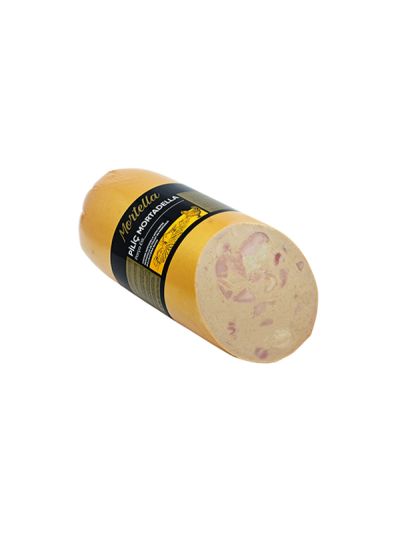
In the mortadella tradition the cross-section pattern is built from the meat itself; vegetable and tomato are later variations. This product carries that classic structure: pieces of chicken set into…

A frankfurter is a sausage made from a meat emulsion. Meat, fat and water are brought together under controlled conditions into a smooth mixture; filled into a fine casing, that mixture gives a homog…
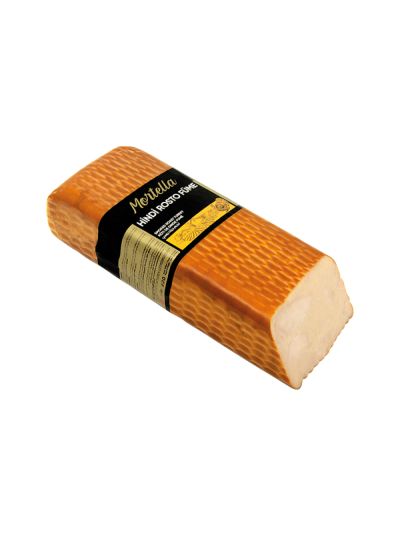
In log products the cross-section area determines yield directly. Turkey roast has a broader section than beef or chicken, which means a slice cut at the same thickness covers more surface. In sandwi…
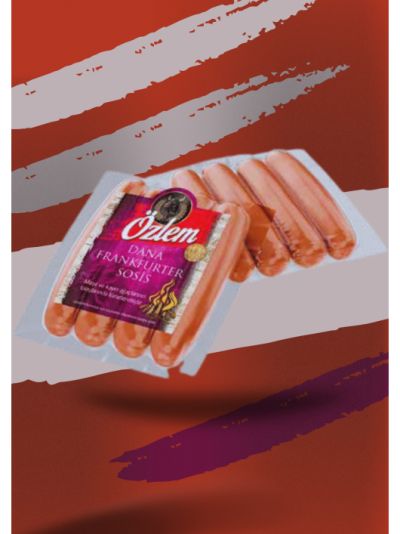
In family restaurants a child's order is a risk line of its own. When a child does not like it the plate comes back, something else is made, the cost doubles — and the whole table's experience suffer…