


Sliced Chicken Jambon
The difference between jambon and roast begins in the production method. A roast is cooked directly, while a jambon is cured first: the meat rests in a salt solution before cooking. Curing distributes moisture evenly through the meat and softens the texture.
That difference carries into shelf life. Sliced jambon holds 120 days where sliced roasts stop at 90; the preservative effect of curing creates that gap. On the plate a jambon gives a softer, moister and more homogeneous slice — the grain visible in a roast is not pronounced here.
Shelf life and storage conditions
- Shelf Life
- 120 days
- Storage Conditions
- Store between 0 °C and +4 °C with the cold chain maintained. After opening, keep refrigerated in a sealed container.
Please contact us for pricing. (professional kitchen / wholesale)
Why Choose This Product?
- Curing softens the texture, giving a moister and more homogeneous slice than a roast.
- A 120-day shelf life, markedly longer than the 90 days of the sliced roasts.
- 20.6 g protein and 2.8 g fat per 100 g; low in fat despite the soft texture.
- A homogeneous cross-section means it holds together even sliced thin and sits neatly in a sandwich.
Where To Use It
- Breakfast plates and hotel buffets
- Sandwich and toastie fillings
- Children's lunchboxes
- Salad and pasta garnish
- Canapés and aperitifs
- Baked potato fillings
Nutrition Information (per 100 g)
- Energy: 502 kJ / 120 kcal
- Fat: 2,8 g (of which saturates 1,2 g)
- Carbohydrate: 3 g (of which sugars 0 g)
- Protein: 20,6 g
- Salt: 2,5 g
Wholesale Ordering & Storage
A longer shelf life eases stock rotation, making it a safer choice than roast where weekly delivery is not possible. The cold chain must be held between 0 and 4 °C. Store between 0 °C and +4 °C with the cold chain maintained. After opening, keep refrigerated in a sealed container. Shelf life: 120 days.
Frequently Asked Questions
What is the difference between jambon and roast?
A roast is cooked directly; a jambon is cured first and then cooked. Jambon is softer and more homogeneous, roast more fibrous and textured.
Why is the shelf life longer?
Curing distributes salt evenly through the meat and creates a preservative effect. That is why jambon carries 120 days against the roast's 90.
Does it contain pork?
No. This product is made from chicken. Jambon here describes a production method, not the animal.
Similar Products
You May Also Like
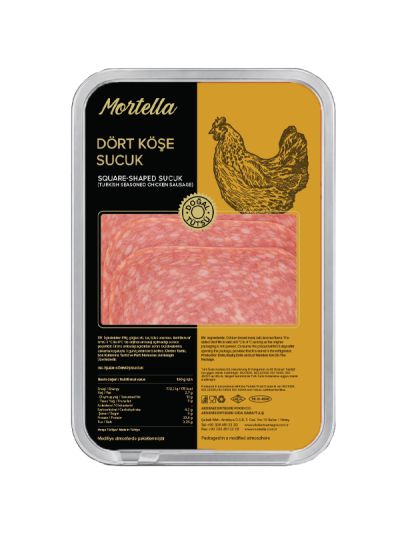
Square Sucuk
Sucuk is traditionally round in section; coils and finger sucuk are produced in that form. Square sucuk carries the tradition into a square section, and the reason is bread alone: toast and sandwich …

For premium pricing to be sustainable, the difference has to be perceptible to the guest. A quality difference that cannot be perceived turns into price resistance on the second order; the guest does…
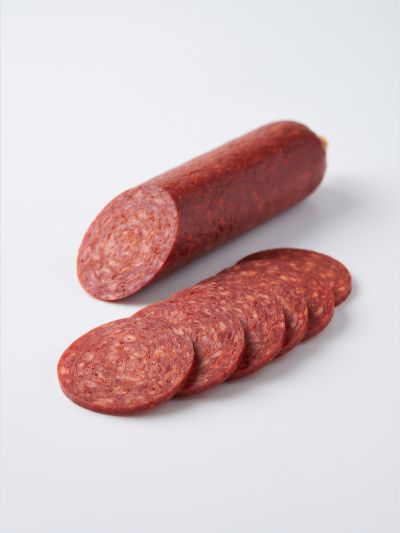
There are two routes in sucuk production. In fermented sucuk the meat matures through natural fermentation, losing water and acidifying; in heat-treated sucuk the product is made safe by cooking at a…
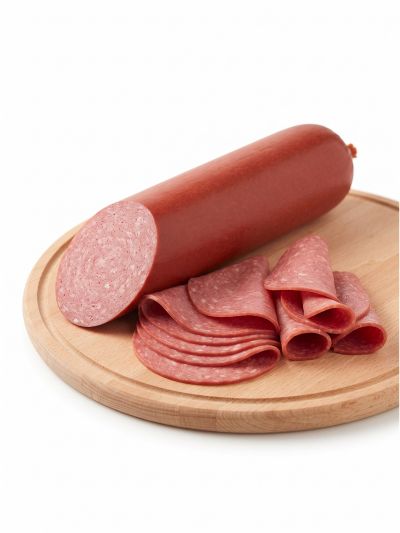
Not every kitchen has a slicing machine. In cafés, small businesses and retail counters a machine means investment, floor space and a cleaning burden; with this product the slicing is done in product…