


Bratwurst Sausage 300 g
On a menu, a product's name does as much work as the recipe. A line reading simply 'sausage' is perceived as generic, while a name belonging to a known culinary tradition positions the product; the guest knows what they ordered and their expectation forms accordingly.
Bratwurst is one of those names. On menus built around gastro pubs, beer pairings or European cooking it arrives with its own context and needs no further explanation. Beside the familiar sausage on the children's menu it covers the adult side, and together the two serve the whole table.
Shelf life and storage conditions
- Shelf Life
- Production and best-before dates are printed on the packaging.
- Storage Conditions
- Store between 0 °C and +4 °C with the cold chain maintained. After opening, keep refrigerated in a sealed container.
Please contact us for pricing. (professional kitchen / wholesale)
Why Choose This Product?
- A name from a known culinary tradition positions the product on the menu without further explanation.
- It fits directly into gastro pub, beer pairing and European-focused menus.
- Beside the children's menu sausage it covers the adult side, so two products serve the whole table.
- A 300 g pack matches the consumption speed of a single menu line.
Where To Use It
- Gastro pubs and beer pairings
- Grill and barbecue menus
- European-style plates
- In bread and hot dogs
- Breakfast plates
- Butcher and deli counters
Wholesale Ordering & Storage
For products that appear as a single menu line, pack size should follow consumption speed; a small pack ensures an opened product is used without waiting. Store between 0 °C and +4 °C with the cold chain maintained. After opening, keep refrigerated in a sealed container.
Frequently Asked Questions
How should it be named on the menu?
By its own name. Belonging to a known culinary tradition, it arrives with its own context and needs no further explanation.
Should it be carried alongside the frankfurter?
It should. One covers the children's side and the other the adult side; together they address the whole table.
Why the small pack?
As a single menu line its consumption speed is limited; a small pack ensures the opened product is finished without waiting.
Similar Products
You May Also Like
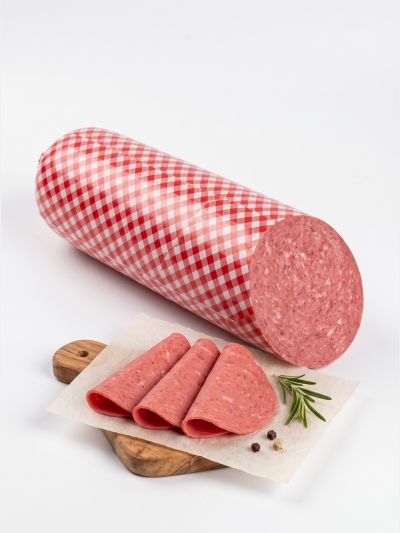
On pizza and baguette lines, what drives cost is not weight but coverage. The number of slices needed to cover a pizza is inversely proportional to the slice diameter; with a wide salami, fewer slice…

What defines Hungarian salami is paprika. In Hungarian cooking paprika is not only a spice but a colouring; mixed into salami it gives the cut an orange-red tone, and that tone is the reason the prod…
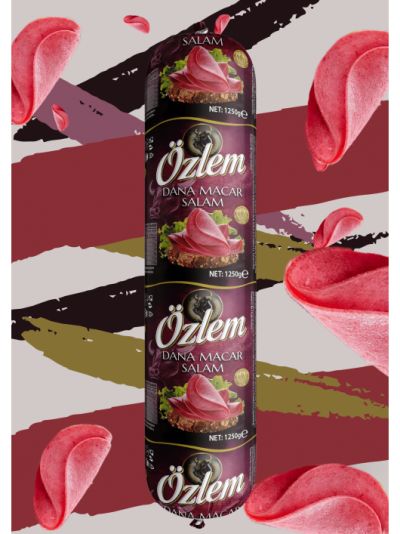
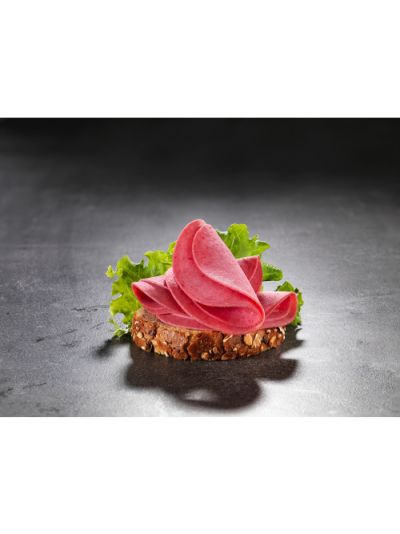
Every kitchen has two kinds of ingredient: specials whose consumption fluctuates, and staples that go out in the same quantity every day. Hungarian salami is the second kind — it appears regularly on…
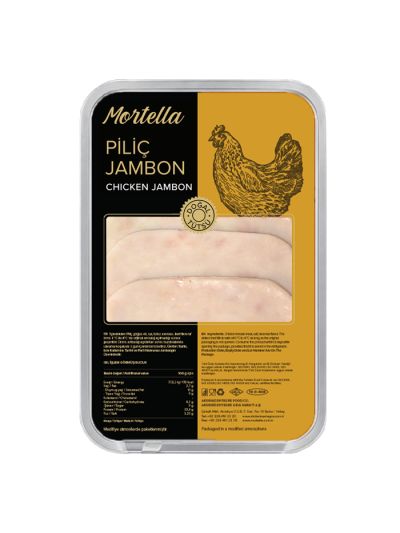
The difference between jambon and roast begins in the production method. A roast is cooked directly, while a jambon is cured first: the meat rests in a salt solution before cooking. Curing distribute…