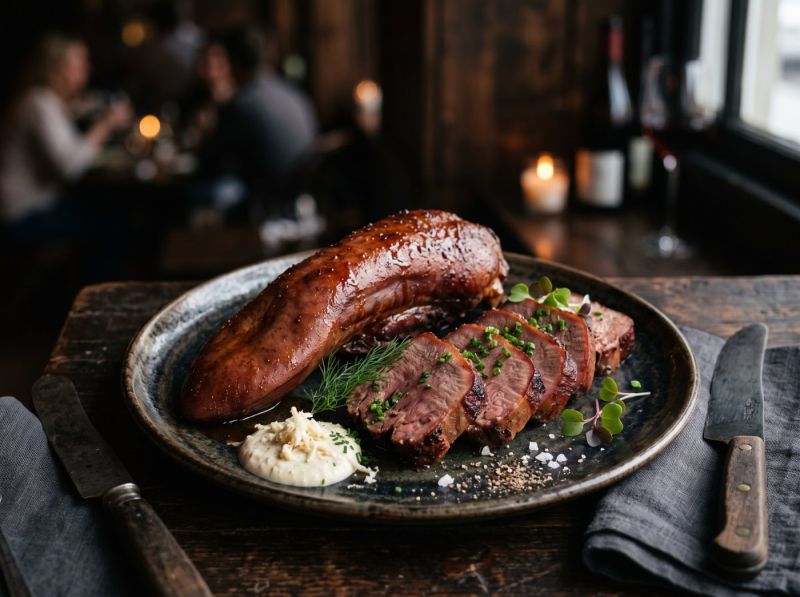
Smoked sirloin is among the most chosen cuts for a cold plate. But being lean, it needs a different approach from other smoked products.
What are the properties of sirloin?
Sirloin comes from the back of the animal.
Its muscle fibres are long and regular.
Its fat is low: four to six grams per hundred.
Marbling is slight.
Those properties survive the smoking.
The product is densely meaty and low in fat.
That gives a markedly different experience from fatty smoked products such as pastırma and ham.
Low fat makes the product light but also leaves it feeling drier in the mouth; the plate needs components that balance that dryness.
How is sirloin sliced?
Slicing directly affects the sense of dryness.
Sirloin always gets cut across the grain.
Slices cut along the grain are hard to chew.
The thickness should not pass two millimetres; one and a half is preferable.
A thin slice feels softer in the mouth.
A thick slice stays tough once the low fat is added to it.
The product gets cut cold; meat at room temperature sticks to the blade.
It then waits to come to room temperature; twenty minutes suffices, and that time is needed for the aroma to open.
| Component | Role | Per head |
|---|---|---|
| Smoked sirloin | Main component | 60-80 g |
| Leaves | Base | 40-50 g |
| Acid (lemon, vinegar) | Balance | 10-15 ml |
| Oil (olive oil) | Moisture and texture | 10-15 ml |
| Cheese | Salt and density | 20-25 g |
| Grain or pulse | Satiety | 60-80 g |
Which salad bases work?
The base determines the character of the plate.
Rocket is the most widespread choice; its bitter note balances the smoked aroma.
Sorrel and purslane are softer and let the product come forward.
Lettuce is a neutral base; it gives volume but contributes little flavour.
Spinach leaves get used too.
Grain bases point in a different direction.
Sirloin laid over bulgur, quinoa or freekeh turns a salad into a main course.
Those bases also balance the dryness of the product, since grain carries its own moisture and travels with it in the mouthful.
Why does acid balance matter?
Smoked products are salty and dense.
Acid breaks that density.
It creates a cleansing effect on the palate.
Lemon juice is the most widespread; fresh and sharp.
Balsamic vinegar is sweeter and rounder.
Cider vinegar sits in the middle.
Pomegranate molasses brings both acid and sweetness.
Ten to fifteen millilitres per head; more overwhelms the meat and hides the smoked aroma, while less fails to break the density.
How is the dressing chosen?
Dressing is the main tool for balancing dryness.
Olive-oil dressings suit best.
Three measures of oil to one of acid.
Mustard, honey or garlic joins them.
Cream-based dressings get used too but they cover the smoked aroma.
Yoghurt-based dressings are lighter and go well with garlic and dill.
The dressing goes over the leaves rather than the meat.
Meat coated in dressing loses both its appearance and its aroma to the sauce; that lowers the value of the most expensive component on the plate.
Which cheese pairings work?
Cheese adds salt and density to the plate.
Parmesan and similar hard cheeses are the classic match.
Grated or in thin shavings.
Goat's cheese is more acidic and forms a strong contrast with sirloin.
White cheese is a local alternative, used crumbled.
Mozzarella is neutral; fresh mozzarella adds moisture.
The quantity should not pass twenty-five grams per head; since both sirloin and cheese are salty the total rises quickly and the plate turns heavy.
How does it combine with grains and pulses?
That combination turns a salad into a main course.
Chickpeas are the most suitable pulse; their neutral taste lets the product come forward.
Borlotti beans are denser and creamier.
Lentils, green ones especially, hold their texture.
Quinoa is light and rich in protein.
Bulgur is more filling and costs less.
The grain or pulse gets used cold.
Smoked meat laid on hot grain warms and turns grey; that spoils both the appearance and the texture.
Can a hot-cold contrast be built?
It can, and it adds a clear dimension to the plate.
The most widespread version pairs cold meat with warm grain.
But the temperature gap should stay controlled.
The grain should have fallen below thirty degrees.
Alternatively a hot component goes on separately: a slice of toasted bread or warm potato.
That component sits at the edge of the plate.
Egg is another tool of contrast; a warm poached egg goes well with cold sirloin and its yolk acts as a natural dressing.
How is the plate arranged?
The arrangement builds in three layers.
Leaves or grain go at the bottom.
Slices of sirloin spread across the middle, overlapping.
Cheese, seeds and fresh herbs go on top.
The dressing comes last.
The slices do not lie flat; they get laid with a slight curl.
That creates volume and the plate looks fuller.
Colour balance gets watched too; a red component — pomegranate seeds, sun-dried tomato or radish — lifts the plate and makes a clear difference in a photograph.
What portion and preparation time apply?
Eighty grams of sirloin per head as a main course.
Fifty or sixty as a starter.
Thirty to forty on a mezze plate.
Preparation happens at most half an hour before service.
A salad made earlier wilts.
Leaves shrink within fifteen minutes of meeting dressing.
The components therefore get prepared separately and combined at the last moment.
The slices of sirloin come out of the fridge twenty minutes ahead; planned together, those two timings send the plate out at its best.