


Smoked Beef Tongue 1000 g
Tongue does not resemble the other muscles in a beef carcass. It is an organ in constant movement in every direction, and its fibres run not in one line but as an interwoven network. That structure explains why tongue gives a soft texture despite being lean — the tenderness comes from the arrangement of the fibres rather than from fat.
In charcuterie, tongue carries a long tradition and is becoming steadily harder to find. It takes more labour to process than other cuts; in return the cross-section resembles nothing else. For a customer who knows it that carries recognition, and for one who does not it becomes the item on a board that raises a question.
Shelf life and storage conditions
- Shelf Life
- Production and best-before dates are printed on the packaging.
- Storage Conditions
- Store between 0 °C and +4 °C with the cold chain maintained. After opening, keep refrigerated in a sealed container.
Please contact us for pricing. (professional kitchen / wholesale)
Why Choose This Product?
- The fibres form an interwoven network rather than running one way; the tenderness comes from that structure.
- Despite a low fat content the texture is not tough — a rare combination in charcuterie.
- The cross-section resembles no other cut and is distinguishable on a board.
- A traditional item that is increasingly hard to find, adding difference to a menu.
Where To Use It
- Charcuterie boards and presentation
- Traditional meze plates
- Breakfast plates
- Sandwich and baguette fillings
- Restaurant à la carte
- Butcher and deli counters
Wholesale Ordering & Storage
An item with a narrower audience; quantities should be planned against charcuterie board sales rather than stocked in expectation of broad consumption. Store between 0 °C and +4 °C with the cold chain maintained. After opening, keep refrigerated in a sealed container.
Frequently Asked Questions
Why is tongue tender despite being lean?
Because of the interwoven network of its fibres. In other muscles fat provides the tenderness; in tongue it comes from the fibre arrangement.
Why does the cut look different?
As the fibres do not run in one direction, the cut does not show the regular lines of other pieces; a distinctive pattern forms instead.
How should it be sliced?
Thin gives the best result. In a thick slice the distinctive texture of tongue becomes too pronounced in the mouth.
Similar Products
You May Also Like
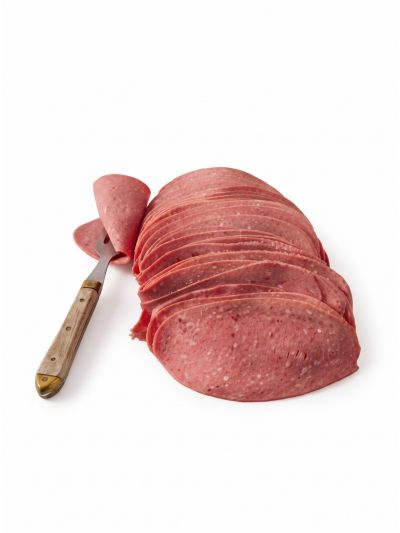
The Spanish and Hungarian salami traditions use the same spice — paprika — in different ways. In the Hungarian tradition the pepper takes a sweetish, colouring role, while the Spanish tradition favou…

In the Italian sausage tradition the seasoning is built around fennel, garlic and black pepper, which separates it from mildly profiled sausages such as the frankfurter. A pronounced spice means the …
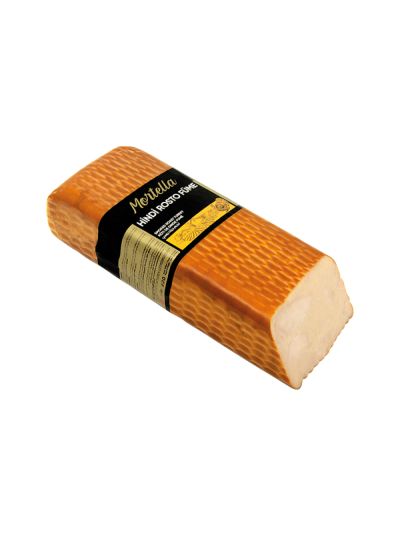
In log products the cross-section area determines yield directly. Turkey roast has a broader section than beef or chicken, which means a slice cut at the same thickness covers more surface. In sandwi…
What defines Hungarian salami is paprika. In Hungarian cooking paprika is not only a spice but a colouring; mixed into salami it gives the cut an orange-red tone, and that tone is the reason the prod…