


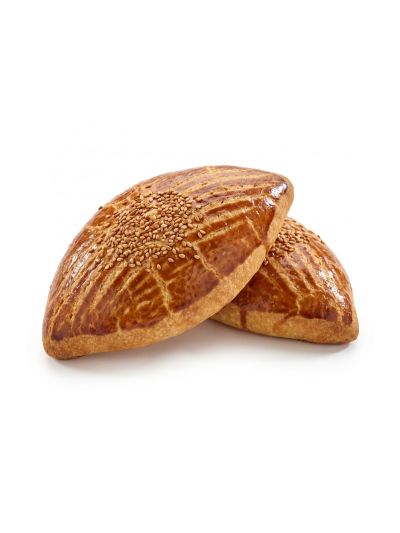
Tahini Cookies 2 kg (Raw Frozen)
The role of fat in cookie dough is not only flavour. Fat coats the surface of the flour particles and limits their contact with water, so the gluten network cannot form fully and the baked product takes on a crumbling rather than a hard texture.
Tahini is one of the ingredients able to take on that role, being largely sesame oil. In the dough it works as both fat and flavour, delivering texture and aroma without a separate fat being added. The result is a product long known in the Anatolian cookie tradition — crumbling in the mouth and carrying the scent of sesame.
Shelf life and storage conditions
- Shelf Life
- 1 year
- Storage Conditions
- Store at -18 °C. Once thawed, do not refreeze.
Please contact us for pricing. (professional kitchen / wholesale)
Why Choose This Product?
- Fat limits the contact between flour and water and holds back the gluten network.
- Tahini can take on that role because it is largely sesame oil.
- It works as both fat and flavour in the dough, so no separate fat is needed.
- A crumbling texture and the scent of sesame are known marks of the Anatolian cookie tradition.
Where To Use It
- Tea and coffee plates
- Patisserie and bakery trays
- Cafés serving traditional flavours
- Office and meeting catering
- Gift and box presentation
- Household use
Wholesale Ordering & Storage
Crumbling cookies are prone to breaking in transit; avoid stacking them when laying out trays or bagging. Store at -18 °C. Once thawed, do not refreeze. Shelf life: 1 year.
Frequently Asked Questions
What does tahini do in the dough?
It acts as the fat, limiting contact between flour and water and holding back gluten so the texture crumbles.
Is separate fat added?
Tahini is largely sesame oil, so it works as both fat and flavour.
Does it break in transit?
Crumbling cookies are prone to breaking; avoid stacking them when laying out trays or bagging.
Similar Products
You May Also Like
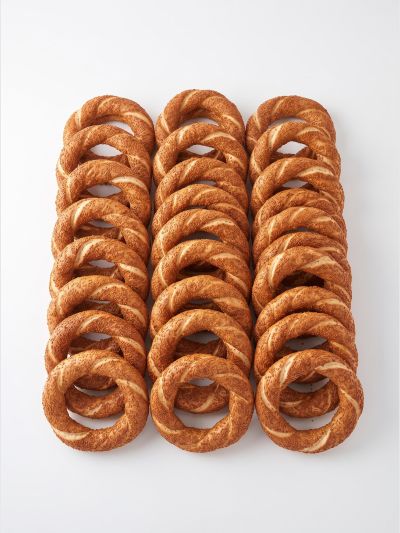
Part-baking is an industrial answer to a specific problem in bread making: the internal structure of the dough is built at the factory while the crust is left to the point of sale. The product leaves…
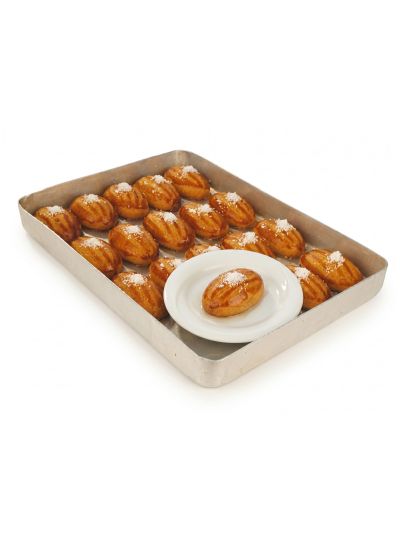
Sekerpare (Raw Frozen)
Semolina is used in şekerpare dough, and that governs how the dessert behaves against syrup. Semolina is coarse-grained; it forms an open structure in the dough, and after baking those pores draw the…
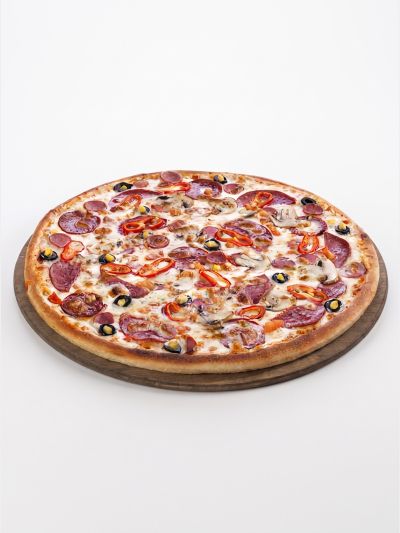
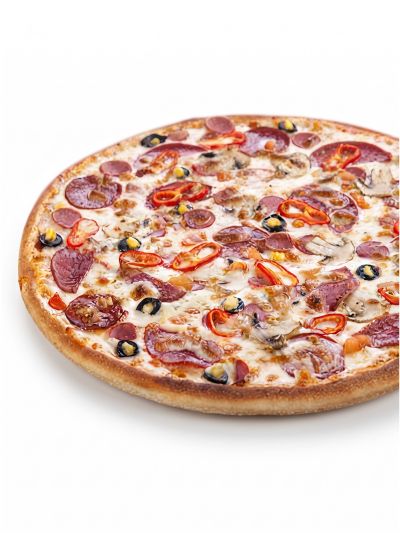
Mixed Topping Pizza (Par-Baked, Frozen)
Adding pizza to a menu is harder than it looks. A dough bench, sauce preparation, a topping fridge, slicing and portion control all mean separate investment and separate staff work. That is why small…
What separates a poğaça from a borek is the filling ratio. In a borek the pastry is a thin carrier and the filling is the mass; in a poğaça the reverse holds — the leavened dough is the product itsel…