


Sliced Beef Jambon
Beef jambon is the curing method applied to red meat. It shares the production logic of the chicken and turkey versions, but the numbers differ: at 21.5 g protein and 2.5 g fat per 100 g it leads the jambon group at both ends.
On flavour, beef asserts itself despite the softening effect of curing. Chicken jambon is neutral, turkey mid-range, and beef jambon carries a pronounced meat taste. That lifts the product beyond a plain breakfast item into something that can stand alone on a charcuterie board.
Shelf life and storage conditions
- Shelf Life
- 120 days
- Storage Conditions
- Store between 0 °C and +4 °C with the cold chain maintained. After opening, keep refrigerated in a sealed container.
Please contact us for pricing. (professional kitchen / wholesale)
Why Choose This Product?
- The highest-protein (21.5 g) and lowest-fat (2.5 g) item in the jambon group.
- The flavour of beef survives the softening effect of curing.
- Strong enough to stand alone on a charcuterie board rather than serve as a plain breakfast item.
- A 120-day shelf life allows a more flexible stock plan than the sliced roasts.
Where To Use It
- Charcuterie boards and wine service
- Sandwich and baguette fillings
- Breakfast plates and buffets
- Protein on salads
- Hot sandwiches and toasties
- Canapés and aperitifs
Nutrition Information (per 100 g)
- Energy: 523 kJ / 125 kcal
- Fat: 2,5 g (of which saturates 1,24 g)
- Carbohydrate: 3,9 g (of which sugars 0 g)
- Protein: 21,5 g
- Salt: 2,8 g
Wholesale Ordering & Storage
This line is listed in the manufacturer's smoked products catalogue but not in the 01.07.2026 price list we hold. Price and stock status should be confirmed before it goes on sale. Store between 0 °C and +4 °C with the cold chain maintained. After opening, keep refrigerated in a sealed container. Shelf life: 120 days.
Frequently Asked Questions
What is the difference between beef jambon and beef roast?
The production method. A jambon is cured then cooked; a roast is cooked directly. The catalogue gives identical per-100 g nutrition for both; the difference lies in texture and shelf life.
Why is this product not on the price list?
It is listed in the catalogue but did not appear in the 01.07.2026 price list. Whether it is still in production should be checked with the supplier.
What is served with it on a board?
Mature cheeses, pickles and mustard suit it. The pronounced flavour of beef carries these stronger companions.
Similar Products
You May Also Like
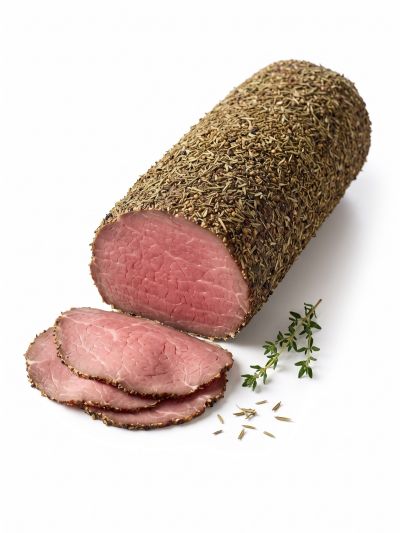
How well an ingredient fits a menu is measured not only by its quality but by the relationship it builds with the dishes around it. Thyme is among the foundational herbs of Mediterranean cooking; on …
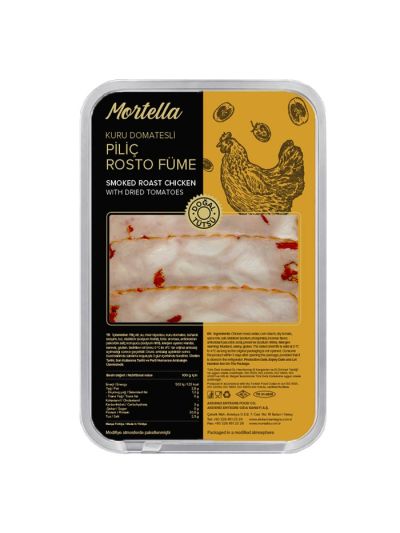
Sliced Smoked Roast Chicken with Dried Tomatoes
100 g / 200 g / 450 g
3 options
A sun-dried tomato is a different ingredient from a fresh one. With the water drawn out its acidity and salt concentrate, so added to meat it brings not only colour but a distinct layer of acid. That…

Striploin is a muscle whose fibres run in a single direction from end to end. That is decisive for slicing: with the grain running one way, a blade entering at a right angle produces a clean cut, the…
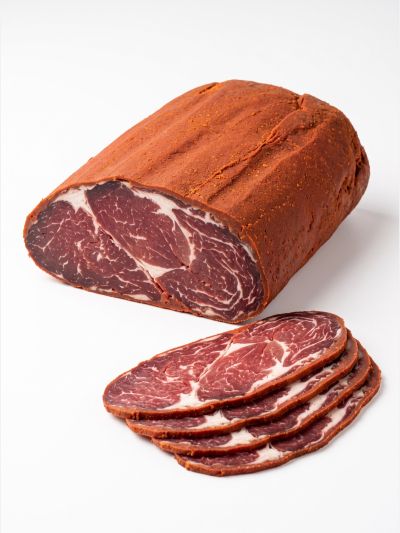
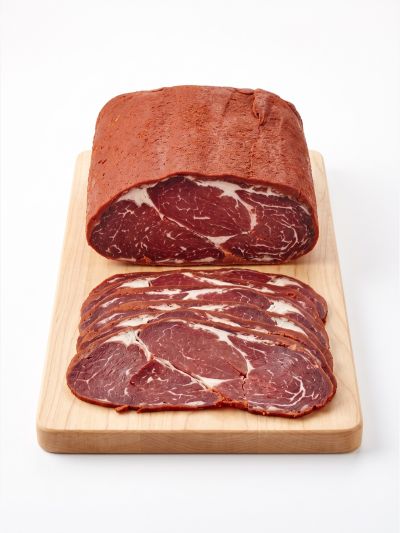
The cut used in pastirma directly determines the grade of the product, and ribeye sits at the top of that classification. The reason is marbling: the fat distributed through the muscle of a ribeye st…