


Sliced Beef Salami
Salami separates most sharply from the sliced range on numbers: 17.7 g of fat per 100 g, roughly seven times that of beef roast. That gap is not a fault but the definition of the product — in salami the fat is the carrier of aroma, and the white flecks in the cross-section are precisely that.
So salami does not do the same job as a roast. A roast is a protein item that fills a portion; salami is a flavour item used in small amounts. A few slices set the tone of a whole pizza, and one slice is enough on a charcuterie board. Portioning should follow accordingly.
Shelf life and storage conditions
- Shelf Life
- 120 days
- Storage Conditions
- Store between 0 °C and +4 °C with the cold chain maintained. After opening, keep refrigerated in a sealed container.
Please contact us for pricing. (professional kitchen / wholesale)
Why Choose This Product?
- The fat content is the carrier of aroma; the white flecks in the cross-section define the product.
- Used in small amounts: a few slices on a pizza, one slice on a board, sets the whole presentation.
- Not in the same class as a roast — a flavour item rather than a portion filler.
- A 120-day shelf life, longer than the 90 days of the sliced roasts.
Where To Use It
- Pizza toppings
- Charcuterie boards and wine service
- Sandwich and baguette fillings
- Aperitifs and canapés
- Pasta and salad garnish
- Breakfast plates
Nutrition Information (per 100 g)
- Energy: 1133 kJ / 271 kcal
- Fat: 17,7 g (of which saturates 10,2 g)
- Carbohydrate: 13,3 g (of which sugars 0 g)
- Protein: 16,6 g
- Salt: 1,7 g
Wholesale Ordering & Storage
As a flavour item the amount per portion is far smaller than a roast; planning by slice count rather than by kilo gives the correct order quantity. Store between 0 °C and +4 °C with the cold chain maintained. After opening, keep refrigerated in a sealed container. Shelf life: 120 days.
Frequently Asked Questions
Why is the fat content so high?
In salami the fat carries the aroma. The white flecks in the cross-section are fat, and they determine the flavour, texture and shelf life of the product. A fat-free salami is not possible.
Can it replace a roast?
It should not. The two do different jobs: a roast fills a portion, a salami supplies aroma. Used at the same weight, the plate becomes heavy.
When should it go on a pizza?
Before the oven. During baking the fat renders, the slice edges curl and the aroma spreads across the whole plate.
Similar Products
You May Also Like

In kitchen economics the price per kilo is a misleading indicator; the real question is how much goes onto a plate. Smoked cured beef is intensely aromatic and enters a dish by the gram — a few thin …
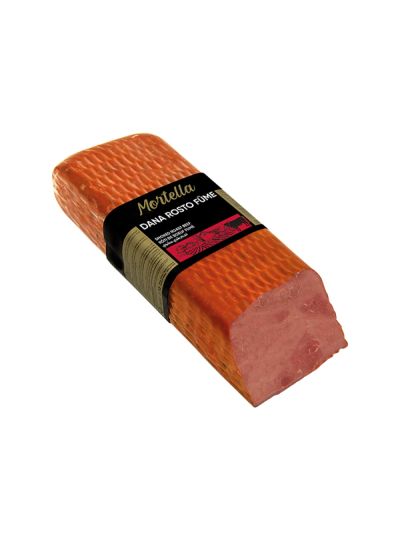
A log is an unsliced whole roast carrying the same recipe as the sliced product. The difference lies in the buying logic: a sliced product buys ready portions, while a log leaves the slicing decision…
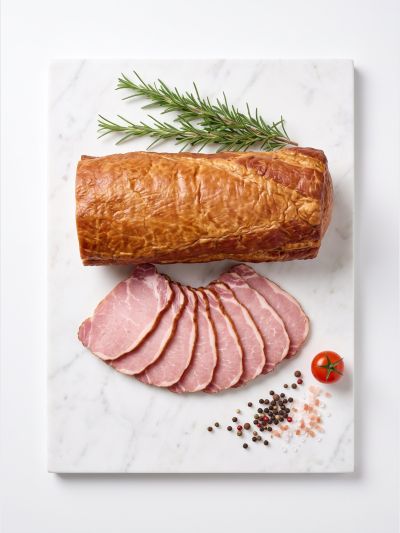
Pack size is not a preference but the result of a calculation. A large block lowers cost per kilo; in return, once opened the cut face meets the air and the product must be finished within a certain …
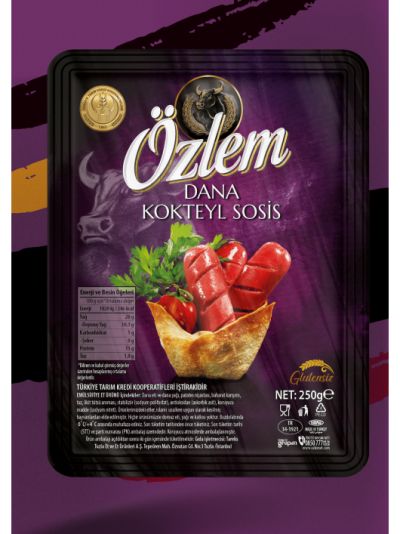
The hardest task in event planning is estimating quantity. With plated dishes the portion varies from guest to guest and leftover food is a straight loss. Items counted by piece remove that uncertain…