


Sliced Chicken Mortadella with Pieces
The pattern in a mortadella cross-section can be built from the meat itself rather than from vegetables or tomato. Here, whole pieces of chicken are set into the emulsion; the cut shows darker islands of meat on a pale base. This is the cross-section closest to the Italian mortadella tradition.
The textural difference follows from that. In the vegetable and tomato versions the pieces are soft; pieces of meat are firmer than the emulsion and register against the teeth. The product gives a two-stage texture rather than uniform softness — the detail that separates a mortadella from a plain sliced product.
Shelf life and storage conditions
- Shelf Life
- 90 days
- Storage Conditions
- Store between 0 °C and +4 °C with the cold chain maintained. After opening, keep refrigerated in a sealed container.
Please contact us for pricing. (professional kitchen / wholesale)
Why Choose This Product?
- The cross-section pattern is built from the meat itself, the type closest to the Italian tradition.
- The meat pieces are firmer than the emulsion, creating a two-stage texture in the mouth.
- Contains no vegetable or spice inclusion; the flavour rests entirely on the meat and its seasoning.
- The group's salt figure holds here too: 1.5 g per 100 g, the lowest in the sliced range.
Where To Use It
- Charcuterie boards and presentation
- Sandwich and toastie fillings
- Breakfast plates and buffets
- Canapés and aperitifs
- Pizza and pasta garnish
- Packed lunches
Nutrition Information (per 100 g)
- Energy: 602,5 kJ / 144 kcal
- Fat: 6,7 g (of which saturates 2,2 g)
- Carbohydrate: 2,76 g (of which sugars 0 g)
- Protein: 17,9 g
- Salt: 1,5 g
Wholesale Ordering & Storage
Bought as a set of three, the differing cross-sections build a varied charcuterie board; all three share the same shelf conditions and shelf life. Store between 0 °C and +4 °C with the cold chain maintained. After opening, keep refrigerated in a sealed container. Shelf life: 90 days.
Frequently Asked Questions
What difference do the meat pieces make?
They create a textural difference. Being firmer than the emulsion, they give a two-stage texture in the mouth and break the uniformity of a plain emulsion.
Which of the three mortadellas is the classic?
The one with pieces. In the Italian tradition the pattern is built from the meat itself; vegetable and tomato are later variations.
Do the pieces fall out when sliced thin?
The emulsion holds them firmly, so at normal thickness nothing falls out. Sliced very thin the edges of the pieces become visible, which is an expected result.
Similar Products
You May Also Like
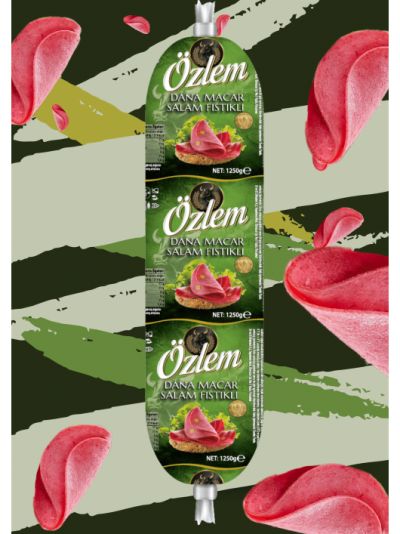
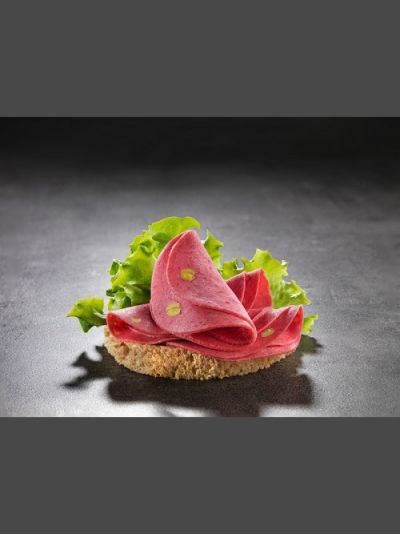
The cost of a charcuterie board is not made up of meat alone; greens, olives, dried fruit and serving items all enter the calculation, and each carries both a purchase and a preparation cost. A slice…
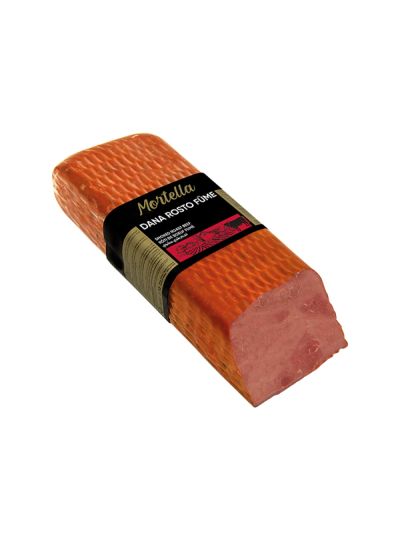
A log is an unsliced whole roast carrying the same recipe as the sliced product. The difference lies in the buying logic: a sliced product buys ready portions, while a log leaves the slicing decision…
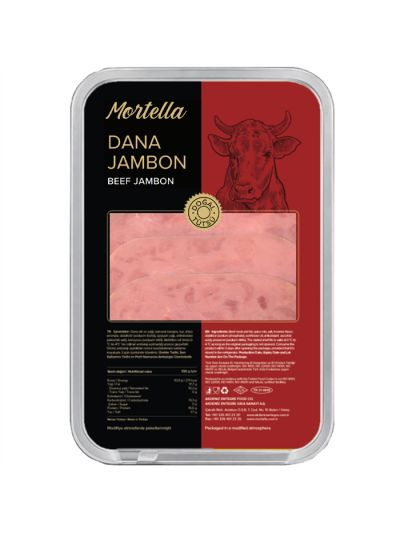
Beef jambon is the curing method applied to red meat. It shares the production logic of the chicken and turkey versions, but the numbers differ: at 21.5 g protein and 2.5 g fat per 100 g it leads the…
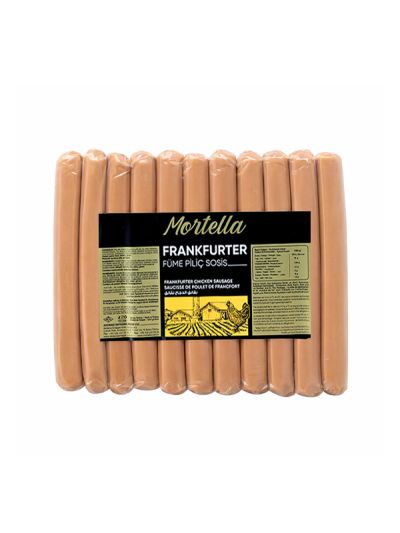
The frankfurter has the most homogeneous texture of the sausage families. The meat is worked into an emulsion and filled into a fine casing; the result is a smooth, soft body that gives no sense of f…