


Chicken Mortadella with Dried Tomatoes 1350 g
The visual identity of a mortadella is its cross-section, and here the pattern is built on a single colour. Dark red islands of tomato scatter across a pale emulsion base; unlike the multicoloured look of the vegetable version, the result is a calmer, more ordered cut.
On a counter that difference matters. Faced with two mortadellas side by side, a customer usually chooses on the appearance of the cut; a single-colour pattern reads as cleaner, a multicoloured one as richer. Carrying both gives the counter visual variety.
Shelf life and storage conditions
- Shelf Life
- Production and best-before dates are printed on the packaging.
- Storage Conditions
- Store between 0 °C and +4 °C with the cold chain maintained. After opening, keep refrigerated in a sealed container.
Please contact us for pricing. (professional kitchen / wholesale)
Why Choose This Product?
- A cross-section built on one colour, calmer and more ordered than the vegetable version.
- The acidity of dried tomato cuts the soft taste of the emulsion and prevents monotony.
- Displayed beside the vegetable version, the two create distinct pattern impressions.
- Shares the low salt figure of the mortadella group, so it suits institutional catering.
Where To Use It
- Panini and hot sandwiches
- Deli counter displays
- Hotel breakfast buffets
- Burgers and round sandwiches
- Pizza toppings
- Canapés and aperitifs
Nutrition Information (per 100 g)
- Energy: 602,5 kJ / 144 kcal
- Fat: 6,7 g (of which saturates 2,2 g)
- Carbohydrate: 2,76 g (of which sugars 0 g)
- Protein: 17,9 g
- Salt: 1,5 g
Wholesale Ordering & Storage
Bought with the vegetable version it builds a two-pattern mortadella line on the counter; sharing the same section diameter, both run at the same slicer setting. Store between 0 °C and +4 °C with the cold chain maintained. After opening, keep refrigerated in a sealed container.
Frequently Asked Questions
Is colour the only difference from the vegetable version?
Colour and taste. Dried tomato brings acidity into the emulsion; the vegetable version gives a softer, rounder flavour.
Does it run at the same slicer setting?
Yes. The two products share the same section diameter, so no adjustment is needed.
Can it be used on pizza?
Yes. Adding it just before the oven is best; long baking dries the slice edges.
Similar Products
You May Also Like
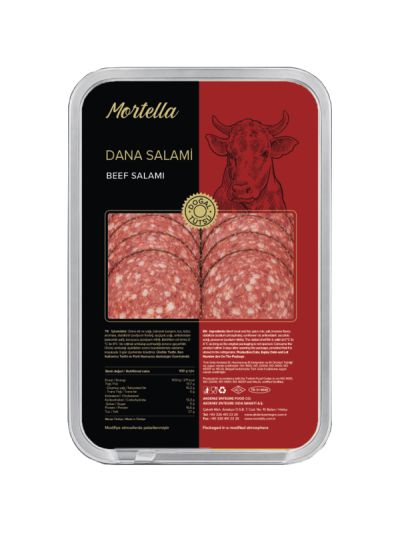
Salami separates most sharply from the sliced range on numbers: 17.7 g of fat per 100 g, roughly seven times that of beef roast. That gap is not a fault but the definition of the product — in salami …
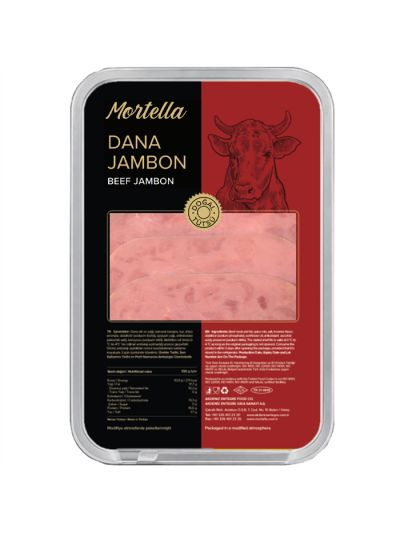
Beef jambon is the curing method applied to red meat. It shares the production logic of the chicken and turkey versions, but the numbers differ: at 21.5 g protein and 2.5 g fat per 100 g it leads the…
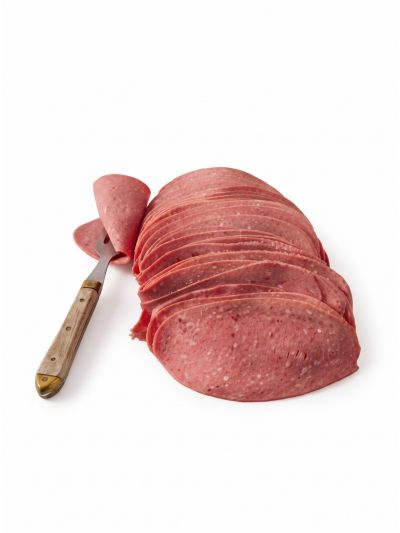
The Spanish and Hungarian salami traditions use the same spice — paprika — in different ways. In the Hungarian tradition the pepper takes a sweetish, colouring role, while the Spanish tradition favou…
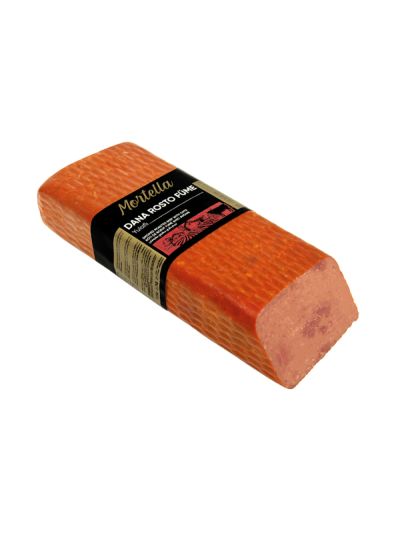
The oat coating is applied to the outer wall of the log. That makes the coating's behaviour independent of slice thickness: however thin or thick the log is cut, the frame stays the same width. On a …